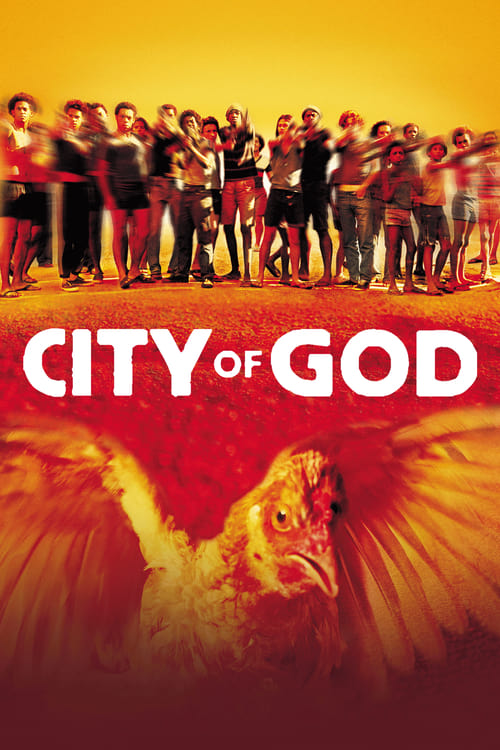
City of God
2002 · Directed by Fernando Meirelles
Woke Score
CriticCritic Score
Audience
Based
Critics rated this 57 points above its woke score. Among Based films, this critic score ranks #85 of 345.
Representation Casting
Score: 68/100
The film features an almost entirely Brazilian cast of largely non-professional actors from favela communities, centering the voices of marginalized populations. This was genuinely progressive for 2002, though the male-dominated casting limits its contemporary strength.
LGBTQ+ Themes
Score: 0/100
No LGBTQ+ themes or characters of significance appear in the narrative. The film shows no engagement with sexual or gender diversity.
Feminist Agenda
Score: 5/100
Female characters appear minimally and primarily as victims or supporting figures in a male-dominated narrative. Alice Braga's character is notable but the film shows little feminist consciousness about gender relations.
Racial Consciousness
Score: 32/100
The film depicts a Black and brown community with nuance and complexity, but frames poverty and violence as inevitable features rather than examining racial and economic structures that produce them. There is documentation without systemic analysis.
Climate Crusade
Score: 0/100
No climate themes appear in the narrative. The film is entirely unconcerned with environmental issues or ecological consciousness.
Eat the Rich
Score: 15/100
While the film depicts the destructive effects of the drug trade, it presents this as a personal moral choice rather than examining capitalism or economic structures. The system itself is never interrogated.
Body Positivity
Score: 0/100
The film contains no engagement with body positivity, disability representation, or questions of bodily autonomy beyond the violence inherent to its subject matter.
Neurodivergence
Score: 0/100
No representation of neurodivergent characters or engagement with disability and neurodiversity appears in the film.
Revisionist History
Score: 10/100
The film depicts the 1970s favela experience but does not reframe or reexamine historical narratives. It presents a narrative of violence and poverty as a historical given rather than analyzing how such conditions were constructed.
Lecture Energy
Score: 8/100
The film trusts its narrative to speak for itself and contains minimal preachy exposition. However, its occasional documentary-style elements and the framing device create a subtle pedagogical impulse about favela life.


Synopsis
In the poverty-stricken favelas of Rio de Janeiro in the 1970s, two young men choose different paths. Rocket is a budding photographer who documents the increasing drug-related violence of his neighborhood, while José "Zé" Pequeno is an ambitious drug dealer diving into a dangerous life of crime.
Consciousness Assessment
City of God presents a paradox that continues to vex film scholars two decades after its release. The film deploys an almost entirely Brazilian cast, predominantly composed of non-professional actors from the favelas themselves, and centers the experiences of marginalized communities with visual flair and narrative complexity. Yet the film's relationship to progressive social consciousness remains ambiguous at best. The narrative focuses overwhelmingly on crime and violence as the defining feature of poverty, offering little structural critique of the economic systems that produce such desperation. The film is a work of considerable artistic achievement, but its social vision remains fundamentally concerned with depicting rather than interrogating the conditions it portrays.
The film's most defensible progressive element is its casting choice, which genuinely centered the voices and faces of the communities depicted. This was noteworthy in 2002, though by modern standards we would expect such representation as baseline. Beyond this, the film struggles to articulate a coherent political perspective. Its visual innovation, while undeniably impressive, serves primarily to aestheticize poverty and violence rather than to illuminate their causes. The narrative arc privileges the coming-of-age story of Rocket, a photographer, over systemic analysis, positioning individual artistic vision as a form of transcendence from structural conditions rather than as a tool for understanding them.
What remains most telling is what the film does not examine. There is minimal engagement with state violence, economic policy, or the specific historical forces that created the favelas. The drug trade appears as a natural feature of the landscape, not as a response to abandonment and inequality. This is not to demand that every film be a political tract, but rather to note that the film's refusal to engage these questions represents a choice, one that ultimately serves an aesthetic over an analytical project. The film remains valuable as cinema and as documentation, but it cannot be mistaken for a work of social consciousness in the modern sense.
Analysis generated by our Consciousness Algorithm
Critic Reviews
“The film is seductive, disturbing, enthralling -- a trip to hell that gives the passengers a great ride.”
“Like a bomb exploding in a fireworks factory: It's fierce and shocking and dazzling and wonderful.”
“A marvelous achievement that refuses to avert its gaze from the poetry and the insane savagery of the hopeless.”
“Undeniably powerful, but also rather numbing.”
Consciousness Markers
The film features an almost entirely Brazilian cast of largely non-professional actors from favela communities, centering the voices of marginalized populations. This was genuinely progressive for 2002, though the male-dominated casting limits its contemporary strength.
No LGBTQ+ themes or characters of significance appear in the narrative. The film shows no engagement with sexual or gender diversity.
Female characters appear minimally and primarily as victims or supporting figures in a male-dominated narrative. Alice Braga's character is notable but the film shows little feminist consciousness about gender relations.
The film depicts a Black and brown community with nuance and complexity, but frames poverty and violence as inevitable features rather than examining racial and economic structures that produce them. There is documentation without systemic analysis.
No climate themes appear in the narrative. The film is entirely unconcerned with environmental issues or ecological consciousness.
While the film depicts the destructive effects of the drug trade, it presents this as a personal moral choice rather than examining capitalism or economic structures. The system itself is never interrogated.
The film contains no engagement with body positivity, disability representation, or questions of bodily autonomy beyond the violence inherent to its subject matter.
No representation of neurodivergent characters or engagement with disability and neurodiversity appears in the film.
The film depicts the 1970s favela experience but does not reframe or reexamine historical narratives. It presents a narrative of violence and poverty as a historical given rather than analyzing how such conditions were constructed.
The film trusts its narrative to speak for itself and contains minimal preachy exposition. However, its occasional documentary-style elements and the framing device create a subtle pedagogical impulse about favela life.