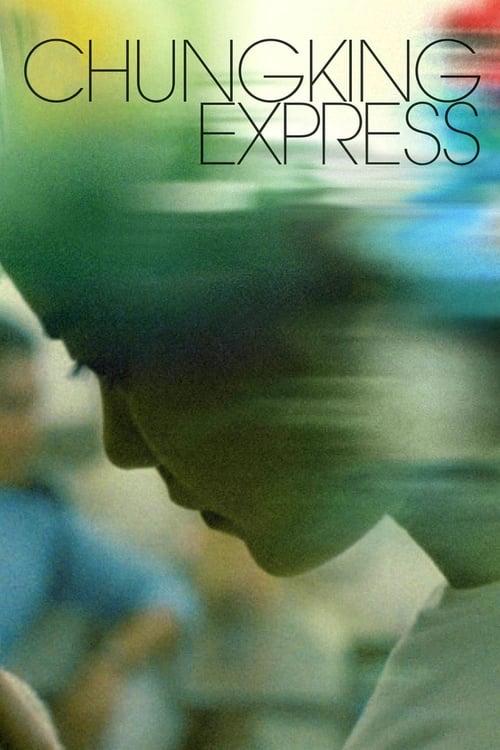
Chungking Express
1994 · Directed by Wong Kar-Wai
Woke Score
CriticCritic Score
Audience
Ultra Based
Critics rated this 74 points above its woke score. Among Ultra Based films, this critic score ranks #422 of 1469.
Representation Casting
Score: 5/100
The film features Asian actors in leading roles, but this reflects the Hong Kong film industry's standard practice rather than conscious representation efforts. No meaningful diversity beyond the default cast composition.
LGBTQ+ Themes
Score: 15/100
Subtext exists in the emotional intimacy between the two male leads, but it remains entirely unacknowledged by the narrative. The homosocial bond is presented as romantic longing without ever explicitly engaging with queer identity.
Feminist Agenda
Score: 8/100
Female characters exist primarily as objects of male desire and fantasy. Their agency is minimal and their interiority is secondary to their aesthetic function in the male protagonists' emotional arcs.
Racial Consciousness
Score: 5/100
Hong Kong's colonial and postcolonial context is entirely absent from the film's concerns. The setting functions as atmosphere rather than as a site of historical or social significance.
Climate Crusade
Score: 0/100
No engagement with environmental themes whatsoever. The film is entirely unconcerned with ecological or climate-related issues.
Eat the Rich
Score: 5/100
The film depicts consumer culture and urban capitalism without critique. Shopping malls and commercial spaces are portrayed as romantic settings rather than as sites of commodification.
Body Positivity
Score: 2/100
The film's aesthetic standards are highly conventional and narrow. All characters conform to narrow beauty ideals with no representation of diverse body types.
Neurodivergence
Score: 0/100
No engagement with neurodiversity. Characters are presented through a neurotypical lens with no acknowledgment of neurodivergent experiences or perspectives.
Revisionist History
Score: 0/100
The film contains no historical narratives or revisionist impulses. History is entirely absent from its concerns.
Lecture Energy
Score: 5/100
While the film occasionally indulges in philosophical musing through voiceover narration, it lacks the preachy quality of explicitly message-driven cinema. The tone is reflective rather than preachy.


Synopsis
Two melancholic Hong Kong policemen fall in love: one with a mysterious underworld figure, the other with a beautiful and ethereal server at a late-night restaurant.
Consciousness Assessment
Wong Kar-Wai's Chungking Express is a visually intoxicating meditation on urban loneliness and the possibility of connection, a film so concerned with its own aesthetic reverie that it barely notices the world outside its frame. The narrative follows two Hong Kong police officers through parallel romantic entanglements, one involving a mysterious woman in a blonde wig who may be a criminal, the other a chance encounter with a young woman working at a noodle shop. The film's romantic sensibility is genuinely affecting, and its visual language, pioneered by cinematographer Christopher Doyle, remains influential decades later. However, beneath this shimmering surface lies a fundamentally conventional approach to gender and desire that belongs entirely to its era.
The female characters, while aesthetically privileged by Wong's camera, exist primarily as objects of male longing rather than as fully realized subjects with interior lives. Brigitte Lin's mysterious woman and Faye Wong's waitress are enigmatic and charming, but their agency is severely curtailed by the film's structure. Neither woman initiates the central romantic movements. Instead, they are pursued, watched, and fantasized about by men who construct elaborate emotional narratives around them. This is not presented as critique but as romance. The film's treatment of these women reflects a 1990s Hong Kong cinema sensibility where female desirability and female subjectivity were treated as separate concerns. There is no attempt at gender consciousness here, nor any interrogation of the male gaze that structures the narrative. The film is simply what it is: a beautiful love letter to melancholy, indifference to contemporary progressive frameworks, and the aestheticization of emotional distance.
Chungking Express also lacks any meaningful representation consciousness, climate awareness, economic critique, or engagement with neurodiversity and body positivity. The film's Hong Kong setting is treated as mere atmosphere rather than as a specific social or historical context deserving examination. While the film's queer subtext has been discussed by some critics, it remains subtext, never acknowledged or developed. The film is essentially a pre-woke artifact, concerned with style over substance, surface over meaning. This is not a moral failing on the film's part, but rather a straightforward historical fact about its cultural moment and artistic priorities.
Analysis generated by our Consciousness Algorithm
Critic Reviews
“Chungking Express ravishingly, seductively exudes the immediacy of everyday life as its spins its classically timeless tales of love lost and almost regained.”
“Experimental in form, it's also open and appealing in its vision of romantic redemption, an avant-garde romp that's also a great date movie. [8 Mar 1996, p.40]”
“Hong Kong writer-director Wong Kar-wai's "Chungking Express" is hip and entertaining... Technically, the film is first-rate, while all the principal performers are excellent. [9 June 1995]”
“For all Wong's energy and virtuosity, the relentless stylishness and whimsicality of Chungking Express become irritating. The cast is appealing -- particularly the forlorn young cops. But the velocity of Wong's attack seems out of proportion to the airy, lightweight quality of the stories.”
Consciousness Markers
The film features Asian actors in leading roles, but this reflects the Hong Kong film industry's standard practice rather than conscious representation efforts. No meaningful diversity beyond the default cast composition.
Subtext exists in the emotional intimacy between the two male leads, but it remains entirely unacknowledged by the narrative. The homosocial bond is presented as romantic longing without ever explicitly engaging with queer identity.
Female characters exist primarily as objects of male desire and fantasy. Their agency is minimal and their interiority is secondary to their aesthetic function in the male protagonists' emotional arcs.
Hong Kong's colonial and postcolonial context is entirely absent from the film's concerns. The setting functions as atmosphere rather than as a site of historical or social significance.
No engagement with environmental themes whatsoever. The film is entirely unconcerned with ecological or climate-related issues.
The film depicts consumer culture and urban capitalism without critique. Shopping malls and commercial spaces are portrayed as romantic settings rather than as sites of commodification.
The film's aesthetic standards are highly conventional and narrow. All characters conform to narrow beauty ideals with no representation of diverse body types.
No engagement with neurodiversity. Characters are presented through a neurotypical lens with no acknowledgment of neurodivergent experiences or perspectives.
The film contains no historical narratives or revisionist impulses. History is entirely absent from its concerns.
While the film occasionally indulges in philosophical musing through voiceover narration, it lacks the preachy quality of explicitly message-driven cinema. The tone is reflective rather than preachy.