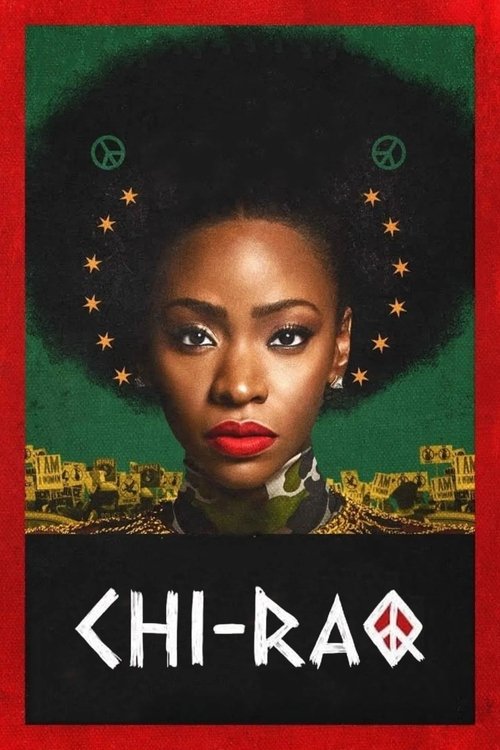
Chi-Raq
2015 · Directed by Spike Lee
Woke Score
CriticCritic Score
Audience
Woke
Critics rated this 1 points below its woke score. Among Woke films, this critic score ranks #43 of 88.
Representation Casting
Score: 70/100
The film features an ensemble of Black actors in leading roles, centering Black talent and Black narratives in a film about Black communities. The casting is intentional and prominent throughout.
LGBTQ+ Themes
Score: 5/100
No meaningful LGBTQ+ representation or thematic engagement is evident in the film's narrative or cast.
Feminist Agenda
Score: 75/100
The entire plot mechanism centers on women's collective action and sexual agency as political resistance. Women organize to withhold sex as a means to stop violence, making female bodily autonomy central to the narrative.
Racial Consciousness
Score: 80/100
The film directly engages with gun violence in Black Chicago neighborhoods as a systemic crisis. It centers Black suffering and Black resistance, treating racial violence as the primary subject of artistic inquiry.
Climate Crusade
Score: 0/100
No climate-related themes, messaging, or plot elements are present in the film.
Eat the Rich
Score: 25/100
The film gestures toward systemic inequality as a root cause of gang violence, with some messaging about structural change, but anti-capitalism is not a primary thematic focus.
Body Positivity
Score: 0/100
No body positivity themes or representation are evident in the film.
Neurodivergence
Score: 0/100
No neurodivergence representation or thematic engagement is present in the film.
Revisionist History
Score: 15/100
The film adapts a classical text to contemporary times but does not engage in revisionist historical interpretation in the modern progressive sense.
Lecture Energy
Score: 85/100
The film prioritizes direct social messaging over narrative subtlety. Samuel L. Jackson's character delivers explicit speeches about violence and solutions, with an on-the-nose finale about love as security.

Synopsis
A modern day adaptation of the ancient Greek play Lysistrata by Aristophanes, set against the backdrop of gang violence in Chicago.
Consciousness Assessment
Chi-Raq represents Spike Lee at his most pedagogically committed, a filmmaker who has abandoned all pretense of subtlety in service of immediate social messaging. The film transplants Aristophanes to Chicago's South Side, where women organize a sex strike to combat gang violence, transforming an ancient comedic mechanism into a vehicle for contemporary racial consciousness. Samuel L. Jackson appears as a Greek chorus figure, delivering speeches of such crystalline directness that ambiguity becomes impossible. We are never left wondering what we should think.
The film's engagement with race and gender is where its progressive sensibilities most clearly manifest. The casting centers Black actors and Black narratives; the plot mechanism grants women political agency through bodily autonomy; the entire enterprise treats gun violence in Black neighborhoods as a crisis worthy of artistic intervention rather than indifference. Yet these elements exist in tension with a certain superficiality. The sex strike as political metaphor, while feminist in structure, reduces female resistance to sexual withholding, which some critics reasonably interpreted as limiting rather than liberatory.
What emerges most forcefully is the film's commitment to lecture energy. Every thematic concern receives explicit articulation. There is no space for the viewer to arrive at conclusions independently. This is not necessarily a flaw in a film concerned with urgent social messaging, but it does explain why Chi-Raq registers as uneven. Lee's passion for his subject matter is authentic, his anger justified, yet the sledgehammer approach to cultural commentary leaves little room for the complexity that defines his finest work. The result is a film that announces its progressive commitments with admirable clarity while sacrificing the narrative and aesthetic sophistication those commitments might deserve.
Analysis generated by our Consciousness Algorithm
Critic Reviews
“While formally quite different from his more universally-respected early work, Chi-Raq has the exuberance and wit you’ll find in Do The Right Thing and Crooklyn. It’s the best film he’s made in a very long time.”
“Chi-Raq is a marvel. It's Lee resurrecting his voice — angry, impassioned, and funny as hell — right when we need to hear it.”
“The movie is angry and horrified and mournful but also warm, sensual, life affirming, and so blisteringly funny that critics and political commentators are sure to blast it as distasteful. ”
“Though it sometimes recalls the irresistibly energetic, genre-bending feel of Lee’s best films – Do The Right Thing in particular – it lacks the assurance and unifying thrust that made those features work so well.”
Consciousness Markers
The film features an ensemble of Black actors in leading roles, centering Black talent and Black narratives in a film about Black communities. The casting is intentional and prominent throughout.
No meaningful LGBTQ+ representation or thematic engagement is evident in the film's narrative or cast.
The entire plot mechanism centers on women's collective action and sexual agency as political resistance. Women organize to withhold sex as a means to stop violence, making female bodily autonomy central to the narrative.
The film directly engages with gun violence in Black Chicago neighborhoods as a systemic crisis. It centers Black suffering and Black resistance, treating racial violence as the primary subject of artistic inquiry.
No climate-related themes, messaging, or plot elements are present in the film.
The film gestures toward systemic inequality as a root cause of gang violence, with some messaging about structural change, but anti-capitalism is not a primary thematic focus.
No body positivity themes or representation are evident in the film.
No neurodivergence representation or thematic engagement is present in the film.
The film adapts a classical text to contemporary times but does not engage in revisionist historical interpretation in the modern progressive sense.
The film prioritizes direct social messaging over narrative subtlety. Samuel L. Jackson's character delivers explicit speeches about violence and solutions, with an on-the-nose finale about love as security.