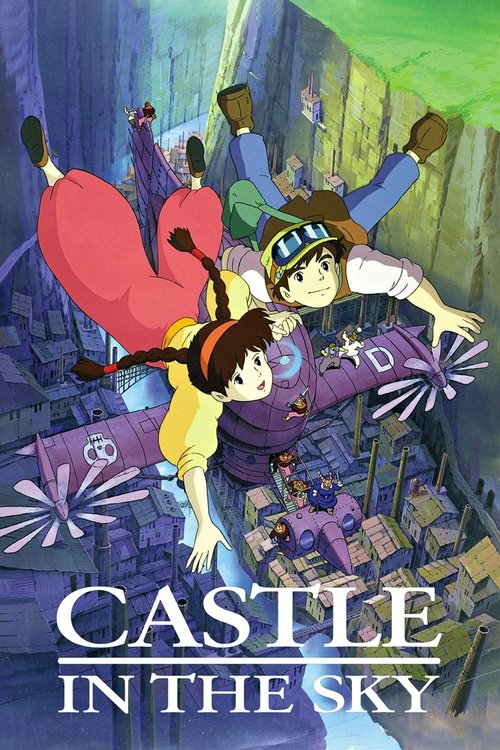
Castle in the Sky
1986 · Directed by Hayao Miyazaki
Woke Score
CriticCritic Score
Audience
Based
Critics rated this 50 points above its woke score. Among Based films, this critic score ranks #94 of 345.
Representation Casting
Score: 35/100
Features a capable female protagonist and strong female supporting character (pirate captain Dola), but this reflects character-driven storytelling from 1986 rather than modern representation initiatives.
LGBTQ+ Themes
Score: 0/100
No LGBTQ+ themes, representation, or commentary present in the film.
Feminist Agenda
Score: 25/100
Sheeta is an active, intelligent protagonist who makes crucial decisions and drives the plot, but this is 1980s character-driven feminism rather than modern feminist agenda messaging.
Racial Consciousness
Score: 0/100
No evidence of modern racial consciousness, commentary on race relations, or deliberate racial representation strategies.
Climate Crusade
Score: 40/100
The film contains strong ecological and anti-technology themes, with Laputa representing harmony destroyed by industrial ambition, but this is philosophical environmentalism rather than contemporary climate activism.
Eat the Rich
Score: 30/100
Depicts conflict between workers and those seeking to control powerful technology, with clear sympathy for the exploited, but presents this through traditional adventure narrative rather than systematic critique of capitalism.
Body Positivity
Score: 0/100
No body positivity messaging, commentary on body standards, or related themes present in the film.
Neurodivergence
Score: 0/100
No representation of or commentary on neurodivergence.
Revisionist History
Score: 0/100
The film is set in a fantasy world rather than a historical setting, so revisionist history is not applicable.
Lecture Energy
Score: 15/100
Environmental and humanist messages are woven organically into the narrative and visual storytelling rather than delivered through explicit exposition or heavy-handed commentary.


Synopsis
A young boy and a girl with a magic crystal must race against pirates and foreign agents in a search for a legendary floating castle.
Consciousness Assessment
Castle in the Sky arrives from an era before social consciousness became a consumer product, a fact that both liberates and limits it as an object of this particular analysis. Miyazaki crafted a film suffused with ecological anxiety and populated by capable women who drive the narrative, yet these elements emerge from humanist storytelling instincts rather than contemporary progressive frameworks. Sheeta possesses agency and intelligence, the film critiques industrial exploitation of nature and human life, and militarism is treated with clear disdain, but none of this registers as the deliberate cultural signaling that characterizes modern social consciousness. The film simply tells its story and trusts the audience to absorb its values.
What distinguishes this work from a genuinely woke text is its lack of self-awareness about these themes. There are no moments where the film pauses to ensure we understand its moral positions, no coded messaging designed to resonate with specific cultural constituencies, no deliberate casting choices made to satisfy representation metrics. The pirates are treated with warmth despite their criminality, suggesting a complexity in moral judgment that predates the binary thinking of contemporary social discourse. Laputa itself functions as a meditation on the dangers of unchecked power and technological dominance, but Miyazaki presents this through visual and narrative poetry rather than through polemical argument.
The film's reputation has only grown since 1986, and contemporary critics have retroactively applied modern analytical frameworks to its themes. This speaks to the universality of its concerns rather than to any deliberate woke positioning on the filmmaker's part. We are witnessing the projection of modern sensibilities onto a work that simply happened to be made by someone with strong humanist values. For the purposes of this assessment, such historical innocence must be noted, measured, and filed away.
Analysis generated by our Consciousness Algorithm
Critic Reviews
“Another example of the explosive imagination that Miyazaki has. The world of the movie looks to use early 20th Century technology, yet it's filled with these giant airships and flying cities. There's a giant, yet lovable, robot that instantly becomes one of the most memorable characters in the film. Combine all of that with an excellent and memorable Joe Hisaishi score, and you have a jewel of animation.”
“Viewed from a purely narrative perspective, Castle in the Sky is a fun, engaging two hours. Miyazaki knows how to keep things moving without belaboring certain scenes. He doesn’t speak down to his audience and isn’t afraid to mix in exposition with action. ”
“Miyazaki’s concerns with the fragility and wonder of our less tangible surroundings haunt the picture without overpowering it.”
“Its detailed fantasy world, including a dark turn-of-the-century mining town and candy-colored futuristic space bikes, is as alluring as any live-action film. Yet this two-hour story about a lost princess, a flying island and space pirates is liable to strain the patience of adults and the attention spans of children. ”
Consciousness Markers
Features a capable female protagonist and strong female supporting character (pirate captain Dola), but this reflects character-driven storytelling from 1986 rather than modern representation initiatives.
No LGBTQ+ themes, representation, or commentary present in the film.
Sheeta is an active, intelligent protagonist who makes crucial decisions and drives the plot, but this is 1980s character-driven feminism rather than modern feminist agenda messaging.
No evidence of modern racial consciousness, commentary on race relations, or deliberate racial representation strategies.
The film contains strong ecological and anti-technology themes, with Laputa representing harmony destroyed by industrial ambition, but this is philosophical environmentalism rather than contemporary climate activism.
Depicts conflict between workers and those seeking to control powerful technology, with clear sympathy for the exploited, but presents this through traditional adventure narrative rather than systematic critique of capitalism.
No body positivity messaging, commentary on body standards, or related themes present in the film.
No representation of or commentary on neurodivergence.
The film is set in a fantasy world rather than a historical setting, so revisionist history is not applicable.
Environmental and humanist messages are woven organically into the narrative and visual storytelling rather than delivered through explicit exposition or heavy-handed commentary.