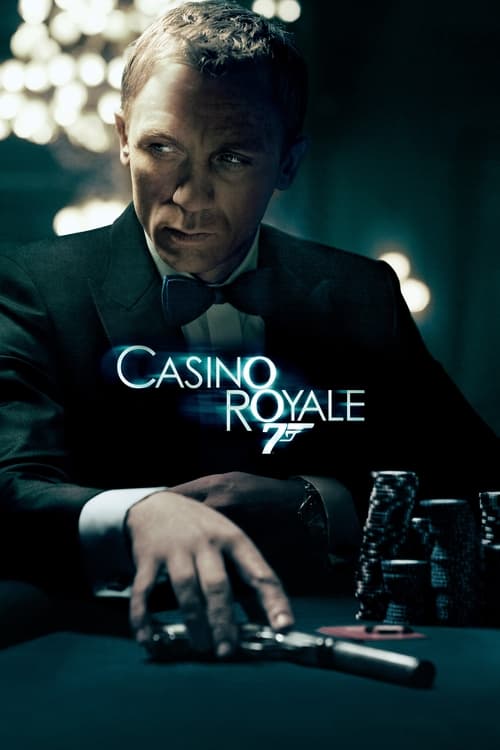
Casino Royale
2006 · Directed by Martin Campbell
Woke Score
CriticCritic Score
Audience
Ultra Based
Critics rated this 72 points above its woke score. Among Ultra Based films, this critic score ranks #366 of 1469.
Representation Casting
Score: 28/100
The cast includes actors of color in supporting roles (Jeffrey Wright, Isaach de Bankolé, Giancarlo Giannini), but their presence is not thematically or narratively foregrounded. Diversity exists without commentary.
LGBTQ+ Themes
Score: 0/100
No LGBTQ+ themes, characters, or subtext present in the film. The narrative is entirely heteronormative in its romantic and sexual dynamics.
Feminist Agenda
Score: 32/100
Eva Green's Vesper Lynd is intelligent and capable, functioning as Bond's equal in the poker game sequence. However, she ultimately serves the male protagonist's emotional arc through her tragic sacrifice. Agency is granted within traditional romantic frameworks.
Racial Consciousness
Score: 8/100
While the film casts actors of color, there is no exploration of racial themes or consciousness. Casting diversity does not translate to thematic engagement with race or colonialism.
Climate Crusade
Score: 0/100
No climate-related themes, imagery, or messaging. The film contains no environmental consciousness or climate crusade elements.
Eat the Rich
Score: 5/100
The villain is a capitalist banker, but the critique is generic villainy rather than systemic. No meaningful examination of economic structures or wealth inequality. The plot is fundamentally about protecting capitalist financial systems.
Body Positivity
Score: 0/100
No body positivity themes. The film features conventionally attractive actors in action sequences without commentary on body diversity or acceptance.
Neurodivergence
Score: 0/100
No representation of neurodivergent characters or exploration of neurodivergence. No accommodation or celebration of cognitive difference.
Revisionist History
Score: 0/100
No revisionist historical framing. The film presents conventional spy thriller narratives without reexamining historical events or perspectives.
Lecture Energy
Score: 5/100
Minimal preachy tone. The film prioritizes entertainment and action over cultural instruction. Bond's journey is emotional and physical rather than ideological.


Synopsis
Le Chiffre, a banker to the world's terrorists, is scheduled to participate in a high-stakes poker game in Montenegro, where he intends to use his winnings to establish his financial grip on the terrorist market. M sends Bond—on his maiden mission as a 00 Agent—to attend this game and prevent Le Chiffre from winning. With the help of Vesper Lynd and Felix Leiter, Bond enters the most important poker game in his already dangerous career.
Consciousness Assessment
Casino Royale represents a deliberate modernization of the Bond franchise, but one primarily concerned with aesthetic and tonal reinvention rather than progressive social consciousness. The film features a diverse supporting cast, yet their presence is incidental to the narrative rather than thematic. Eva Green's Vesper Lynd is a complex female character who functions as a genuine equal to Bond within the plot, though she ultimately exists to serve his emotional arc through tragedy. The film contains no meaningful engagement with climate issues, economic critique, body positivity, neurodivergence, or revisionist history.
The film's representation of women, while improved from earlier Bond entries, remains within traditional action-thriller parameters. Vesper Lynd's agency and intelligence are acknowledged, but she is positioned within the romantic-sacrifice narrative archetype. There is no LGBTQ+ content, no racial consciousness beyond casting diversity, and no systemic critique of capitalism or imperialism. The tone is earnest action cinema, not preachy cultural instruction, with minimal lecture energy.
For a 2006 film, Casino Royale occupies a transitional moment. It reflects modest improvements in gender representation compared to earlier Bond films, yet it predates the contemporary cultural moment when social consciousness became a measurable element of mainstream cinema. The film is competent and entertaining, but entirely innocent of the specific progressive sensibilities that define 21st-century cultural debate.
Analysis generated by our Consciousness Algorithm
Critic Reviews
“Relaunches the series by doing something I wouldn't have thought possible: It turns Bond into a human being again -- a gruffly charming yet volatile chap who may be the swank king stud of the Western world, but who still has room for rage, fear, vulnerability, love.”
“This movie is NEW from the get-go. It could be your first Bond. In fact, it was the first Bond; it was Ian Fleming's first 007 novel, and he was still discovering who the character was.”
“Casino Royale is just swell when Bond is busting up bathrooms in Prague, busting up embassies in Madagascar and busting a move in Nassau. But when he gets to, well, Casino Royale (here, in the former Yugoslav Republic of Montenegro), the film goes utterly flat.”
Consciousness Markers
The cast includes actors of color in supporting roles (Jeffrey Wright, Isaach de Bankolé, Giancarlo Giannini), but their presence is not thematically or narratively foregrounded. Diversity exists without commentary.
No LGBTQ+ themes, characters, or subtext present in the film. The narrative is entirely heteronormative in its romantic and sexual dynamics.
Eva Green's Vesper Lynd is intelligent and capable, functioning as Bond's equal in the poker game sequence. However, she ultimately serves the male protagonist's emotional arc through her tragic sacrifice. Agency is granted within traditional romantic frameworks.
While the film casts actors of color, there is no exploration of racial themes or consciousness. Casting diversity does not translate to thematic engagement with race or colonialism.
No climate-related themes, imagery, or messaging. The film contains no environmental consciousness or climate crusade elements.
The villain is a capitalist banker, but the critique is generic villainy rather than systemic. No meaningful examination of economic structures or wealth inequality. The plot is fundamentally about protecting capitalist financial systems.
No body positivity themes. The film features conventionally attractive actors in action sequences without commentary on body diversity or acceptance.
No representation of neurodivergent characters or exploration of neurodivergence. No accommodation or celebration of cognitive difference.
No revisionist historical framing. The film presents conventional spy thriller narratives without reexamining historical events or perspectives.
Minimal preachy tone. The film prioritizes entertainment and action over cultural instruction. Bond's journey is emotional and physical rather than ideological.