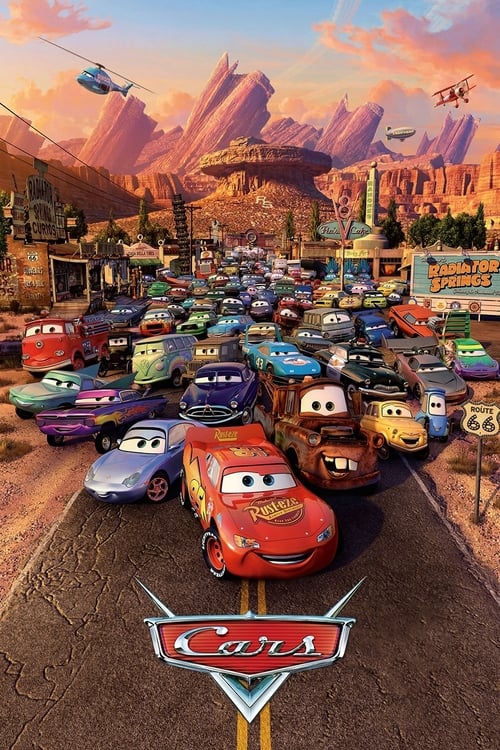
Cars
2006 · Directed by John Lasseter
Woke Score
CriticCritic Score
Audience
Ultra Based
Critics rated this 69 points above its woke score. Among Ultra Based films, this critic score ranks #530 of 1469.
Representation Casting
Score: 18/100
The cast includes some actors of color, but they occupy peripheral roles. The protagonists and emotional core are predominantly white.
LGBTQ+ Themes
Score: 0/100
No LGBTQ+ themes, representation, or subtext of any kind. The film is entirely heteronormative in its romantic framing.
Feminist Agenda
Score: 5/100
Female characters are minimal and largely confined to supporting roles. Sally exists primarily as a love interest and town historian.
Racial Consciousness
Score: 0/100
No engagement with racial themes, history, or contemporary racial consciousness. Characters of color exist without commentary or centrality.
Climate Crusade
Score: 0/100
A film celebrating car culture and gasoline-powered vehicles shows no environmental consciousness or climate considerations whatsoever.
Eat the Rich
Score: 5/100
The narrative celebrates entrepreneurship, small business, and consumer capitalism. The film mourns the decline of Route 66 commerce rather than critiquing it.
Body Positivity
Score: 0/100
Not applicable to a film about sentient vehicles. No body diversity or body positivity themes are present or relevant.
Neurodivergence
Score: 0/100
No engagement with neurodivergence, mental health, or neurodiversity representation of any kind.
Revisionist History
Score: 8/100
The film presents a romanticized, uncritical view of Route 66 and mid-century small-town America without acknowledging historical inequities or structural problems.
Lecture Energy
Score: 3/100
The film tells its story through narrative and character interaction rather than exposition or preachy messaging. Minimal lecture quality.


Synopsis
Lightning McQueen, a hotshot rookie race car driven to succeed, discovers that life is about the journey, not the finish line, when he finds himself unexpectedly detoured in the sleepy Route 66 town of Radiator Springs. On route across the country to the big Piston Cup Championship in California to compete against two seasoned pros, McQueen gets to know the town's offbeat characters.
Consciousness Assessment
Cars is a film suffused with the kind of nostalgia that asks us to cherish a vanished America without examining what made it vanish or who benefited from its existence. Radiator Springs functions as a time capsule of small-town vitality, populated by endearing eccentrics, yet the narrative never interrogates the economic forces that displaced such communities or the labor dynamics that sustained them. The film operates in a pre-contemporary-progressive register, content to celebrate American car culture and entrepreneurial spirit with the uncritical warmth of a Hallmark channel special. For a family film of this vintage, this is entirely unremarkable.
The cast, while featuring some vocal talent from actors of color, relegates these performers to supporting roles that exist outside the emotional core of the narrative. Sally receives nominal presence as a female character but serves primarily as a love interest and town historian rather than as an agent with her own arc or ambitions. The film's moral universe is one of simple interpersonal kindness and community values, which are genuine virtues, but these operate in isolation from any contemporary framework of social consciousness. There is no engagement with systemic inequality, no interrogation of representation, no climate considerations, and certainly no suggestion that the structures being celebrated might warrant critical examination.
This is a 2006 Pixar film made for children, assessed against markers that did not yet define cultural discourse. Judging it by contemporary standards would be anachronistic, yet the exercise itself demands such judgment. Cars earns its modest score not through offensive content but through the simple absence of the specific cultural sensibilities we are measuring. It is a film content to be what it is, and what it is remains largely indifferent to the progressive consciousness that would emerge as a cultural force in subsequent years.
Analysis generated by our Consciousness Algorithm
Critic Reviews
“Whether the movie will make you believe a shocking-orange stock car has a future with a lavender Carrera, it's more fun to follow than a televised freeway chase.”
“If Cars is indicative of the kind of movie we can expect from Pixar post-Disney merger, well, there's always Miyazaki.”
Consciousness Markers
The cast includes some actors of color, but they occupy peripheral roles. The protagonists and emotional core are predominantly white.
No LGBTQ+ themes, representation, or subtext of any kind. The film is entirely heteronormative in its romantic framing.
Female characters are minimal and largely confined to supporting roles. Sally exists primarily as a love interest and town historian.
No engagement with racial themes, history, or contemporary racial consciousness. Characters of color exist without commentary or centrality.
A film celebrating car culture and gasoline-powered vehicles shows no environmental consciousness or climate considerations whatsoever.
The narrative celebrates entrepreneurship, small business, and consumer capitalism. The film mourns the decline of Route 66 commerce rather than critiquing it.
Not applicable to a film about sentient vehicles. No body diversity or body positivity themes are present or relevant.
No engagement with neurodivergence, mental health, or neurodiversity representation of any kind.
The film presents a romanticized, uncritical view of Route 66 and mid-century small-town America without acknowledging historical inequities or structural problems.
The film tells its story through narrative and character interaction rather than exposition or preachy messaging. Minimal lecture quality.