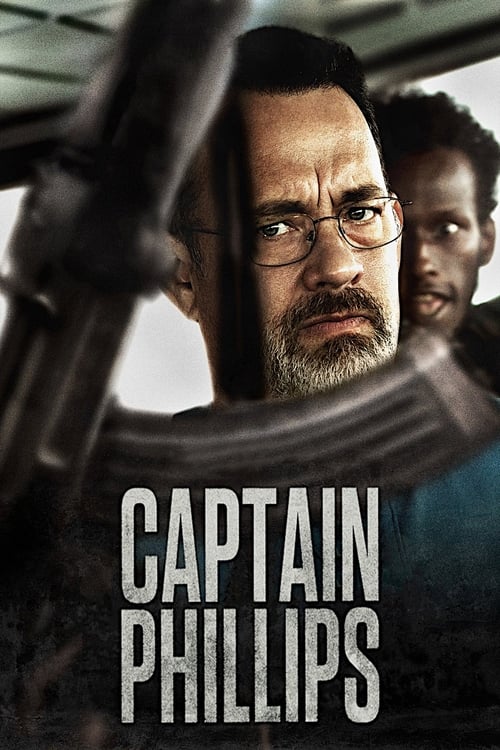
Captain Phillips
2013 · Directed by Paul Greengrass
Woke Score
CriticCritic Score
Audience
Ultra Based
Critics rated this 64 points above its woke score. Among Ultra Based films, this critic score ranks #315 of 1469.
Representation Casting
Score: 35/100
Features Somali actors in significant roles, including Barkhad Abdi in a prominent supporting part. However, the narrative privileges the white American captain's perspective, relegating Somali characters to antagonist roles without deeper character development.
LGBTQ+ Themes
Score: 0/100
No LGBTQ+ themes, characters, or representation present in the film.
Feminist Agenda
Score: 0/100
The film contains virtually no female characters and contains no feminist themes or agenda.
Racial Consciousness
Score: 25/100
While casting Somali actors, the film does not examine the systemic, economic, or political factors driving Somali piracy. Somali characters are presented as threatening rather than as products of colonialism or global economic inequality.
Climate Crusade
Score: 0/100
No climate themes or environmental consciousness present in this maritime action thriller.
Eat the Rich
Score: 15/100
The film briefly gestures toward poverty and desperation as motivators for piracy, but never critiques capitalism or global systems. The narrative ultimately celebrates American maritime commerce and military intervention.
Body Positivity
Score: 0/100
No body positivity themes or representation present in the film.
Neurodivergence
Score: 0/100
No neurodivergent characters or representation present in the film.
Revisionist History
Score: 20/100
The film dramatizes the true story with artistic license, particularly in its portrayal of Captain Phillips' heroism and actions. Real events are simplified and heightened for dramatic effect, though not fundamentally rewritten.
Lecture Energy
Score: 10/100
The film is primarily an action thriller focused on suspense and tension. Brief moments acknowledge pirate desperation, but the film avoids lecturing audiences on systemic issues or social commentary.


Synopsis
The true story of Captain Richard Phillips and the 2009 hijacking by Somali pirates of the US-flagged MV Maersk Alabama, the first American cargo ship to be hijacked in two hundred years.
Consciousness Assessment
Captain Phillips arrives as a competent maritime thriller that demonstrates the bare minimum of contemporary casting consciousness by featuring Somali actors in substantial roles, primarily through Barkhad Abdi's haunting performance as pirate leader Muse. Yet this gesture toward representation functions largely as window dressing for a fundamentally conservative narrative architecture. The film centers entirely on Tom Hanks' experience of trauma and heroism, with the Somali hijackers serving as faceless antagonists whose desperation is acknowledged but never examined. Paul Greengrass' direction prioritizes kinetic tension over any meaningful engagement with the geopolitical contexts that produce piracy from failed states.
The film's approach to its subject matter reflects a distinctly American sensibility unconcerned with systemic critique. We see poverty mentioned as motivation, but never interrogated as a product of colonialism, global capitalism, or the international systems that marginalize the Global South. The narrative implicitly endorses military intervention and celebrates maritime commerce as inherent goods. The Somali characters, despite being portrayed by Somali actors, remain largely one-dimensional obstacles to the protagonist's survival and vindication. No female characters of consequence appear, and the film contains no other markers of contemporary progressive sensibility.
This is fundamentally a film about American exceptionalism dressed in the language of individual heroism. It happened to be made in 2013, during a period when mainstream cinema was beginning to reckon with representation, but Captain Phillips resists any deeper interrogation of power, systems, or perspective. The casting of Somali actors represents progress only when compared to the alternative of hiring white actors for those roles. As a work of art, it is efficient and involving. As a cultural artifact reflecting progressive sensibilities, it remains stubbornly conventional.
Analysis generated by our Consciousness Algorithm
Critic Reviews
“It’s a breathlessly told movie; both meticulous and frenetic, sweat-soaked and methodical. It will take hold and won’t let you go, and it’s one of the most engaging movies of the year.”
“The most gripping based-on-fact film so far this year. ”
“It falls to Hanks and his movie-star presence to anchor this ambitious enterprise, and he does some of his most impressive acting without saying a word.”
“Not far below the surface Captain Phillips is also an unpleasant and uncomfortable experience, a film that’s not entirely happy with itself.”
Consciousness Markers
Features Somali actors in significant roles, including Barkhad Abdi in a prominent supporting part. However, the narrative privileges the white American captain's perspective, relegating Somali characters to antagonist roles without deeper character development.
No LGBTQ+ themes, characters, or representation present in the film.
The film contains virtually no female characters and contains no feminist themes or agenda.
While casting Somali actors, the film does not examine the systemic, economic, or political factors driving Somali piracy. Somali characters are presented as threatening rather than as products of colonialism or global economic inequality.
No climate themes or environmental consciousness present in this maritime action thriller.
The film briefly gestures toward poverty and desperation as motivators for piracy, but never critiques capitalism or global systems. The narrative ultimately celebrates American maritime commerce and military intervention.
No body positivity themes or representation present in the film.
No neurodivergent characters or representation present in the film.
The film dramatizes the true story with artistic license, particularly in its portrayal of Captain Phillips' heroism and actions. Real events are simplified and heightened for dramatic effect, though not fundamentally rewritten.
The film is primarily an action thriller focused on suspense and tension. Brief moments acknowledge pirate desperation, but the film avoids lecturing audiences on systemic issues or social commentary.