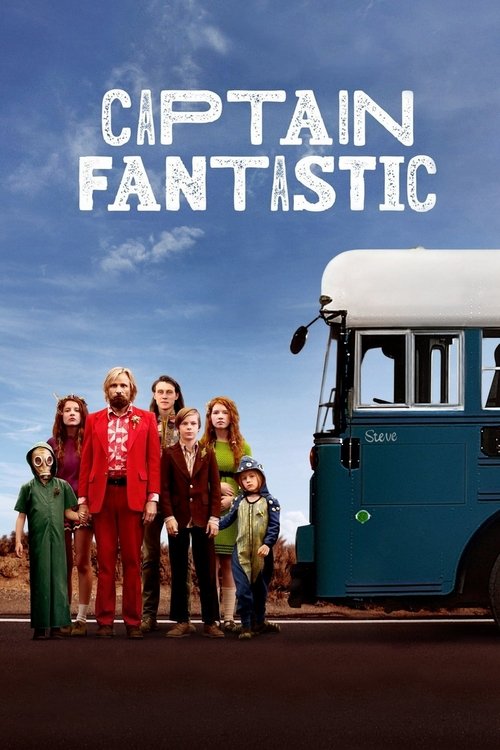
Captain Fantastic
2016 · Directed by Matt Ross
Woke Score
CriticCritic Score
Audience
Ultra Based
Critics rated this 64 points above its woke score. Among Ultra Based films, this critic score ranks #556 of 1469.
Representation Casting
Score: 15/100
The cast is predominantly white with limited racial diversity. While the film does not center racial themes, the lack of intentional diverse casting reflects the film's indifference to representation concerns.
LGBTQ+ Themes
Score: 0/100
No LGBTQ+ characters, themes, or storylines are present in the film.
Feminist Agenda
Score: 10/100
The father's ideology and control dominate the narrative. While the daughters are educated equally to the sons, there is no explicit feminist framing or exploration of gender dynamics within the family structure.
Racial Consciousness
Score: 0/100
The film does not engage with racial themes, racial identity, or racial consciousness in any meaningful way.
Climate Crusade
Score: 0/100
No climate activism, environmental messaging, or ecological consciousness is present in the narrative.
Eat the Rich
Score: 15/100
The father deliberately rejects consumer capitalism and mainstream consumer culture, but this is framed as personal philosophy and ideology rather than systemic political critique or activism.
Body Positivity
Score: 0/100
The film emphasizes rigorous physical fitness and athletic training as part of the father's educational philosophy. There is no body positivity messaging or acceptance of diverse body types.
Neurodivergence
Score: 0/100
The film contains no representation of neurodivergence or exploration of neurodivergent experiences.
Revisionist History
Score: 5/100
The father teaches his children unconventional interpretations of history and society, but the film itself does not promote or validate revisionist historical narratives.
Lecture Energy
Score: 25/100
The father frequently delivers lectures and monologues about philosophy, politics, and cultural critique, but these are presented as character traits revealing his rigidity rather than as the film's endorsed worldview.


Synopsis
Deep in the forests of the Pacific Northwest, a father devoted to raising his six kids with a rigorous physical and intellectual education is forced to leave his paradise and enter the world, beginning a journey that challenges his idea of what it means to be a parent.
Consciousness Assessment
Captain Fantastic presents the portrait of a man whose radical rejection of mainstream American culture is treated with the careful ambivalence it deserves. Ben Cash has constructed an intellectual and physical paradise in the wilderness, free from the corrupting influence of television, processed food, and conventional education. His children are indeed remarkable specimens: fluent in multiple languages, versed in classical literature, and capable of scaling mountains with disturbing ease. Yet the film refuses to either celebrate or condemn this vision wholesale. Instead, it traces the slow collision between Ben's carefully curated worldview and the messy reality of human vulnerability, grief, and the possibility that his children might want something other than what he has designed for them.
The film's ambivalence toward progressive ideology deserves particular attention. Ben's lectures on capitalism, consumerism, and the failures of contemporary civilization are presented not as wisdom but as the obsessions of a man grappling with personal loss and ideological rigidity. His children, particularly his eldest son, begin to question whether their father's anti-establishment convictions have been imposed upon them rather than chosen by them. The film suggests that even the most intellectually sound critique of society can become a prison when it is enforced without consent. There is no moment where the film validates Ben's worldview as the correct path to enlightenment; rather, it demonstrates the costs of such certainty.
What saves Captain Fantastic from being merely a gentle critique of alternative parenting is its refusal to offer easy answers. When the family enters the mainstream world, we do not see them immediately corrupted by consumer culture or television. We see them confused, sometimes struggling, sometimes thriving in unexpected ways. The film acknowledges that the outside world contains both genuine dangers and genuine possibilities. In this measured approach, Captain Fantastic remains skeptical of any ideology, whether Ben's radical individualism or the comfortable conformity of mainstream America. It is a film about the limits of any single vision of how to live, which perhaps explains why it has appealed to audiences across the political spectrum.
Analysis generated by our Consciousness Algorithm
Critic Reviews
“Captain Fantastic leaves viewers with the cheering, deeply affecting image of a dad whose superpowers lie in simply doing the best that he can.”
“Anchored by Viggo Mortensen's prismatic portrayal of Ben, this is one of the summer's nicest movie surprises, and among its wisest.”
“The movie really belongs to Mortensen, who allows Ben to be exasperating, arrogant and impatient but also warm, loving and caring. He’s a tough but adoring father, a grieving widower and an angry defender of his wife’s final wishes, and Mortensen plays all these notes and more with subtlety and grace.”
“The film is premised on a radical act that it buries beneath a grueling avalanche of quirk.”
Consciousness Markers
The cast is predominantly white with limited racial diversity. While the film does not center racial themes, the lack of intentional diverse casting reflects the film's indifference to representation concerns.
No LGBTQ+ characters, themes, or storylines are present in the film.
The father's ideology and control dominate the narrative. While the daughters are educated equally to the sons, there is no explicit feminist framing or exploration of gender dynamics within the family structure.
The film does not engage with racial themes, racial identity, or racial consciousness in any meaningful way.
No climate activism, environmental messaging, or ecological consciousness is present in the narrative.
The father deliberately rejects consumer capitalism and mainstream consumer culture, but this is framed as personal philosophy and ideology rather than systemic political critique or activism.
The film emphasizes rigorous physical fitness and athletic training as part of the father's educational philosophy. There is no body positivity messaging or acceptance of diverse body types.
The film contains no representation of neurodivergence or exploration of neurodivergent experiences.
The father teaches his children unconventional interpretations of history and society, but the film itself does not promote or validate revisionist historical narratives.
The father frequently delivers lectures and monologues about philosophy, politics, and cultural critique, but these are presented as character traits revealing his rigidity rather than as the film's endorsed worldview.