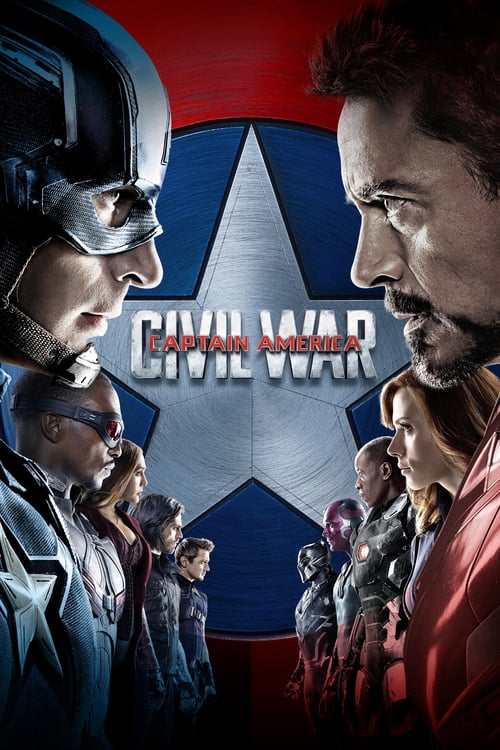
Captain America: Civil War
2016 · Directed by Joe Russo
Woke Score
CriticCritic Score
Audience
Based
Critics rated this 40 points above its woke score. Among Based films, this critic score ranks #113 of 345.
Representation Casting
Score: 55/100
Diverse ensemble cast with Chadwick Boseman's Black Panther debut and Don Cheadle as War Machine, though white male characters remain central to the narrative.
LGBTQ+ Themes
Score: 0/100
No LGBTQ+ themes, characters, or representation present in the film.
Feminist Agenda
Score: 20/100
Scarlett Johansson has some agency but remains tertiary to male leads. The film is overwhelmingly centered on male characters and male conflict.
Racial Consciousness
Score: 35/100
Black Panther's introduction is culturally significant, but his arc is limited to a revenge subplot that does not engage substantively with racial themes or consciousness.
Climate Crusade
Score: 0/100
No climate change themes or environmental consciousness present in the narrative.
Eat the Rich
Score: 30/100
The film's central conflict involves government regulation of superhuman activity, touching lightly on accountability themes without developing explicit anti-capitalist critique.
Body Positivity
Score: 5/100
Standard superhero film featuring conventionally attractive actors in peak physical condition. No body positivity themes or representation.
Neurodivergence
Score: 0/100
No representation of or engagement with neurodivergent characters or themes.
Revisionist History
Score: 0/100
The film does not engage with historical revisionism or reinterpretation of historical events.
Lecture Energy
Score: 40/100
Characters articulate political positions through dialogue and conflict, though the film prioritizes action and spectacle over sustained ideological exploration.


Synopsis
Following the events of Age of Ultron, the collective governments of the world pass an act designed to regulate all superhuman activity. This polarizes opinion amongst the Avengers, causing two factions to side with Iron Man or Captain America, which causes an epic battle between former allies.
Consciousness Assessment
Captain America: Civil War arrives as a thoroughly professional assembly of expensive action sequences and star power, a film so committed to the business of entertaining that it barely pauses to examine the political implications of its own premise. The narrative presents a conflict between government oversight and individual liberty, though the filmmakers treat this ideological schism with the same care one might apply to choosing toppings at a pizza restaurant. The introduction of Chadwick Boseman as Black Panther represents a milestone for representation in the franchise, yet his character functions primarily as a vengeful subplot rather than a genuine exploration of racial or cultural consciousness.
The film's ensemble nature ensures that no single perspective receives sustained development, which proves both its strength and its limitation. We witness arguments about accountability and power, but these remain largely abstract, delivered between fight choreography and quips. The cast includes actors of various backgrounds, yet their presence rarely extends beyond the visual satisfaction of diversity. Scarlett Johansson carries some agency within the narrative, though she remains tertiary to the male leads. This is blockbuster filmmaking at its most competent: calculating, risk-averse, and fundamentally uninterested in the deeper implications of its stated conflicts.
What emerges from viewing this film is a clear understanding of its priorities. We are watching a vehicle designed to generate box office revenue and set up future franchise entries, not a work grappling meaningfully with questions of power, justice, or social responsibility. The progressive elements present here feel less like artistic choices and more like the inevitable byproduct of casting decisions made by a studio attempting to appeal to the widest possible audience. This is not cynicism about the film so much as clarity about what it actually is.
Analysis generated by our Consciousness Algorithm
Critic Reviews
“Matching its blockbuster scale and spectacle with the smarts of a great, grown-up thriller, Captain America: Civil War is Marvel Studios’ finest film yet.”
“If there’s a risk of the Marvel ‘formula’ becoming stale, there isn’t any evidence of that here. Civil War isn’t just a damn-near-perfect popcorn crowd-pleaser; it doesn’t offer any easy answers for its combatants, or the world going forward. Team Cap or Team Iron Man? The real winner here is Team Marvel.”
“What makes Captain America: Civil War such a terrific accomplishment is the way it takes what could have been the most crass and overcrowded story to adapt as a film and instead transforms it into an examination of just who these heroes are and what impact they’ve had on the world around them, and vice versa.”
“As the feigning wears off, and Captain America: Civil War crawls to a close, you sense that the possibilities of nature have been not just exceeded but exhausted. Even the dialogue seems like a special effect: “You’re being uncharacteristically non-hyperverbal,” Black Widow remarks to Iron Man. Translation: “Say something.””
Consciousness Markers
Diverse ensemble cast with Chadwick Boseman's Black Panther debut and Don Cheadle as War Machine, though white male characters remain central to the narrative.
No LGBTQ+ themes, characters, or representation present in the film.
Scarlett Johansson has some agency but remains tertiary to male leads. The film is overwhelmingly centered on male characters and male conflict.
Black Panther's introduction is culturally significant, but his arc is limited to a revenge subplot that does not engage substantively with racial themes or consciousness.
No climate change themes or environmental consciousness present in the narrative.
The film's central conflict involves government regulation of superhuman activity, touching lightly on accountability themes without developing explicit anti-capitalist critique.
Standard superhero film featuring conventionally attractive actors in peak physical condition. No body positivity themes or representation.
No representation of or engagement with neurodivergent characters or themes.
The film does not engage with historical revisionism or reinterpretation of historical events.
Characters articulate political positions through dialogue and conflict, though the film prioritizes action and spectacle over sustained ideological exploration.