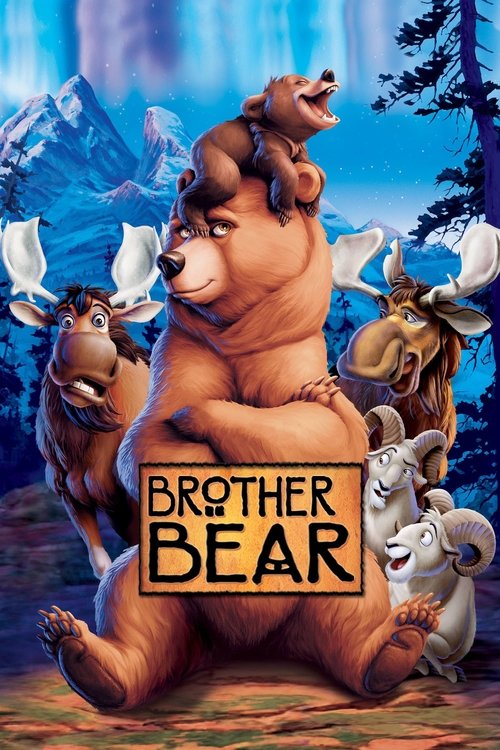
Brother Bear
2003 · Directed by Aaron Blaise
Woke Score
CriticCritic Score
Audience
Woke-Adjacent
Critics rated this 0 points above its woke score. Among Woke-Adjacent films, this critic score ranks #141 of 151.
Representation Casting
Score: 45/100
The cast includes some ethnic diversity and features indigenous voice actors in certain roles, yet the core narrative centers a non-indigenous protagonist and the film's approach to representation remains surface-level rather than substantive.
LGBTQ+ Themes
Score: 5/100
No LGBTQ+ themes or representation present in the film. The relationships depicted are entirely heteronormative and familial.
Feminist Agenda
Score: 20/100
Female characters exist in the narrative but occupy peripheral roles. The story privileges male perspectives and relationships, particularly the bond between Kenai and Koda.
Racial Consciousness
Score: 55/100
The film engages with indigenous cultural imagery and spirituality, though primarily through appropriation and aesthetic borrowing rather than genuine cultural consultation or representation of indigenous perspectives.
Climate Crusade
Score: 60/100
Environmental consciousness permeates the narrative, with emphasis on ecological interconnectedness, the natural world's intrinsic value, and humanity's relationship to wildlife. The film advocates for conservation and respect for nature.
Eat the Rich
Score: 0/100
No significant critique of capitalism or class systems. The film operates entirely within conventional commercial entertainment frameworks without interrogating economic structures.
Body Positivity
Score: 25/100
While the transformation into a bear's body could suggest acceptance of different physical forms, the narrative frames this as punishment and inconvenience rather than celebration of bodily diversity.
Neurodivergence
Score: 0/100
No representation of neurodivergent characters or engagement with neurodivergent themes. The comedy relies on physical humor and animal behavior rather than exploring cognitive difference.
Revisionist History
Score: 30/100
The film employs indigenous spiritual traditions and mythology but does so ahistorically, presenting them as timeless and abstract rather than grounded in specific historical or contemporary contexts.
Lecture Energy
Score: 50/100
The film contains explicit moral instruction about empathy and perspective-taking, delivered through dialogue and narrative structure, though it avoids the most heavy-handed preachiness that emerged in later animated features.


Synopsis
When an impulsive boy named Kenai is magically transformed into a bear, he must literally walk in another's footsteps until he learns some valuable life lessons. His courageous and often zany journey introduces him to a forest full of wildlife, including the lovable bear cub Koda, hilarious moose Rutt and Tuke, woolly mammoths and rambunctious rams.
Consciousness Assessment
Brother Bear occupies an uncomfortable middle ground between genuine cultural engagement and the kind of well-intentioned appropriation that dominated mainstream animation in the early 2000s. The film draws heavily from Tlingit and other Pacific Northwest indigenous traditions, employing spiritual transformation narratives and shamanic elements as the narrative engine for what is ultimately a coming-of-age story about a boy learning empathy. The central conceit, in which the protagonist must literally inhabit another's body to understand their perspective, carries the faint scent of progressive pedagogy, yet the execution raises questions about whose story this actually is and who benefits from its telling.
The voice cast includes some ethnic diversity, though the film's approach to indigenous representation remains fundamentally extractive. It borrows spiritual and cultural imagery without substantive engagement with contemporary indigenous communities or histories. The transformation sequence and the overall spiritual framework feel less like respectful incorporation and more like aesthetic window dressing applied to a standard Disney moral lesson. The humor, provided largely by Rick Moranis and Dave Thomas as comic relief moose characters, suggests the filmmakers understood this material as a backdrop for entertainment rather than a framework deserving of careful stewardship.
What distinguishes Brother Bear from more nakedly exploitative works is its genuine attempt at environmental consciousness and its emphasis on interconnectedness between species and individuals. The film's ecological awareness and its repeated messaging about learning to see through another's eyes demonstrates some engagement with broader progressive sensibilities. However, these elements are diluted by the film's fundamental project, which remains the domestication of indigenous spirituality into a digestible narrative for mass audiences. We are left with a film that gestures toward cultural consciousness while ultimately reinforcing the extractive patterns it pretends to critique.
Analysis generated by our Consciousness Algorithm
Critic Reviews
“A sweet celebration of brotherhood in its many forms. It gently encourages human communion with animals, nature and our fellow man. ”
“While not a masterpiece along the lines of "The Lion King," and not a super-smart witticism-fest like "Lilo and Stitch," Brother Bear is deeply heartfelt, touching, and beautiful. ”
“The end result is a pleasant experience that is more appropriate for families than for adults unaccompanied by young offspring. ”
“The characters are mechanisms who move along the plot arc from Point A to Point B. They’re not particularly memorable individuals.”
Consciousness Markers
The cast includes some ethnic diversity and features indigenous voice actors in certain roles, yet the core narrative centers a non-indigenous protagonist and the film's approach to representation remains surface-level rather than substantive.
No LGBTQ+ themes or representation present in the film. The relationships depicted are entirely heteronormative and familial.
Female characters exist in the narrative but occupy peripheral roles. The story privileges male perspectives and relationships, particularly the bond between Kenai and Koda.
The film engages with indigenous cultural imagery and spirituality, though primarily through appropriation and aesthetic borrowing rather than genuine cultural consultation or representation of indigenous perspectives.
Environmental consciousness permeates the narrative, with emphasis on ecological interconnectedness, the natural world's intrinsic value, and humanity's relationship to wildlife. The film advocates for conservation and respect for nature.
No significant critique of capitalism or class systems. The film operates entirely within conventional commercial entertainment frameworks without interrogating economic structures.
While the transformation into a bear's body could suggest acceptance of different physical forms, the narrative frames this as punishment and inconvenience rather than celebration of bodily diversity.
No representation of neurodivergent characters or engagement with neurodivergent themes. The comedy relies on physical humor and animal behavior rather than exploring cognitive difference.
The film employs indigenous spiritual traditions and mythology but does so ahistorically, presenting them as timeless and abstract rather than grounded in specific historical or contemporary contexts.
The film contains explicit moral instruction about empathy and perspective-taking, delivered through dialogue and narrative structure, though it avoids the most heavy-handed preachiness that emerged in later animated features.