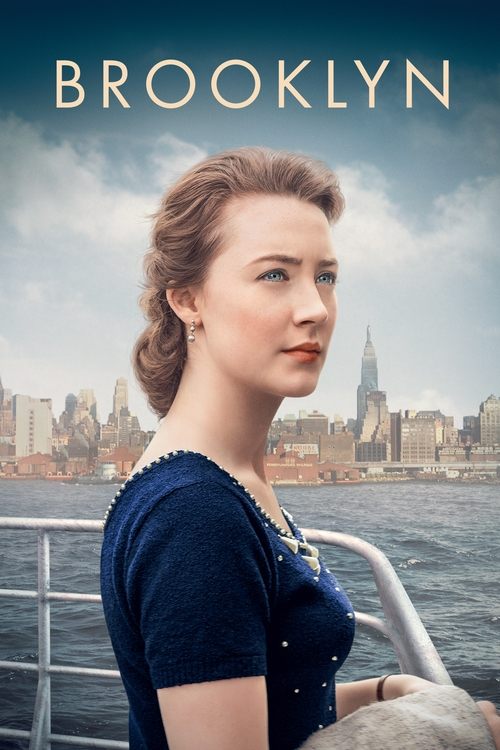
Brooklyn
2015 · Directed by John Crowley
Woke Score
CriticCritic Score
Audience
Ultra Based
Critics rated this 80 points above its woke score. Among Ultra Based films, this critic score ranks #169 of 1469.
Representation Casting
Score: 15/100
The cast is predominantly Irish, reflecting the film's setting and story authentically. However, this is casting accuracy rather than deliberate representation politics.
LGBTQ+ Themes
Score: 0/100
No LGBTQ+ themes, characters, or representation are present in the film.
Feminist Agenda
Score: 35/100
The female protagonist drives the narrative and makes autonomous choices about her future, but the film does not explicitly engage with feminist critique or gender politics. The feminism is incidental, not ideological.
Racial Consciousness
Score: 0/100
The film contains no engagement with racial themes or racial consciousness. It focuses on Irish immigration without addressing racial dynamics.
Climate Crusade
Score: 0/100
No climate-related themes or environmental consciousness appears in this historical romance.
Eat the Rich
Score: 0/100
The film does not critique capitalism or present anti-capitalist themes. Economic systems are backdrop rather than subject.
Body Positivity
Score: 0/100
Body positivity is not a thematic concern in this traditional period romance.
Neurodivergence
Score: 0/100
No neurodivergent characters or themes are present in the narrative.
Revisionist History
Score: 0/100
The film depicts 1950s Irish-American life straightforwardly without revisionist intent or reframing of historical narratives.
Lecture Energy
Score: 5/100
The film maintains a contemplative tone focused on personal drama rather than social instruction, though period details occasionally carry implicit commentary on historical constraints.


Synopsis
In 1950s Ireland and New York, young Eilis Lacey has to choose between two men and two countries.
Consciousness Assessment
Brooklyn occupies an interesting position in the contemporary film landscape: a prestige drama centered on a female protagonist making autonomous decisions about her life and romantic future, yet one that predates the full crystallization of modern progressive sensibilities. The film does center a woman's interiority and agency as the driving force of its narrative, with Saoirse Ronan's Eilis making the consequential choices that propel the story forward rather than having events happen to her. The immigrant experience is treated with dignity and emotional specificity, exploring both the vulnerability and strength required to navigate displacement and belonging.
Yet the film's progressive elements remain largely incidental rather than deliberate. The story is fundamentally a personal drama about romantic and geographic choice, not a vehicle for social consciousness. The Irish immigrant community is presented sympathetically, but without the sort of explicit framing or interrogation that characterizes modern progressive cinema. The film's feminism, if one can call it that, emerges organically from its protagonist's agency rather than from a preachy impulse to examine gender systems. We simply observe Eilis making her choice.
The film represents a pre-2015 sensibility dressed in contemporary production values. It is well-crafted and emotionally intelligent, but it exhibits none of the contemporary markers of progressive cultural consciousness that would register as genuinely woke in the modern sense. The representation of Irish characters is simply accurate casting. The female protagonist is a vehicle for a universal human story, not a statement about representation. This is a film of genuine artistic merit that operates entirely outside the framework we are meant to be measuring.
Analysis generated by our Consciousness Algorithm
Critic Reviews
“Classily and classically crafted in the best sense by director John Crowley and screenwriter Nick Hornby, this superbly acted romantic drama is set in the early 1950s and provides the feeling of being lifted into a different world altogether, so transporting is the film’s sense of time and place and social mores. ”
“A heartbreaking and poignant story about choices, country, commitments, sacrifice, and love, Brooklyn is a superb, luminous, and bittersweet portrayal of who we are, where we’ve come from, where we’re going, and the places we call home.”
“The movement of the story—from wrenching homesickness to blooming confidence and a smile on one’s stroll to work—elevates the movie into universal urban poetry.”
“The simplifications and sanitizations of Brooklyn would be only dreary if they merely served the purpose of a streamlined and simplified story-telling mechanism. What renders them odious is the ethos that they embody, the worldview that they package.”
Consciousness Markers
The cast is predominantly Irish, reflecting the film's setting and story authentically. However, this is casting accuracy rather than deliberate representation politics.
No LGBTQ+ themes, characters, or representation are present in the film.
The female protagonist drives the narrative and makes autonomous choices about her future, but the film does not explicitly engage with feminist critique or gender politics. The feminism is incidental, not ideological.
The film contains no engagement with racial themes or racial consciousness. It focuses on Irish immigration without addressing racial dynamics.
No climate-related themes or environmental consciousness appears in this historical romance.
The film does not critique capitalism or present anti-capitalist themes. Economic systems are backdrop rather than subject.
Body positivity is not a thematic concern in this traditional period romance.
No neurodivergent characters or themes are present in the narrative.
The film depicts 1950s Irish-American life straightforwardly without revisionist intent or reframing of historical narratives.
The film maintains a contemplative tone focused on personal drama rather than social instruction, though period details occasionally carry implicit commentary on historical constraints.