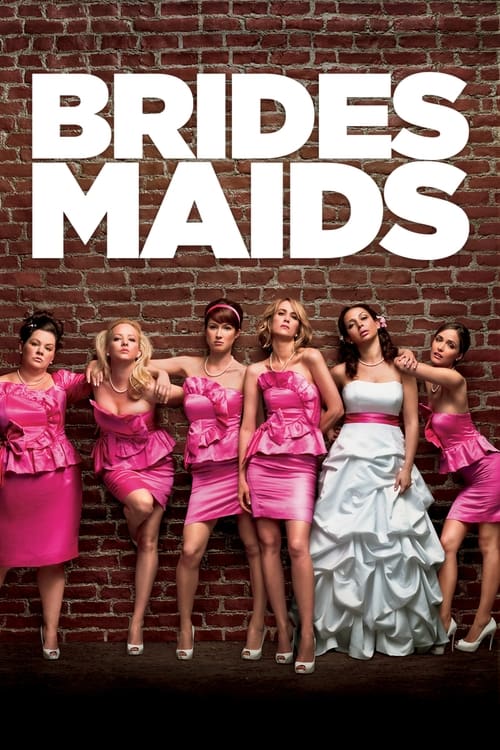
Bridesmaids
2011 · Directed by Paul Feig
Woke Score
CriticCritic Score
Audience
Woke-Adjacent
Critics rated this 27 points above its woke score. Among Woke-Adjacent films, this critic score ranks #61 of 151.
Representation Casting
Score: 25/100
The cast is predominantly white with no significant racial diversity among the main or supporting characters. While the film centers women, the representation remains limited to a narrow demographic slice.
LGBTQ+ Themes
Score: 0/100
No LGBTQ+ themes, characters, or storylines are present in the film. Sexual orientation and gender identity are not addressed.
Feminist Agenda
Score: 65/100
The film centers female friendship and agency, allowing women to be complex, flawed, and comedically crude. However, the narrative still culminates in romantic resolution with a man, limiting its systemic feminist critique.
Racial Consciousness
Score: 0/100
The film does not engage with race, racial identity, or systemic racism. The homogeneity of the cast and setting goes unexamined.
Climate Crusade
Score: 0/100
Climate change and environmental concerns are entirely absent from the film's narrative and thematic concerns.
Eat the Rich
Score: 15/100
The film depicts consumer excess and wedding industry hyper-consumption, but treats these as comedic backdrop rather than subjects of sustained critique. No systemic interrogation of capitalism is present.
Body Positivity
Score: 35/100
Melissa McCarthy's larger body is present on screen without constant commentary, which was notable for mainstream comedy at the time. However, her character is still defined partly by her physical comedy and the film does not systematically champion body diversity.
Neurodivergence
Score: 0/100
No neurodivergent characters or themes are represented in the film.
Revisionist History
Score: 0/100
The film does not engage with historical narrative or revisionist framings of historical events.
Lecture Energy
Score: 20/100
The film carries an implicit message about female solidarity and empowerment through its narrative structure, but does not explicitly didactize or lecture about social issues.


Synopsis
Annie's life is a mess. But when she finds out her lifetime best friend is engaged, she simply must serve as Lillian's maid of honor. Though lovelorn and broke, Annie bluffs her way through the expensive and bizarre rituals. With one chance to get it perfect, she'll show Lillian and her bridesmaids just how far you'll go for someone you love.
Consciousness Assessment
Bridesmaids occupies an unusual position in the contemporary cultural canon. Released in 2011, it predates the full crystallization of modern progressive sensibilities by several years, yet it was immediately hailed as a watershed moment for women in comedy. The film centers female friendship and desire without apology, and Melissa McCarthy's performance became a touchstone for discussions about body representation in mainstream comedy. However, the film's progressive credentials are largely rooted in its basic premise rather than any systematic engagement with contemporary social consciousness. The narrative framework remains conventionally romantic: a woman's arc is still oriented toward resolution with a man, and the film's politics are more about expanding what women can do in comedic spaces (be loud, be crude, fail spectacularly) instead of interrogating power structures or systemic inequality.
The casting is predominantly white, with a supporting ensemble that includes Rose Byrne, Ellie Kemper, and Wendi McLendon-Covey. There is no significant engagement with racial consciousness or any attempt to interrogate the homogeneity of the wedding industry being satirized. The film does not grapple with class in any meaningful way, despite its central character's economic precarity serving as a plot device. Climate, disability representation, and revisionist history do not factor into the narrative. The "lecture energy" is minimal, though the film does carry an implicit message about female empowerment through solidarity.
What Bridesmaids actually represents is a successful case of women claiming space in an R-rated comedy genre that had been male-dominated. This was culturally significant in 2011, but it is not the same as embodying contemporary progressive consciousness. The film's legacy has been somewhat complicated in retrospect by its limited engagement with actual diversity and its reliance on familiar romantic comedy beats. Viewing it now requires separating its genuine achievement in expanding comedic possibilities for women from any claim that it was systematically engaged with modern social justice frameworks.
Analysis generated by our Consciousness Algorithm
Critic Reviews
“She's an Everywoman you can believe in, showcased in the kind of deft comedy of feminine passion - where deep despair meets Wilson Phillips - that a great many people have been waiting for. Now that Wiig and company have built it, will they come?”
“Bridesmaids is hilariously funny, but what makes it exhilarating is how boldly it defies that conventional wisdom about what men and women like. ”
“By the time two hours had dragged by, I felt a lot like I had sat through a five-hour wedding.”
Consciousness Markers
The cast is predominantly white with no significant racial diversity among the main or supporting characters. While the film centers women, the representation remains limited to a narrow demographic slice.
No LGBTQ+ themes, characters, or storylines are present in the film. Sexual orientation and gender identity are not addressed.
The film centers female friendship and agency, allowing women to be complex, flawed, and comedically crude. However, the narrative still culminates in romantic resolution with a man, limiting its systemic feminist critique.
The film does not engage with race, racial identity, or systemic racism. The homogeneity of the cast and setting goes unexamined.
Climate change and environmental concerns are entirely absent from the film's narrative and thematic concerns.
The film depicts consumer excess and wedding industry hyper-consumption, but treats these as comedic backdrop rather than subjects of sustained critique. No systemic interrogation of capitalism is present.
Melissa McCarthy's larger body is present on screen without constant commentary, which was notable for mainstream comedy at the time. However, her character is still defined partly by her physical comedy and the film does not systematically champion body diversity.
No neurodivergent characters or themes are represented in the film.
The film does not engage with historical narrative or revisionist framings of historical events.
The film carries an implicit message about female solidarity and empowerment through its narrative structure, but does not explicitly didactize or lecture about social issues.