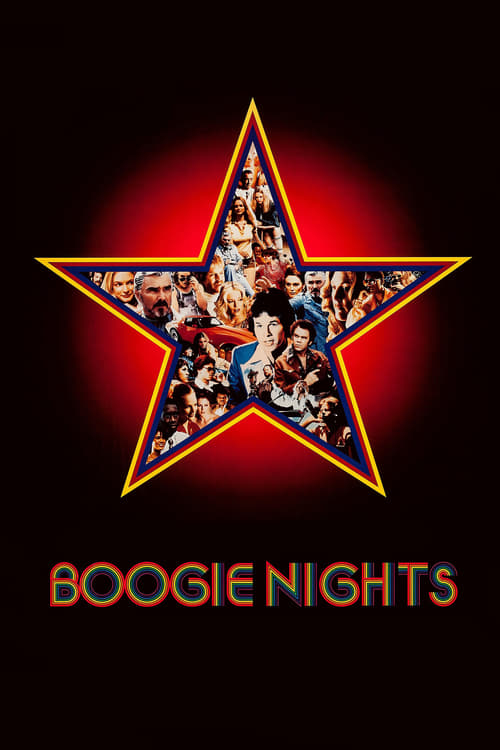
Boogie Nights
1997 · Directed by Paul Thomas Anderson
Woke Score
CriticCritic Score
Audience
Based
Critics rated this 64 points above its woke score. Among Based films, this critic score ranks #40 of 345.
Representation Casting
Score: 15/100
The ensemble cast includes Don Cheadle and Luis Guzmán in supporting roles, reflecting some diversity in the cast. However, this diversity appears organic to the story's setting rather than driven by deliberate representation goals.
LGBTQ+ Themes
Score: 20/100
John C. Reilly's character exhibits gay or bisexual coding, and there are LGBTQ characters present in the ensemble. However, these characters are not central to the narrative, and the film does not foreground LGBTQ themes or issues.
Feminist Agenda
Score: 5/100
Female characters, particularly Julianne Moore's Amber Waves, are portrayed with empathy but remain largely positioned within the male gaze. The film does not advance feminist critique or examine power dynamics from a progressive feminist perspective.
Racial Consciousness
Score: 10/100
While the cast includes performers of color, the film does not engage with racial themes or consciousness as a central or even peripheral concern. Racial dynamics are not examined or foregrounded.
Climate Crusade
Score: 0/100
No evidence of climate-related themes, environmental consciousness, or ecological concern in the film.
Eat the Rich
Score: 35/100
The film functions as a critique of American capitalism through the microcosm of the porn industry, depicting the industry's transition from idealistic artistry to profit-driven video production. However, this critique lacks the explicit ideological framing of contemporary anti-capitalist progressive cinema.
Body Positivity
Score: 0/100
No evidence of body positivity messaging or deliberate challenge to conventional beauty standards. The film engages with bodies as objects of desire and commodification rather than as sites of empowerment.
Neurodivergence
Score: 0/100
No representation of neurodivergent characters or engagement with neurodiversity as a thematic concern.
Revisionist History
Score: 0/100
The film does not reframe historical narratives or engage in revisionist history. It presents the 1970s-80s porn industry as a historical document rather than reinterpreting the past through a contemporary progressive lens.
Lecture Energy
Score: 8/100
While the film contains implicit social critique regarding capitalism and the commodification of sex, it rarely adopts an explicit preachy tone. The critique emerges through narrative and character rather than through direct messaging or heavy-handed exposition.


Synopsis
Set in 1977, back when sex was safe, pleasure was a business and business was booming, idealistic porn producer Jack Horner aspires to elevate his craft to an art form. Horner discovers Eddie Adams, a hot young talent working as a busboy in a nightclub, and welcomes him into the extended family of movie-makers, misfits and hangers-on that are always around. Adams' rise from nobody to a celebrity adult entertainer is meteoric, and soon the whole world seems to know his porn alter ego, "Dirk Diggler". Now, when disco and drugs are in vogue, fashion is in flux and the party never seems to stop, Adams' dreams of turning sex into stardom are about to collide with cold, hard reality.
Consciousness Assessment
Paul Thomas Anderson's Boogie Nights is a film firmly of its 1997 moment, a sprawling examination of the adult film industry as a crucible of American capitalism and self-delusion. The work displays no particular investment in the progressive cultural markers that would later come to dominate critical discourse. Anderson treats his characters with anthropological interest rather than ideological purpose, documenting their rise and fall through the industry's transition from film to video with the detachment of a naturalist observing behavioral patterns. The ensemble cast includes performers of various backgrounds, yet this diversity emerges from the story's authentic milieu rather than from any deliberate commitment to representation for its own sake.
What modest progressive sensibilities the film does contain stem almost entirely from its critique of capitalism and the commodification of the human body. The industry itself becomes a mirror for American ambition and its corrupting effects, with the shift from celluloid to videotape serving as a metaphor for the decade's transition from idealism to naked financial calculation. Yet this critique lacks the preachy quality or explicit social consciousness one would associate with contemporary progressive filmmaking. The film simply shows us the machinery of desire and profit without lecturing us about its mechanisms.
The portrayal of female characters deserves particular scrutiny. Julianne Moore's performance as Amber Waves carries considerable pathos, yet the film positions women primarily within the male gaze, their agency circumscribed by the industry that surrounds them. There is no effort to invert or interrogate this dynamic from a feminist framework. The film is interested in masculinity as a construct and a performance, but not in advancing any particular thesis about gender relations. It is a work of artistic ambition and considerable technical skill, yet one that predates and remains largely untouched by the social consciousness that would later reshape cinema.
Analysis generated by our Consciousness Algorithm
Critic Reviews
“Writer-director Paul Thomas Anderson has perfectly wedded form to function by filming Boogie Nights in a style suggesting the grainy texture of porn and the ambivalence of the era.”
“Anderson is young enough to be post-hip and post-ironic, if such terms are possible.”
“While it's very funny, Boogie Nights taps into something much deeper with its on-target depiction of the shifting political and social tides of the '70s and '80s and thoughtful relationships between characters. It's a deeply satisfying movie.”
“It's possible to be dazzled by a movie and still not like it very much.”
Consciousness Markers
The ensemble cast includes Don Cheadle and Luis Guzmán in supporting roles, reflecting some diversity in the cast. However, this diversity appears organic to the story's setting rather than driven by deliberate representation goals.
John C. Reilly's character exhibits gay or bisexual coding, and there are LGBTQ characters present in the ensemble. However, these characters are not central to the narrative, and the film does not foreground LGBTQ themes or issues.
Female characters, particularly Julianne Moore's Amber Waves, are portrayed with empathy but remain largely positioned within the male gaze. The film does not advance feminist critique or examine power dynamics from a progressive feminist perspective.
While the cast includes performers of color, the film does not engage with racial themes or consciousness as a central or even peripheral concern. Racial dynamics are not examined or foregrounded.
No evidence of climate-related themes, environmental consciousness, or ecological concern in the film.
The film functions as a critique of American capitalism through the microcosm of the porn industry, depicting the industry's transition from idealistic artistry to profit-driven video production. However, this critique lacks the explicit ideological framing of contemporary anti-capitalist progressive cinema.
No evidence of body positivity messaging or deliberate challenge to conventional beauty standards. The film engages with bodies as objects of desire and commodification rather than as sites of empowerment.
No representation of neurodivergent characters or engagement with neurodiversity as a thematic concern.
The film does not reframe historical narratives or engage in revisionist history. It presents the 1970s-80s porn industry as a historical document rather than reinterpreting the past through a contemporary progressive lens.
While the film contains implicit social critique regarding capitalism and the commodification of sex, it rarely adopts an explicit preachy tone. The critique emerges through narrative and character rather than through direct messaging or heavy-handed exposition.