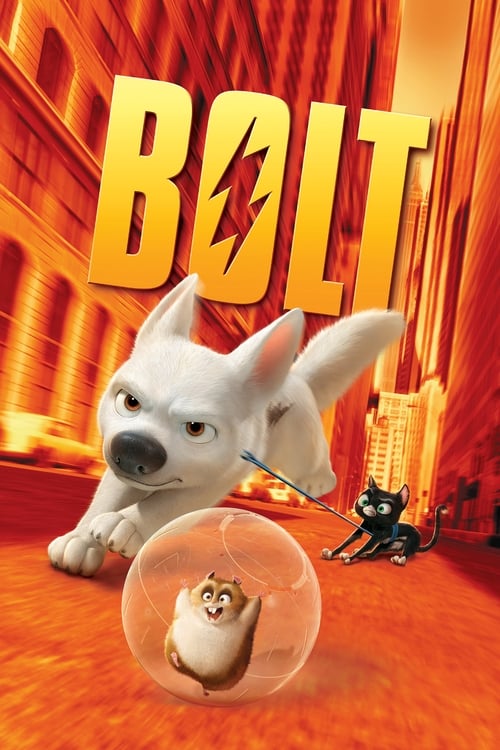
Bolt
2008 · Directed by Chris Williams
Woke Score
CriticCritic Score
Audience
Ultra Based
Critics rated this 55 points above its woke score. Among Ultra Based films, this critic score ranks #709 of 1469.
Representation Casting
Score: 15/100
The cast features a white male dog protagonist and white female child co-star. Minimal diversity in primary or supporting roles with any narrative significance.
LGBTQ+ Themes
Score: 0/100
No LGBTQ+ characters, themes, or representation present in the narrative.
Feminist Agenda
Score: 20/100
Penny demonstrates agency and bravery but functions primarily as motivation for the male protagonist's arc rather than having her own centered narrative.
Racial Consciousness
Score: 5/100
The film operates in a colorblind universe with no engagement with racial themes or consciousness.
Climate Crusade
Score: 0/100
No environmental or climate-related themes present in the narrative.
Eat the Rich
Score: 10/100
Mild satire of Hollywood commodification and the entertainment industry, but critique is superficial and not systemic.
Body Positivity
Score: 0/100
No emphasis on body diversity or body positivity themes. Characters are simply designed without particular consideration of such issues.
Neurodivergence
Score: 0/100
No representation of neurodivergent characters or engagement with neurodiversity themes.
Revisionist History
Score: 0/100
Not applicable to a contemporary fictional narrative set in a fictional universe.
Lecture Energy
Score: 15/100
Gentle moral lessons about reality versus illusion and the importance of family are embedded in the story rather than delivered heavy-handedly.


Synopsis
Bolt is the star of the biggest show in Hollywood. The only problem is, he thinks it's real. After he's accidentally shipped to New York City and separated from Penny, his beloved co-star and owner, Bolt must harness all his "super powers" to find a way home.
Consciousness Assessment
Bolt arrives as a relic from a simpler era of Disney animation, before the House of Mouse began its earnest conversion into a progressive institution. The film concerns itself with the metaphysical quandaries of a delusional white dog and his relationship to a young girl named Penny, which is to say it concerns itself with nothing that would trouble the sleep of a cultural studies major circa 2024. The narrative proceeds from the assumption that reality is objective and that a dog cannot actually possess superpowers, a stance refreshingly materialist were it not so banal.
The supporting cast includes a street cat who exists primarily to facilitate the plot and a pigeon who serves no narrative function whatsoever. Representation, in the modern sense, is not merely absent but appears never to have been considered. The film's satirical jabs at the entertainment industry amount to little more than gentle ribbing, suggesting that Hollywood is perhaps a bit silly, without advancing any systemic critique or questioning the economic structures that produce such commodification. One detects no trace of contemporary progressive consciousness in its construction.
This is a film content to entertain children with slapstick humor and a dog's misadventure in New York City. It is neither offensive nor aware. It exists in a pre-partisan space, which is to say a space utterly foreign to the cultural moment we now inhabit. In the vocabulary of contemporary social consciousness, Bolt registers as essentially inert.
Analysis generated by our Consciousness Algorithm
Critic Reviews
“There's something both simple and sweet about Bolt, yet epic, that's entirely surprising.”
“Bolt breaks no great new stylistic ground -- and yet it's a sturdy beaut.”
“Bolt has the magical quality of great animation, the ability to touch us without the hint of preachiness or manipulation.”
“It's a seriously withholding action comedy, stingy on the wit, charm, jokes, narrative satisfactions and animals with personalities sharp enough for the big screen, either in 2-D or 3-D.”
Consciousness Markers
The cast features a white male dog protagonist and white female child co-star. Minimal diversity in primary or supporting roles with any narrative significance.
No LGBTQ+ characters, themes, or representation present in the narrative.
Penny demonstrates agency and bravery but functions primarily as motivation for the male protagonist's arc rather than having her own centered narrative.
The film operates in a colorblind universe with no engagement with racial themes or consciousness.
No environmental or climate-related themes present in the narrative.
Mild satire of Hollywood commodification and the entertainment industry, but critique is superficial and not systemic.
No emphasis on body diversity or body positivity themes. Characters are simply designed without particular consideration of such issues.
No representation of neurodivergent characters or engagement with neurodiversity themes.
Not applicable to a contemporary fictional narrative set in a fictional universe.
Gentle moral lessons about reality versus illusion and the importance of family are embedded in the story rather than delivered heavy-handedly.