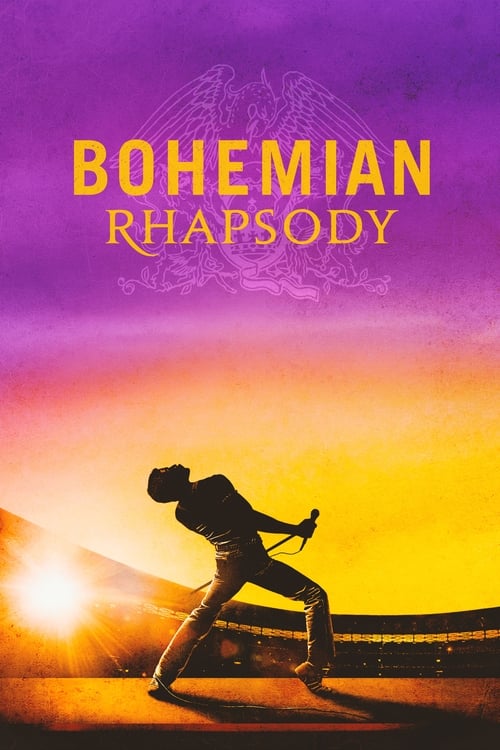
Bohemian Rhapsody
2018 · Directed by Bryan Singer
Woke Score
CriticCritic Score
Audience
Based
Critics rated this 21 points above its woke score. Among Based films, this critic score ranks #309 of 345.
Representation Casting
Score: 35/100
The cast reflects some diversity with Ben Hardy as Roger Taylor and Joseph Mazzello as John Deacon, but this appears circumstantial to the historical record rather than deliberate casting choices. Women and people of color are present but largely peripheral.
LGBTQ+ Themes
Score: 42/100
The film centers on a gay icon but treats his sexuality with notable circumspection. Mercury's relationships are presented ambiguously, with emphasis on his heterosexual connection to Mary Austin. His queerness is treated as a personal failing rather than an integral aspect of his identity.
Feminist Agenda
Score: 28/100
Female characters exist primarily in relation to male leads. Mary Austin and Lucy Boynton's character serve supporting functions without significant agency or development. The film's worldview remains male-centered.
Racial Consciousness
Score: 22/100
While the cast includes people of color reflecting historical reality, the film makes no particular effort to examine race or foreground diverse perspectives. Race is invisible to the narrative.
Climate Crusade
Score: 0/100
Climate concerns are entirely absent from this biographical drama, as would be expected from a film set in the 1970s and 1980s with no environmental themes.
Eat the Rich
Score: 8/100
The film celebrates the accumulation of wealth, fame, and excess. Queen's rise to stardom is presented as unambiguous triumph. There is no critique of capitalism or commodity culture.
Body Positivity
Score: 15/100
The film presents Rami Malek's performance of Mercury's physique without commentary, but the narrative associates Mercury's physical appearance and lifestyle choices with moral decline and recklessness.
Neurodivergence
Score: 0/100
Neurodivergence is not addressed in this biographical film, which treats Mercury's personality and behavior as character flaws rather than examining any neurological dimensions.
Revisionist History
Score: 38/100
The film takes considerable liberties with historical accuracy and chronology, particularly regarding Mercury's personal relationships and the circumstances of his death. These revisions tend toward emotional rather than political reinterpretation.
Lecture Energy
Score: 25/100
While the film occasionally includes period-specific social commentary, it largely avoids preachy messaging. Its ideology is implicit rather than explicitly stated, though the conservative moral framework is detectable.


Synopsis
Singer Freddie Mercury, guitarist Brian May, drummer Roger Taylor and bass guitarist John Deacon take the music world by storm when they form the rock 'n' roll band Queen in 1970. Hit songs become instant classics. When Mercury's increasingly wild lifestyle starts to spiral out of control, Queen soon faces its greatest challenge yet – finding a way to keep the band together amid the success and excess.
Consciousness Assessment
Bohemian Rhapsody presents a curious case of a film that wants to tell the story of Freddie Mercury, one of rock's most flamboyant and unapologetically queer figures, while simultaneously remaining deeply uncomfortable with the implications of that fact. The narrative treats Mercury's sexuality with the delicacy of someone handling an artifact in a museum, present but never quite acknowledged as the central fact of his existence. His relationship with Mary Austin receives far more screen time and emotional weight than his long-term partnership with Jim Hutton, a choice that speaks volumes about the film's priorities. The band members are portrayed with reasonable ethnic diversity in their supporting roles, though this appears incidental rather than ideological.
The film's approach to Mercury's personal struggles veers dangerously close to the tragic gay man archetype. His sexuality is presented as a liability, something that pulls him away from the "real" work of making music with the band. When he finally pursues his own identity and desires, the film frames this as a descent into hedonism that nearly destroys everything. This moral framework, while narratively coherent, reflects a distinctly conservative sensibility about what constitutes responsible living. The AIDS crisis is mentioned only in passing, treated as a plot point rather than a historical moment worthy of examination. A film about Freddie Mercury released in 2018 that cannot bring itself to genuinely grapple with queerness beyond coded references and allusions falls short of the cultural moment.
The film does feature a diverse supporting cast reflecting the historical record, and it presents women without particular degradation. However, these elements feel like the natural result of casting actual historical figures rather than any commitment to progressive representation. The working-class origins of the band members receive some attention, but the film is fundamentally a celebration of stardom and excess rather than any critique of it. A competent biopic that achieves commercial success by making its subject legible to mainstream audiences, which means, in practice, making him less queer.
Analysis generated by our Consciousness Algorithm
Critic Reviews
“You will not see a more perfect and imperfect rock and roll biopic than Bohemian Rhapsody, which does many things extremely well, other things sort of average, and one thing flawlessly: capturing the immense charisma and panache of Queen singer Freddie Mercury. Jamie Foxx’s full-body inhabitation of Ray Charles just got some competition at the top.”
“Deftly tweaking the tropes of rock biopics, this drama of singer Freddie Mercury and British hitmakers Queen dazzlingly captures an era, a man and the universal quest for identity.”
“Appropriately for a group known for its theatrical, crowd-pleasing tunes, this authorised-by-the-band biopic carries itself lightly, serving up familiar plot points with panache and a sense of humour, while at the same time investing in the story’s emotional through-line, building to a genuinely moving climax.”
“The only redeeming value of Bohemian Rhapsody is it’s so bad, there’s plenty of room left for a much better biopic about the one and only Freddie Mercury.”
Consciousness Markers
The cast reflects some diversity with Ben Hardy as Roger Taylor and Joseph Mazzello as John Deacon, but this appears circumstantial to the historical record rather than deliberate casting choices. Women and people of color are present but largely peripheral.
The film centers on a gay icon but treats his sexuality with notable circumspection. Mercury's relationships are presented ambiguously, with emphasis on his heterosexual connection to Mary Austin. His queerness is treated as a personal failing rather than an integral aspect of his identity.
Female characters exist primarily in relation to male leads. Mary Austin and Lucy Boynton's character serve supporting functions without significant agency or development. The film's worldview remains male-centered.
While the cast includes people of color reflecting historical reality, the film makes no particular effort to examine race or foreground diverse perspectives. Race is invisible to the narrative.
Climate concerns are entirely absent from this biographical drama, as would be expected from a film set in the 1970s and 1980s with no environmental themes.
The film celebrates the accumulation of wealth, fame, and excess. Queen's rise to stardom is presented as unambiguous triumph. There is no critique of capitalism or commodity culture.
The film presents Rami Malek's performance of Mercury's physique without commentary, but the narrative associates Mercury's physical appearance and lifestyle choices with moral decline and recklessness.
Neurodivergence is not addressed in this biographical film, which treats Mercury's personality and behavior as character flaws rather than examining any neurological dimensions.
The film takes considerable liberties with historical accuracy and chronology, particularly regarding Mercury's personal relationships and the circumstances of his death. These revisions tend toward emotional rather than political reinterpretation.
While the film occasionally includes period-specific social commentary, it largely avoids preachy messaging. Its ideology is implicit rather than explicitly stated, though the conservative moral framework is detectable.