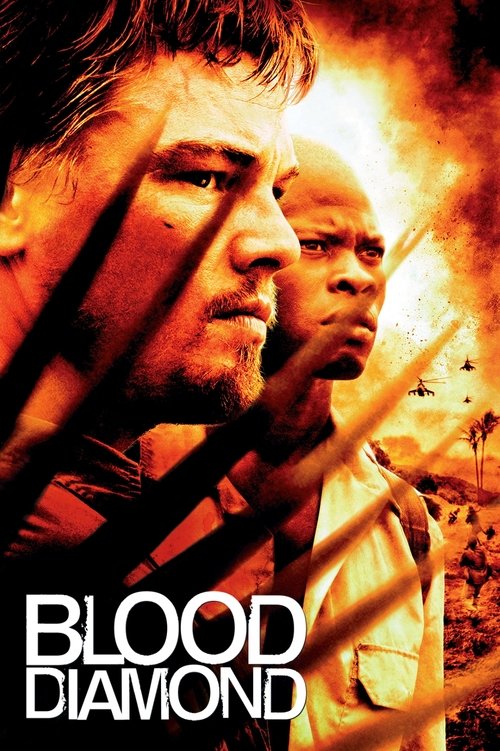
Blood Diamond
2006 · Directed by Edward Zwick
Woke Score
CriticCritic Score
Audience
Woke-Adjacent
Critics rated this 22 points above its woke score. Among Woke-Adjacent films, this critic score ranks #104 of 151.
Representation Casting
Score: 35/100
The film features significant African cast members, including Djimon Hounsou in a substantial role, but the narrative structure privileges Leonardo DiCaprio's white character as the moral center and driver of the plot, reflecting typical Hollywood savior dynamics.
LGBTQ+ Themes
Score: 0/100
No LGBTQ+ themes or representation present in the film.
Feminist Agenda
Score: 15/100
Jennifer Connelly appears in a supporting role as a journalist, but her character is largely peripheral to the main narrative and functions more as a love interest than as a developed protagonist with agency.
Racial Consciousness
Score: 55/100
The film explicitly addresses colonial exploitation, resource extraction, and the specific brutality inflicted on African populations, demonstrating awareness of racialized violence and systemic oppression, though filtered through a white protagonist's perspective.
Climate Crusade
Score: 0/100
No climate-related themes or environmental crusade messaging present in the film.
Eat the Rich
Score: 60/100
The film contains substantial critique of capitalist exploitation through its examination of conflict diamonds, corporate complicity in violence, and the diamond industry's role in fueling African civil wars.
Body Positivity
Score: 0/100
No body positivity messaging or related themes present in the film.
Neurodivergence
Score: 0/100
No representation of neurodivergence or related themes in the film.
Revisionist History
Score: 25/100
While the film depicts a real historical conflict, it simplifies and dramatizes events primarily through a fictional three-character narrative, potentially reshaping historical understanding to serve plot requirements.
Lecture Energy
Score: 40/100
The film includes expository dialogue explaining the conflict diamond trade and its mechanisms, though it integrates these elements into character conversations rather than pure preachy exposition.


Synopsis
An ex-mercenary turned smuggler. A Mende fisherman. Amid the explosive civil war overtaking 1999 Sierra Leone, these men join for two desperate missions: recovering a rare pink diamond of immense value and rescuing the fisherman's son, conscripted as a child soldier into the brutal rebel forces ripping a swath of torture and bloodshed countrywide.
Consciousness Assessment
Blood Diamond presents itself as a morally urgent thriller about conflict diamonds and child soldiers in Sierra Leone, deploying all the aesthetic machinery of liberal guilt cinema. The film operates within a familiar framework where African suffering serves as a narrative backdrop for the redemption of a white American smuggler, with Djimon Hounsou's Mende fisherman functioning primarily as a vehicle for DiCaprio's character arc. This narrative economy, however well-intentioned, reflects the unstated assumption that Western audiences require a white protagonist to engage with African atrocity. The film does make genuine effort to depict the brutality of the RUF rebellion and the exploitation of conflict minerals, elements that carry real social consciousness about global capitalism and resource extraction.
What complicates any reading of the film's progressive credentials is its fundamental reliance on a savior narrative where the white smuggler's transformation drives the plot forward. The African characters, while present and occasionally given agency, remain secondary to this arc of moral awakening. The film engages substantively with anti-capitalist critique regarding the diamond industry, and it does not shy away from depicting violence and systemic oppression. Yet this engagement exists alongside troubling representational choices. The film received five Academy Award nominations, suggesting institutional recognition, though these came primarily in technical categories rather than reflecting some progressive breakthrough in casting or narrative structure.
The film's approach to depicting Sierra Leone is documentary-adjacent in its commitment to showing specific atrocities, which carries a certain integrity, but this very specificity never quite transcends the adventure-thriller framework that shapes the entire enterprise. Blood Diamond occupies an awkward middle ground, sincere in its condemnation of resource extraction while remaining structurally committed to white Western protagonists navigating African crises. It is a film that wants to be socially conscious without fully interrogating the mechanisms through which it achieves that consciousness.
Analysis generated by our Consciousness Algorithm
Critic Reviews
“Essentially a romantic adventure story with politics in the background--an old-fashioned movie, I suppose, but exciting and stunningly well made.”
“Action-adventure pictures have a lamentable tendency toward mindlessness, but Edward Zwick's epic story has numerous virtues apart from suspense and spectacle.”
“Not that Diamond skimps on the social commentary; far from it. But it makes its points without too much breast-beating, caching its polemic within a tough-minded entertainment.”
“Director Edward Zwick tried to make a great movie, but somewhere in the process he forgot to make a good one.”
Consciousness Markers
The film features significant African cast members, including Djimon Hounsou in a substantial role, but the narrative structure privileges Leonardo DiCaprio's white character as the moral center and driver of the plot, reflecting typical Hollywood savior dynamics.
No LGBTQ+ themes or representation present in the film.
Jennifer Connelly appears in a supporting role as a journalist, but her character is largely peripheral to the main narrative and functions more as a love interest than as a developed protagonist with agency.
The film explicitly addresses colonial exploitation, resource extraction, and the specific brutality inflicted on African populations, demonstrating awareness of racialized violence and systemic oppression, though filtered through a white protagonist's perspective.
No climate-related themes or environmental crusade messaging present in the film.
The film contains substantial critique of capitalist exploitation through its examination of conflict diamonds, corporate complicity in violence, and the diamond industry's role in fueling African civil wars.
No body positivity messaging or related themes present in the film.
No representation of neurodivergence or related themes in the film.
While the film depicts a real historical conflict, it simplifies and dramatizes events primarily through a fictional three-character narrative, potentially reshaping historical understanding to serve plot requirements.
The film includes expository dialogue explaining the conflict diamond trade and its mechanisms, though it integrates these elements into character conversations rather than pure preachy exposition.