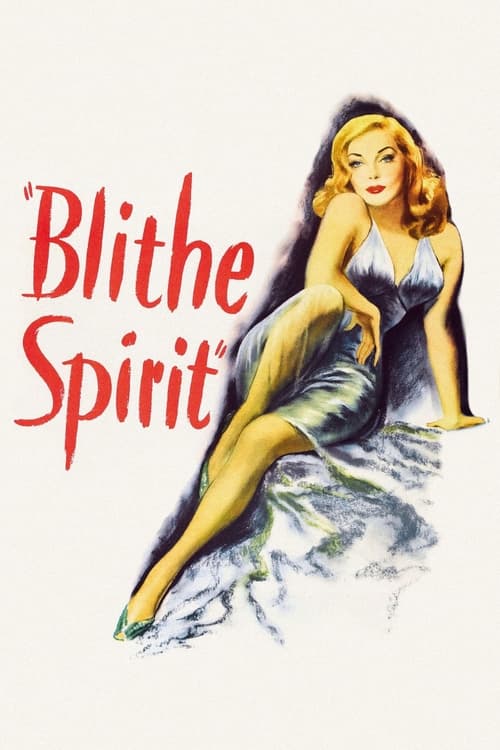
Blithe Spirit
1945 · Directed by David Lean
Woke Score
CriticCritic Score
Audience
Ultra Based
Critics rated this 22 points above its woke score. Among Ultra Based films, this critic score ranks #1452 of 1469.
Representation Casting
Score: 0/100
The cast reflects 1940s British theatrical convention with no apparent attention to diversity or inclusive casting principles.
LGBTQ+ Themes
Score: 0/100
No LGBTQ themes or characters appear in the narrative, which centers on heterosexual domestic comedy.
Feminist Agenda
Score: 15/100
While both female characters possess agency and wit, the film makes no explicit feminist argument and operates within conventional romantic comedy frameworks of the era.
Racial Consciousness
Score: 5/100
Madame Arcati's character relies on orientalist tropes and references to India as markers of exoticism and eccentricity, reflecting colonial attitudes rather than racial consciousness.
Climate Crusade
Score: 0/100
Climate concerns are entirely absent from this supernatural comedy, which contains no environmental themes whatsoever.
Eat the Rich
Score: 0/100
The film contains no critique of capitalism or class systems, focusing instead on domestic marital chaos among the upper middle class.
Body Positivity
Score: 0/100
No body positivity themes appear in the film, which treats bodies and appearance in conventional comedic fashion.
Neurodivergence
Score: 0/100
Madame Arcati's eccentricity, while played for laughs, is not presented as neurodivergence but rather as theatrical characterization.
Revisionist History
Score: 0/100
The film contains no historical elements or revisionist engagement with historical narratives.
Lecture Energy
Score: 0/100
The film prioritizes theatrical entertainment and comedy over any preachy or lecture-like delivery of social messages.


Synopsis
A harmless séance at a novelist's home summons the ghost of his glamorous first wife.
Consciousness Assessment
Blithe Spirit arrives as a peculiar specimen in any progressive consciousness audit, a 1945 British farce that predates modern cultural sensibilities by decades and yet manages to contain elements that would later become markers of social awareness. The film concerns itself with a love triangle involving two women and one hapless man, a scenario that could have been played for straightforward misogyny but instead presents both wives as possessed of agency, intelligence, and destructive capability. The second wife, Ruth, proves no simpering wallflower but rather a sharp-tongued equal to her husband's scheming. The first wife, Elvira, haunts not as a tragic figure but as a mischievous agent of chaos who refuses to be conveniently dead.
Yet the film's progressive elements arrive almost by accident, the byproduct of Coward's theatrical sensibilities rather than deliberate social commentary. Margaret Rutherford's Madame Arcati, the eccentric medium, does unfortunately function as a repository for orientalist anxieties, her eccentricity coded through reference to India and otherness in ways that feel uncomfortable by contemporary standards. The film's treatment of the supernatural and the feminine exists in a register of pure theatrical comedy rather than social critique. We cannot reasonably credit it with genuine consciousness of gender dynamics, only with the happy accident that its female characters possess more dimension than typical comedies of the era provided.
The film's minimal score reflects not approval but acknowledgment of these scattered elements against a landscape fundamentally indifferent to modern social categories. A 1945 entertainment that happens to give women interesting things to do and say remains a 1945 entertainment, operating within the assumptions and aesthetics of its moment.
Analysis generated by our Consciousness Algorithm
Critic Reviews
“Hall has taken away the brittle wit of Coward’s source material and replaced it with little other than some fun performances in search of a better movie.”
“It’s the cinematic equivalent of day-old champagne: the taste is almost there, but the bubbles disappeared long ago. ”
“A tin-eared, lumpen-footed, almost perversely unfunny new spin on Noël Coward’s breezy 1940s farce.”
Consciousness Markers
The cast reflects 1940s British theatrical convention with no apparent attention to diversity or inclusive casting principles.
No LGBTQ themes or characters appear in the narrative, which centers on heterosexual domestic comedy.
While both female characters possess agency and wit, the film makes no explicit feminist argument and operates within conventional romantic comedy frameworks of the era.
Madame Arcati's character relies on orientalist tropes and references to India as markers of exoticism and eccentricity, reflecting colonial attitudes rather than racial consciousness.
Climate concerns are entirely absent from this supernatural comedy, which contains no environmental themes whatsoever.
The film contains no critique of capitalism or class systems, focusing instead on domestic marital chaos among the upper middle class.
No body positivity themes appear in the film, which treats bodies and appearance in conventional comedic fashion.
Madame Arcati's eccentricity, while played for laughs, is not presented as neurodivergence but rather as theatrical characterization.
The film contains no historical elements or revisionist engagement with historical narratives.
The film prioritizes theatrical entertainment and comedy over any preachy or lecture-like delivery of social messages.