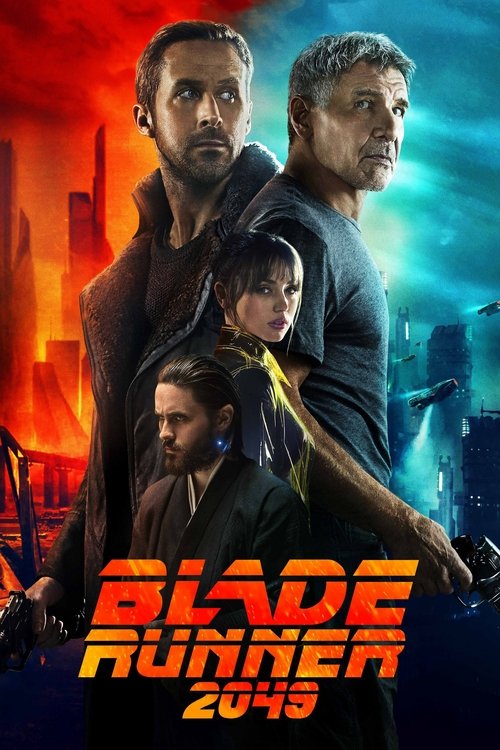
Blade Runner 2049
2017 · Directed by Denis Villeneuve
Woke Score
CriticCritic Score
Audience
Ultra Based
Critics rated this 66 points above its woke score. Among Ultra Based films, this critic score ranks #332 of 1469.
Representation Casting
Score: 25/100
The cast includes women and actors of color, but female characters occupy secondary roles as memory-keepers and support figures. Sylvia Hoeks and others appear in action sequences but remain secondary to the male protagonist's journey.
LGBTQ+ Themes
Score: 0/100
No LGBTQ+ themes, characters, or representation are present in the film. The narrative contains no romantic or sexual relationships of any kind.
Feminist Agenda
Score: 15/100
The film is structured around a male protagonist and male-driven narrative. Female characters exist primarily in relation to male characters' goals and discoveries, lacking independent agency in the central plot.
Racial Consciousness
Score: 10/100
The film contains no explicit engagement with racial themes or contemporary racial consciousness. Casting includes actors of color but without commentary on race or identity.
Climate Crusade
Score: 20/100
The film depicts a world ravaged by environmental collapse and radioactive desert, but this setting functions as noir atmosphere rather than as commentary on climate crisis or environmental justice.
Eat the Rich
Score: 25/100
The narrative features corporate villainy through the Wallace Corporation and Niander Wallace's empire, and explores themes of labor and creation, but these emerge from noir conventions rather than explicit anti-capitalist critique.
Body Positivity
Score: 0/100
No body positivity messaging or diverse body representation is present. The film features conventionally attractive actors in a futuristic setting with no commentary on bodies or physicality.
Neurodivergence
Score: 15/100
Jared Leto's character Niander Wallace is portrayed as blind, presented as an eccentric character trait rather than meaningful neurodivergent representation or advocacy.
Revisionist History
Score: 0/100
The film contains no historical revisionism. It is a science fiction narrative set in a future timeline with no engagement with real historical events or reinterpretation of them.
Lecture Energy
Score: 5/100
The film is philosophical and contemplative rather than preachy. Villeneuve avoids explicit moralizing, though the work occasionally reflects on consciousness and identity in abstract terms.


Synopsis
Thirty years after the events of the first film, a new blade runner, LAPD Officer K, unearths a long-buried secret that has the potential to plunge what's left of society into chaos. K's discovery leads him on a quest to find Rick Deckard, a former LAPD blade runner who has been missing for 30 years.
Consciousness Assessment
Blade Runner 2049 occupies a curious position in the contemporary film landscape, arriving in 2017 with the visual sophistication and narrative ambition of a prestige science fiction epic while remaining almost defiantly indifferent to the progressive social sensibilities that were already reshaping Hollywood discourse. Denis Villeneuve's film is a work of profound philosophical inquiry into consciousness, identity, and the nature of humanity, concerns that have animated the franchise since its inception. Yet in its commitment to these metaphysical questions, the film exhibits little interest in the social markers that define contemporary cultural awareness. The narrative is driven entirely by male characters and their obsessions, with female characters relegated to supporting roles defined by their proximity to the male leads. Ana de Armas's Dr. Stelline, the film's most significant female character, spends most of her screen time confined to a laboratory, her agency limited to creating and examining memories rather than driving events.
What progressive elements exist in the film are incidental rather than intentional. Jared Leto's Niander Wallace is portrayed as blind, a choice that could theoretically signal neurodivergent representation, though the film treats his blindness as a quirk of character design rather than a meaningful exploration of disability. The film's world, ravaged by environmental collapse and corporate consolidation, presents a dystopia shaped by unchecked capitalism, yet this critique emerges from the film's noir tradition rather than from any contemporary desire to lecture the audience about systemic inequality. The replicant underclass could be read as an allegory for labor exploitation or racial oppression, but Villeneuve declines to sharpen this blade. Instead, the replicants exist as a philosophical problem, their consciousness and rights treated as abstract questions rather than urgent social justice imperatives.
The film's orientation is backward-looking, a meditation on whether consciousness and memory constitute personhood, posed through the language of 1940s noir rather than 2020s activism. It is a work of genuine artistic achievement that regards contemporary progressive discourse with the polite indifference of someone absorbed in a different conversation entirely. In the vocabulary of social consciousness, this is a film that simply does not speak.
Analysis generated by our Consciousness Algorithm
Critic Reviews
“Blade Runner 2049 is a narcotic spectacle of eerie and pitiless vastness, by turns satirical, tragic and romantic.”
“As bold as the original Blade Runner and even more beautiful (especially if you see it in IMAX). Visually immaculate, swirling with themes as heart-rending as they are mind-twisting, 2049 is, without doubt, a good year. And one of 2017’s best.”
“That Blade Runner 2049 is a more than worthy sequel to Scott’s first film means it crosses the highest bar anyone could have reasonably set for it, and it distinguishes Villeneuve – who’s masterminded all of this, somehow, since making Arrival – as the most exciting filmmaker working at his level today.”
“Denis Villeneuve’s film is designed to reward the audience for recognizing references in the midst of an action pursuit, and, after an hour or so of the clipped and earnest signifying, one may find themselves nostalgic for Ridley Scott’s unforced indifference to the issue. ”
Consciousness Markers
The cast includes women and actors of color, but female characters occupy secondary roles as memory-keepers and support figures. Sylvia Hoeks and others appear in action sequences but remain secondary to the male protagonist's journey.
No LGBTQ+ themes, characters, or representation are present in the film. The narrative contains no romantic or sexual relationships of any kind.
The film is structured around a male protagonist and male-driven narrative. Female characters exist primarily in relation to male characters' goals and discoveries, lacking independent agency in the central plot.
The film contains no explicit engagement with racial themes or contemporary racial consciousness. Casting includes actors of color but without commentary on race or identity.
The film depicts a world ravaged by environmental collapse and radioactive desert, but this setting functions as noir atmosphere rather than as commentary on climate crisis or environmental justice.
The narrative features corporate villainy through the Wallace Corporation and Niander Wallace's empire, and explores themes of labor and creation, but these emerge from noir conventions rather than explicit anti-capitalist critique.
No body positivity messaging or diverse body representation is present. The film features conventionally attractive actors in a futuristic setting with no commentary on bodies or physicality.
Jared Leto's character Niander Wallace is portrayed as blind, presented as an eccentric character trait rather than meaningful neurodivergent representation or advocacy.
The film contains no historical revisionism. It is a science fiction narrative set in a future timeline with no engagement with real historical events or reinterpretation of them.
The film is philosophical and contemplative rather than preachy. Villeneuve avoids explicit moralizing, though the work occasionally reflects on consciousness and identity in abstract terms.