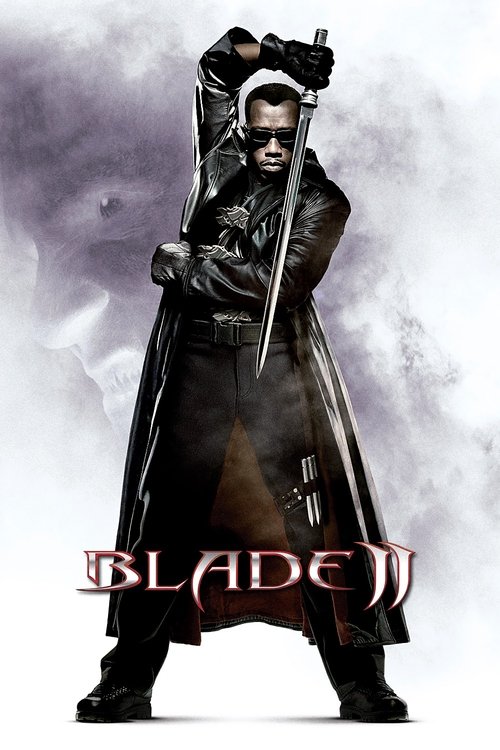
Blade II
2002 · Directed by Guillermo del Toro
Woke Score
CriticCritic Score
Audience
Ultra Based
Critics rated this 48 points above its woke score. Among Ultra Based films, this critic score ranks #1110 of 1469.
Representation Casting
Score: 20/100
Wesley Snipes as the lead Black action hero was relatively rare in 2002 mainstream cinema, though the film engages with this fact thematically.
LGBTQ+ Themes
Score: 0/100
No LGBTQ+ themes, characters, or representation present.
Feminist Agenda
Score: 5/100
Female characters like Leonor Varela appear in supporting action roles but no feminist themes or gender commentary emerges from the narrative.
Racial Consciousness
Score: 0/100
While Blade is a Black protagonist, the film does not engage with race as a thematic concern or employ contemporary racial consciousness.
Climate Crusade
Score: 0/100
No environmental or climate-related themes whatsoever.
Eat the Rich
Score: 0/100
The film contains no critique of capitalism or exploration of economic systems.
Body Positivity
Score: 0/100
Grotesque creature designs reflect genre conventions, not body positivity messaging.
Neurodivergence
Score: 0/100
No representation or thematic engagement with neurodivergence.
Revisionist History
Score: 0/100
Set in a fictional vampire universe with no historical revisionism.
Lecture Energy
Score: 0/100
The film prioritizes action and spectacle over preachy messaging about social issues.


Synopsis
Blade forms an uneasy alliance with the vampire council in order to combat the Reapers, who are feeding on vampires.
Consciousness Assessment
Blade II stands as a curious artifact of pre-awakening action cinema, a film so thoroughly committed to the pursuit of stylish violence that it scarcely notices the world around it. Guillermo del Toro brought his sensibilities to bear on what might have been a rote sequel, infusing the proceedings with gothic architecture, sympathetic monsters, and the sort of gross-out practical effects that would become his trademark. The result is an aggressively apolitical work, concerned with vampire hierarchies and Reaper threats rather than any examination of the social structures these metaphors might represent. Wesley Snipes, already a veteran of action cinema by 2002, carries the film with martial competence and a certain weariness that suits the material. The ensemble cast performs adequately within the constraints of a plot that exists primarily as scaffolding for set pieces.
What marks Blade II as genuinely innocent of contemporary progressive sensibilities is its complete indifference to them. The film contains no deliberate representation strategy, no thematic interrogation of gender or sexuality, no environmental messaging, no anti-capitalist critique. Leonor Varela fights vampires alongside the male cast without the film pausing to congratulate itself. Diverse actors appear in diverse roles because action cinema in 2002 had organically arrived at such casting, not because anyone was consciously advancing a diversity agenda. This is a film that treats its subject matter as pure genre exercise, a musical of violence as del Toro himself described it.
The film's commercial success, opening at number one with 32.5 million dollars, speaks to audiences who wanted exactly what they received: spectacle without sermon. In retrospect, Blade II reads almost as a document of a cinema that had not yet learned to weaponize its own narrative choices as statements of cultural alignment. It is simply too busy with its monsters to notice.
Analysis generated by our Consciousness Algorithm
Critic Reviews
“To appreciate the movie, you have to be okay with vampire violence. I don't mean subtle little nips at the neck and, ooooh, it's directed by Werner Herzog.”
“You can sense the difference between a movie that's a technical exercise ("Resident Evil") and one steamed in the dread cauldrons of the filmmaker's imagination.”
“Like the original, Blade II has superior production values and visual and special effects. Snipes and Kristofferson build on the resonance of their original portrayals.”
Consciousness Markers
Wesley Snipes as the lead Black action hero was relatively rare in 2002 mainstream cinema, though the film engages with this fact thematically.
No LGBTQ+ themes, characters, or representation present.
Female characters like Leonor Varela appear in supporting action roles but no feminist themes or gender commentary emerges from the narrative.
While Blade is a Black protagonist, the film does not engage with race as a thematic concern or employ contemporary racial consciousness.
No environmental or climate-related themes whatsoever.
The film contains no critique of capitalism or exploration of economic systems.
Grotesque creature designs reflect genre conventions, not body positivity messaging.
No representation or thematic engagement with neurodivergence.
Set in a fictional vampire universe with no historical revisionism.
The film prioritizes action and spectacle over preachy messaging about social issues.