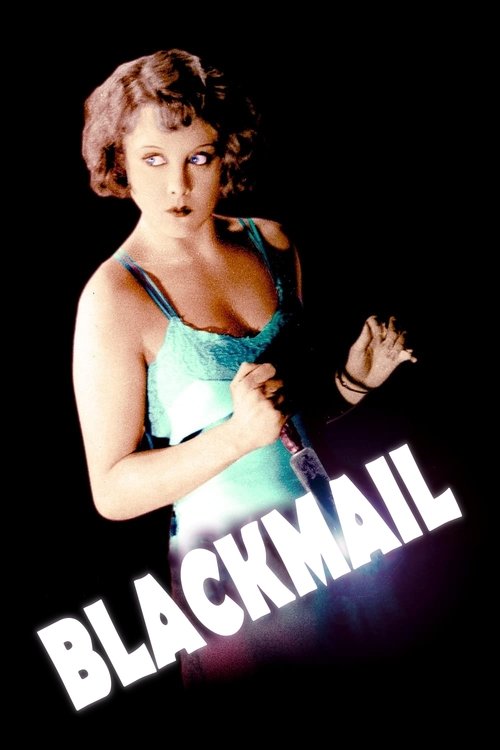
Blackmail
1929 · Directed by Alfred Hitchcock
Woke Score
CriticCritic Score
Ultra Based
Critics rated this 67 points above its woke score. Among Ultra Based films, this critic score ranks #607 of 1469.
Representation Casting
Score: 15/100
Features a female protagonist in Anny Ondra, relatively progressive for 1929, but undermined by the dubbing of her voice with another actress due to her accent being deemed unsuitable.
LGBTQ+ Themes
Score: 0/100
No LGBTQ+ themes, content, or representation present in the film.
Feminist Agenda
Score: 25/100
Presents a female character who is sexually assaulted and kills in self-defense, but frames her crime as shameful rather than justified. Alice's agency is abandoned as she becomes passive and dependent on her male detective boyfriend.
Racial Consciousness
Score: 0/100
Set in 1929 London with no racial consciousness, commentary, or diverse representation of any kind.
Climate Crusade
Score: 0/100
A crime thriller from 1929 contains no climate-related themes or messaging.
Eat the Rich
Score: 10/100
Minimal anti-capitalist commentary, though working-class characters appear and the blackmailer's exploitation touches on class anxiety incidentally rather than thematically.
Body Positivity
Score: 0/100
No body positivity messaging or representation evident in this 1929 film.
Neurodivergence
Score: 0/100
No representation of or engagement with neurodivergent characters or themes.
Revisionist History
Score: 0/100
A contemporary crime thriller rather than a historical narrative, so revisionist history is not applicable.
Lecture Energy
Score: 5/100
Primarily a suspense thriller without preachy intent, though mild moralizing about the consequences of deception and concealment provides faint instructional undertones.


Synopsis
London, 1929. Frank Webber, a very busy Scotland Yard detective, seems to be more interested in his work than in Alice White, his girlfriend. Feeling herself ignored, Alice agrees to go out with an elegant and well-mannered artist who invites her to visit his fancy apartment.
Consciousness Assessment
Blackmail, Hitchcock's inaugural sound film and Britain's first talkie, remains a technical and narrative achievement of the late silent era's transition. The film centers on Alice White, a young woman who kills an artist following an assault, only to find herself trapped in a web of extortion and moral compromise. Yet the progressive potential of this premise is systematically squandered. Alice is rendered passive and ashamed, her agency dissolving as the narrative pivots toward her detective boyfriend's investigation. The production itself exemplifies this passivity: Anny Ondra's voice was deemed unsuitable for the role due to her Czech accent, so another actress stood off-camera to voice the protagonist while Ondra mimed her dialogue. This technical solution transforms the lead character into a kind of living puppet, her physical presence separated from her voice. The film treats this as a practical solution, not as an erasure, which tells us all we need to know about its cultural moment. There is no consciousness here of what such a choice means, no irony or critique. Blackmail is a masterwork of suspense construction, but it offers no modern sensibilities to measure. It is what it is: a 1929 thriller that happens to star a woman in the central role, but only on condition that the woman be silenced.
Analysis generated by our Consciousness Algorithm
Critic Reviews
“The extraordinary plateau attained by Hitchcock’s first sound film in relation to his overall development is the sum of many accomplishments: above all, a decisive mastery in moving back and forth between objective and subjective narrative modes. ”
“A little clunky at times for contemporary audiences but still manages to truly perturb at times...”
“Moodily filmed in an effectively Germanic style, with a neat supporting turn by Calthrop and fine set pieces such as the chase through the British Museum, BLACKMAIL still plays well, and is a suitable precursor to the master director's later work. ”
“Blackmail is most draggy. It has no speed or pace and very little suspense.”
Consciousness Markers
Features a female protagonist in Anny Ondra, relatively progressive for 1929, but undermined by the dubbing of her voice with another actress due to her accent being deemed unsuitable.
No LGBTQ+ themes, content, or representation present in the film.
Presents a female character who is sexually assaulted and kills in self-defense, but frames her crime as shameful rather than justified. Alice's agency is abandoned as she becomes passive and dependent on her male detective boyfriend.
Set in 1929 London with no racial consciousness, commentary, or diverse representation of any kind.
A crime thriller from 1929 contains no climate-related themes or messaging.
Minimal anti-capitalist commentary, though working-class characters appear and the blackmailer's exploitation touches on class anxiety incidentally rather than thematically.
No body positivity messaging or representation evident in this 1929 film.
No representation of or engagement with neurodivergent characters or themes.
A contemporary crime thriller rather than a historical narrative, so revisionist history is not applicable.
Primarily a suspense thriller without preachy intent, though mild moralizing about the consequences of deception and concealment provides faint instructional undertones.