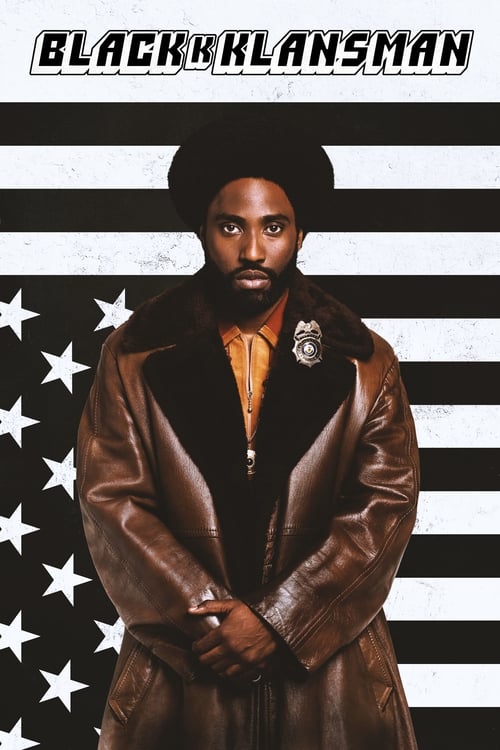
BlacKkKlansman
2018 · Directed by Spike Lee
Woke Score
CriticCritic Score
Audience
Woke
Critics rated this 5 points above its woke score. Among Woke films, this critic score ranks #22 of 88.
Representation Casting
Score: 75/100
The film centers Black and Jewish protagonists in positions of institutional authority and narrative importance. While this reflects the historical true story rather than deliberate diversity casting, the prominence of these figures carries symbolic weight within contemporary cinema.
LGBTQ+ Themes
Score: 0/100
No LGBTQ+ themes, characters, or content present in the film. Jewish identity is represented but does not constitute LGBTQ+ representation.
Feminist Agenda
Score: 15/100
Laura Harrier's character exists primarily as a romantic subplot without substantial feminist consciousness or development. The film's focus on gender equity is minimal.
Racial Consciousness
Score: 95/100
The film's central concern is racial consciousness, explicitly interrogating white supremacy, systemic racism, and drawing direct parallels between 1970s KKK activity and contemporary white nationalism, particularly through its ending montage connecting to 2017 events.
Climate Crusade
Score: 0/100
No climate-related themes, messaging, or environmental consciousness present in the film.
Eat the Rich
Score: 20/100
While the film critiques institutional oppression within law enforcement, it does not engage in substantive anti-capitalist messaging or critique of economic systems.
Body Positivity
Score: 0/100
No body positivity messaging, representation, or thematic engagement present in the film.
Neurodivergence
Score: 0/100
No neurodivergence representation, themes, or consciousness present in the film.
Revisionist History
Score: 25/100
The film adapts true historical events but frames them through a contemporary lens emphasizing continuities with present-day white nationalism. While interpretively selective, it does not fundamentally rewrite established historical facts.
Lecture Energy
Score: 65/100
The film employs comedy to balance its preachy impulses, yet maintains considerable lecture energy, culminating in an explicit montage connecting historical racism to contemporary events without subtlety.


Synopsis
Colorado Springs, late 1970s. Ron Stallworth, an African American police officer, and Flip Zimmerman, his Jewish colleague, run an undercover operation to infiltrate the Ku Klux Klan.
Consciousness Assessment
Spike Lee's BlacKkKlansman stands as a document of contemporary progressive sensibilities applied retrospectively to historical events, a technique that marks much of the cultural output of the 2018 moment. The film concerns itself overwhelmingly with racial consciousness and the persistence of white supremacy from the 1970s into the present day, a preoccupation that Lee makes abundantly clear through his editing choices and explicit contemporary parallels. The narrative itself, drawn from true events, requires no embellishment to convey its message: a Black detective infiltrating the Klan is inherently a statement about racial awareness and systemic injustice.
What complicates any assessment is the film's deliberate entertainment value, which both amplifies and dilutes its more strident impulses. Lee employs comedy as a vehicle for social commentary, creating moments of levity before pivoting to scenes of stark racial violence. This tonal oscillation is intentional, yet it raises the question of whether the entertainment imperative has compromised the preachy ambition. The film's ending montage, connecting 1970s Klan activity directly to 2017 white nationalist rallies, abandons all pretense of subtlety, delivering its lecture with the force of a sledgehammer. One might call this clarity or one might call it heavy-handedness, depending on one's tolerance for unambiguous messaging in cinema.
The film's markers of progressive consciousness extend primarily to its racial focus and the presence of a Black protagonist in a position of institutional authority, paired with a Jewish co-lead, both of which carry symbolic weight within the cultural moment of its release. However, the film lacks the broader constellation of contemporary progressive concerns: there is no meaningful engagement with climate politics, body positivity, neurodivergence, or robust feminist consciousness. What we have instead is a film laser-focused on one dimension of social awareness, executed with Lee's characteristic directness and without apology for its preachiness.
Analysis generated by our Consciousness Algorithm
Critic Reviews
“BlacKkKlansman is both hilarious and exquisitely direct, and had it been made before November 2016, you might call Lee’s approach a little alarmist. But if anything, he’s restrained. This is an angry film as well as a hugely entertaining one, and Lee has complete control over its shifting tone, minute by minute.”
“BlacKkKlansman presents racism as a dichotomy between the absurd and the dangerous; the film’s intentional laughs often get caught in one’s throat.”
“BlacKkKlansman is one of Spike Lee’s most accomplished films in recent memory, and one of the best films of 2018.”
“BlacKkKlansman isn’t wrong about the evils of white supremacy. But it’s pretty sure you, out in the audience, aren’t going to get it unless it spells out the message in blinking neon lights. And even then, the film seems to fear you might miss the point.”
Consciousness Markers
The film centers Black and Jewish protagonists in positions of institutional authority and narrative importance. While this reflects the historical true story rather than deliberate diversity casting, the prominence of these figures carries symbolic weight within contemporary cinema.
No LGBTQ+ themes, characters, or content present in the film. Jewish identity is represented but does not constitute LGBTQ+ representation.
Laura Harrier's character exists primarily as a romantic subplot without substantial feminist consciousness or development. The film's focus on gender equity is minimal.
The film's central concern is racial consciousness, explicitly interrogating white supremacy, systemic racism, and drawing direct parallels between 1970s KKK activity and contemporary white nationalism, particularly through its ending montage connecting to 2017 events.
No climate-related themes, messaging, or environmental consciousness present in the film.
While the film critiques institutional oppression within law enforcement, it does not engage in substantive anti-capitalist messaging or critique of economic systems.
No body positivity messaging, representation, or thematic engagement present in the film.
No neurodivergence representation, themes, or consciousness present in the film.
The film adapts true historical events but frames them through a contemporary lens emphasizing continuities with present-day white nationalism. While interpretively selective, it does not fundamentally rewrite established historical facts.
The film employs comedy to balance its preachy impulses, yet maintains considerable lecture energy, culminating in an explicit montage connecting historical racism to contemporary events without subtlety.