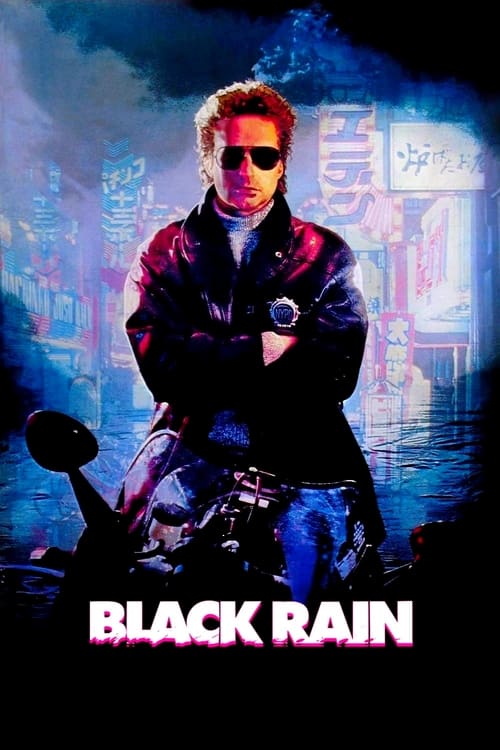
Black Rain
1989 · Directed by Ridley Scott
Woke Score
CriticCritic Score
Audience
Ultra Based
Critics rated this 81 points above its woke score. Among Ultra Based films, this critic score ranks #249 of 1469.
Representation Casting
Score: 0/100
The film centers on white American male protagonists with Japanese characters relegated to supporting roles, primarily as villains or sidekicks. No meaningful representation of diverse backgrounds in lead positions.
LGBTQ+ Themes
Score: 0/100
No LGBTQ+ themes, characters, or representation present in the film.
Feminist Agenda
Score: 5/100
Kate Capshaw appears as a female character but functions primarily as a romantic interest and plot device. No meaningful exploration of feminist themes or female agency.
Racial Consciousness
Score: 15/100
The film has been criticized for stereotypical and hostile portrayals of Japanese culture and the Yakuza, reflecting 1980s anxieties about Japanese economic power. Japanese characters are depicted through narrow, exotic lenses without nuance.
Climate Crusade
Score: 0/100
No climate-related themes, messaging, or environmental consciousness present in the film.
Eat the Rich
Score: 0/100
No anti-capitalist messaging or critique of economic systems. The film is a straightforward action thriller without economic or class commentary.
Body Positivity
Score: 0/100
No body positivity themes or representation of diverse body types. Standard 1980s action film with conventionally attractive leads.
Neurodivergence
Score: 0/100
No representation of neurodivergent characters or exploration of neurodivergence in the narrative.
Revisionist History
Score: 0/100
The film is not based on historical events and makes no attempt to reframe or reinterpret history.
Lecture Energy
Score: 0/100
No preachy messaging or attempts to educate the audience about social issues. The film is purely narrative-driven action entertainment.


Synopsis
Two New York cops get involved in a gang war between members of the Yakuza, the Japanese Mafia. They arrest one of their killers and are ordered to escort him back to Japan. However, in Japan he manages to escape, and as they try to track him down, they get deeper and deeper into the Japanese Mafia scene and they have to learn that they can only win by playing the game—the Japanese way.
Consciousness Assessment
Ridley Scott's Black Rain arrives as a period piece in every sense, a 1989 action thriller that crystallizes the era's anxieties about Japanese economic ascendance and cultural otherness with the subtlety of a motorcycle crash through a storefront window. The film follows two NYPD detectives through a plot that amounts to little more than a series of chases and explosions set against neon-soaked Osaka streets, where Japan functions less as a place than as an aesthetic mood board for Western discomfort. Michael Douglas plays the type of American masculine ideal that requires no character development, merely a leather jacket and a motorcycle, while the Japanese characters exist primarily to be outsmarted, evaded, or destroyed by virtue of American ingenuity and moral clarity.
What distinguishes the film most clearly is its investment in a particular strain of 1980s Orientalism, one suffused with resentment toward Japanese commercial success and cultural difference. The Yakuza are rendered as exotic villains rather than complex human beings, their rituals and codes presented as inscrutable and ultimately inferior to American pragmatism. The film's visual spectacle, which critics have noted as its primary virtue, serves mainly to distract from a narrative that relies entirely on stereotypical characterizations and a worldview in which cultural assimilation means adopting American methods instead of genuine engagement or understanding.
By contemporary standards of cultural representation, Black Rain registers as actively regressive, though judgment must account for its historical moment, when such attitudes were not merely acceptable but marketable. The film contains no progressive elements worth cataloging. It is straightforward action entertainment that treats cultural difference as a problem to be solved through masculine American intervention, with no irony, no self-awareness, and no inclination toward critique. One watches it now primarily as a document of how mainstream cinema once casually trafficked in racial and cultural caricature.
Analysis generated by our Consciousness Algorithm
Critic Reviews
“Weir had a truly magical touch in early films like this 1977 masterpiece, which offers a transfixing excursion into the "dream time" of Australian myth.”
“A powerful, yet subtle, picture from Australian director Peter Weir, who has demonstrated quite a flair for mystical themes.”
“A minor triumph of atmosphere and nightmare imaginings.”
Consciousness Markers
The film centers on white American male protagonists with Japanese characters relegated to supporting roles, primarily as villains or sidekicks. No meaningful representation of diverse backgrounds in lead positions.
No LGBTQ+ themes, characters, or representation present in the film.
Kate Capshaw appears as a female character but functions primarily as a romantic interest and plot device. No meaningful exploration of feminist themes or female agency.
The film has been criticized for stereotypical and hostile portrayals of Japanese culture and the Yakuza, reflecting 1980s anxieties about Japanese economic power. Japanese characters are depicted through narrow, exotic lenses without nuance.
No climate-related themes, messaging, or environmental consciousness present in the film.
No anti-capitalist messaging or critique of economic systems. The film is a straightforward action thriller without economic or class commentary.
No body positivity themes or representation of diverse body types. Standard 1980s action film with conventionally attractive leads.
No representation of neurodivergent characters or exploration of neurodivergence in the narrative.
The film is not based on historical events and makes no attempt to reframe or reinterpret history.
No preachy messaging or attempts to educate the audience about social issues. The film is purely narrative-driven action entertainment.