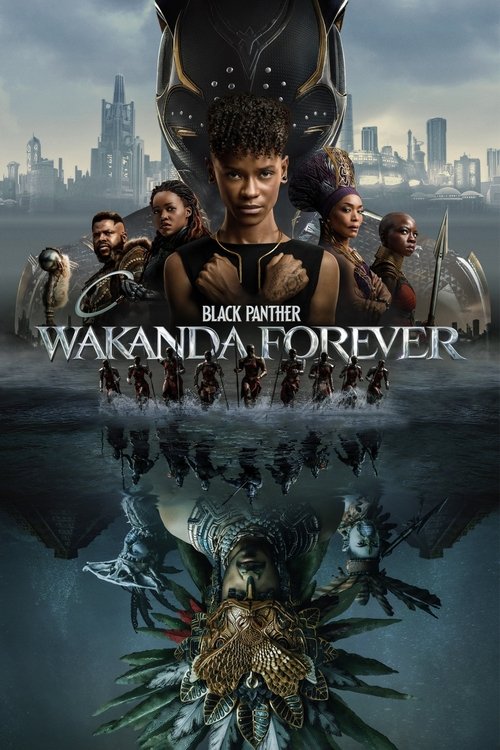
Black Panther: Wakanda Forever
2022 · Directed by Ryan Coogler
Woke Score
CriticCritic Score
Audience
Woke
Critics rated this 1 points below its woke score. Among Woke films, this critic score ranks #65 of 88.
Representation Casting
Score: 90/100
The film features an overwhelmingly Black and female ensemble in positions of power and narrative agency. Women drive the central plot, and the casting decisions reflect intentional representation rather than tokenism.
LGBTQ+ Themes
Score: 0/100
No significant LGBTQ+ representation or themes. The film features traditional heterosexual relationships and does not explore queer identity or dynamics.
Feminist Agenda
Score: 70/100
Female characters occupy leadership roles as queens, warriors, and strategists. The succession involves female inheritance and decision-making, though feminist critique remains largely implicit rather than explicit.
Racial Consciousness
Score: 85/100
The film celebrates Afrocentric culture, Black excellence, and African sovereignty. It positions colonialism as a central antagonistic force and centers Black perspectives throughout the narrative.
Climate Crusade
Score: 0/100
No meaningful engagement with climate themes or environmental consciousness. The film focuses on political succession and cultural preservation rather than ecological concerns.
Eat the Rich
Score: 20/100
The film celebrates Black wealth and technological innovation within capitalist frameworks rather than critiquing them. Wakanda's power derives from resource control and economic dominance, which go unchallenged.
Body Positivity
Score: 35/100
While the film features diverse body types among its cast, there is no explicit body positivity messaging or critique of beauty standards. Bodies are primarily presented as warrior forms.
Neurodivergence
Score: 10/100
No representation of neurodivergent characters or engagement with neurodivergence as a theme. The narrative does not address cognitive diversity or disability.
Revisionist History
Score: 45/100
The film reimagines African history and mythology through a fictional lens, presenting an alternative history of African power and technological advancement. This is imaginative worldbuilding rather than revisionist history proper.
Lecture Energy
Score: 30/100
The film integrates its themes organically into character dynamics and action sequences rather than through expository dialogue. Cultural values are shown through ritual and visual language rather than explained.


Synopsis
Queen Ramonda, Shuri, M'Baku, Okoye and the Dora Milaje fight to protect their nation from intervening world powers in the wake of King T'Challa's death. As the Wakandans strive to embrace their next chapter, the heroes must band together with the help of War Dog Nakia and Everett Ross and forge a new path for the kingdom of Wakanda.
Consciousness Assessment
Black Panther: Wakanda Forever centers Afrocentric cultural pride through the lens of a fictional African nation, presenting Black leadership, ingenuity, and resilience without apology. The ensemble cast is overwhelmingly Black and female in positions of power, with women like Queen Ramonda, Shuri, Okoye, and Nakia driving the narrative forward. This is not incidental casting but structural to the film's worldview. The narrative grapples with grief, succession, and the cost of leadership, themes that allow for emotional depth beyond mere representation. The film engages with colonialism through its antagonist, positioning indigenous resistance against Western imperial power.
However, the film operates primarily within the Marvel action-adventure framework, which constrains its capacity for systemic critique. While it celebrates Black excellence and female leadership, it does not fundamentally interrogate capitalism, empire, or the material conditions that produce inequality. The film is culturally conscious and progressive in its casting and thematic concerns, but it remains a blockbuster entertainment property designed to generate profit. It celebrates Black wealth and power rather than questioning the structures that produce wealth disparity.
The film's progressive sensibilities are genuine but measured. It represents a mainstream entertainment product that has integrated progressive values into its visual language and narrative structure without fundamentally challenging the systems it depicts. This is not a criticism so much as an observation about the nature of studio filmmaking in the 2020s.
Analysis generated by our Consciousness Algorithm
Critic Reviews
“Every aspect — acting, writing, special effects, score — is a notch above its superhero peers. In the best possible sense, you forget you’re watching just another Marvel movie.”
“Chadwick Boseman does not appear in this movie, but he’s felt in every single scene. It feels like a way to say goodbye. And, in that, it very much succeeds … while also being a rip-roaring Black Panther movie. Again, this movie is a miracle.”
“Wakanda Forever, first and foremost is a film about grief — which is extremely fitting for a movie that, in another and perhaps better timeline, would have starred the man who led the original film to both box office and awards glory.”
“Only Nyong’o and Winston Duke, whose avuncular mountain tribe chief M’Baku makes a welcome return, actually feel like human beings. Elsewhere it’s drainingly apparent we’re just watching the nth round of chess pieces being rearranged. Like Namor with his dinky ankle-wings, this franchise has become super-heroically adept at treading water.”
Consciousness Markers
The film features an overwhelmingly Black and female ensemble in positions of power and narrative agency. Women drive the central plot, and the casting decisions reflect intentional representation rather than tokenism.
No significant LGBTQ+ representation or themes. The film features traditional heterosexual relationships and does not explore queer identity or dynamics.
Female characters occupy leadership roles as queens, warriors, and strategists. The succession involves female inheritance and decision-making, though feminist critique remains largely implicit rather than explicit.
The film celebrates Afrocentric culture, Black excellence, and African sovereignty. It positions colonialism as a central antagonistic force and centers Black perspectives throughout the narrative.
No meaningful engagement with climate themes or environmental consciousness. The film focuses on political succession and cultural preservation rather than ecological concerns.
The film celebrates Black wealth and technological innovation within capitalist frameworks rather than critiquing them. Wakanda's power derives from resource control and economic dominance, which go unchallenged.
While the film features diverse body types among its cast, there is no explicit body positivity messaging or critique of beauty standards. Bodies are primarily presented as warrior forms.
No representation of neurodivergent characters or engagement with neurodivergence as a theme. The narrative does not address cognitive diversity or disability.
The film reimagines African history and mythology through a fictional lens, presenting an alternative history of African power and technological advancement. This is imaginative worldbuilding rather than revisionist history proper.
The film integrates its themes organically into character dynamics and action sequences rather than through expository dialogue. Cultural values are shown through ritual and visual language rather than explained.