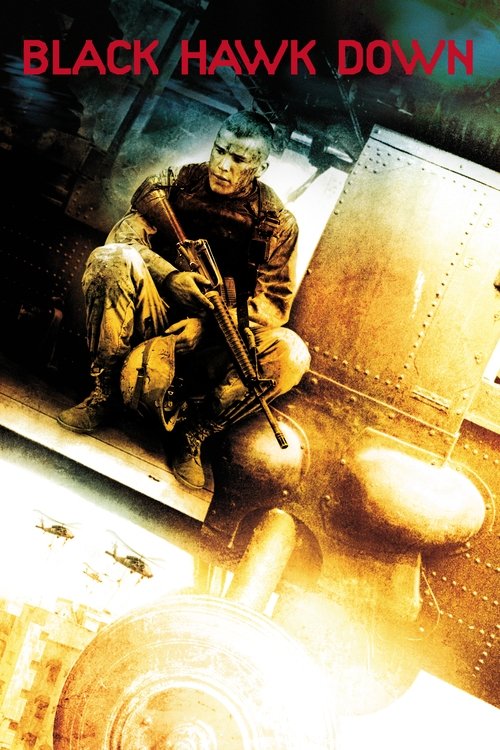
Black Hawk Down
2001 · Directed by Ridley Scott
Woke Score
CriticCritic Score
Audience
Ultra Based
Critics rated this 70 points above its woke score. Among Ultra Based films, this critic score ranks #507 of 1469.
Representation Casting
Score: 5/100
The cast includes some diversity (Orlando Bloom, but primarily white male soldiers), though this reflects the actual unit composition. The film makes no effort to center or develop non-white perspectives.
LGBTQ+ Themes
Score: 0/100
No LGBTQ+ themes, characters, or representation present in the film.
Feminist Agenda
Score: 0/100
No feminist themes or female-centered perspectives. Women are entirely absent from the narrative.
Racial Consciousness
Score: 15/100
Somali fighters are depicted as faceless antagonists with no individual characterization or context. The film presents a unilateral American perspective without examining colonial history or intervention consequences.
Climate Crusade
Score: 0/100
No climate-related themes or environmental consciousness present.
Eat the Rich
Score: 0/100
No anti-capitalist messaging or critique of economic systems.
Body Positivity
Score: 0/100
No body positivity messaging or representation of diverse body types.
Neurodivergence
Score: 0/100
No representation of neurodivergent characters or themes.
Revisionist History
Score: 25/100
While based on true events, the film presents a simplified military narrative that omits Somali casualties and the broader context of US intervention, creating a revisionist heroic frame.
Lecture Energy
Score: 5/100
The film delivers its narrative through action and spectacle rather than explicit messaging, though its framing implicitly endorses American military intervention without critique.


Synopsis
When U.S. Rangers and an elite Delta Force team attempt to kidnap two underlings of a Somali warlord, their Black Hawk helicopters are shot down, and the Americans suffer heavy casualties, facing intense fighting from the militia on the ground.
Consciousness Assessment
Black Hawk Down represents a particular species of war cinema that arrived at a peculiar historical moment. Released in late 2001, mere weeks after September 11th, Ridley Scott's film offered American audiences a narrative of military heroism and sacrifice that required no moral ambiguity. The film depicts the 1993 Battle of Mogadishu as a straightforward tale of soldiers under fire, their bravery in the face of overwhelming odds, their bonds with one another. It asks little of viewers beyond sympathetic identification with American servicemen.
What the film does not do is interrogate the reasons for American intervention in Somalia, the scale of civilian casualties that resulted from such interventions, or the long-term consequences of foreign military action in the region. Somali fighters exist as an undifferentiated antagonistic force rather than as humans with their own perspectives, grievances, or agency. The film's visual and narrative architecture centers entirely on the American experience. This is not a film that troubles itself with the suffering of others or with structural critique of imperial overreach. It is a film about American soldiers, made for American audiences, in the immediate aftermath of national trauma.
The absence of progressive sensibilities here is so thorough as to be almost classical. There are no women of consequence in the narrative. LGBTQ+ characters do not exist. The film does not examine its own perspective or offer competing viewpoints. It is, in other words, a film of a particular time, untroubled by the cultural self-examination that would become characteristic of subsequent decades. Whether this constitutes a virtue or a failing remains a matter of interpretation.
Analysis generated by our Consciousness Algorithm
Critic Reviews
“His is a triumph of pure filmmaking, a pitiless, unrelenting, no-excuses war movie so thoroughly convincing it's frequently difficult to believe it is a staged re-creation.”
“Perhaps they truly believe war is an inescapable aspect of human life. If so, why make movies that rub our faces in its horror? If artists have no antidote to war's evil or insight into the suffering it brings, their motive in depicting it must be merely to sensationalize its terrors and make money from the morbid fascination it holds for audiences. We deserve better.”
Consciousness Markers
The cast includes some diversity (Orlando Bloom, but primarily white male soldiers), though this reflects the actual unit composition. The film makes no effort to center or develop non-white perspectives.
No LGBTQ+ themes, characters, or representation present in the film.
No feminist themes or female-centered perspectives. Women are entirely absent from the narrative.
Somali fighters are depicted as faceless antagonists with no individual characterization or context. The film presents a unilateral American perspective without examining colonial history or intervention consequences.
No climate-related themes or environmental consciousness present.
No anti-capitalist messaging or critique of economic systems.
No body positivity messaging or representation of diverse body types.
No representation of neurodivergent characters or themes.
While based on true events, the film presents a simplified military narrative that omits Somali casualties and the broader context of US intervention, creating a revisionist heroic frame.
The film delivers its narrative through action and spectacle rather than explicit messaging, though its framing implicitly endorses American military intervention without critique.