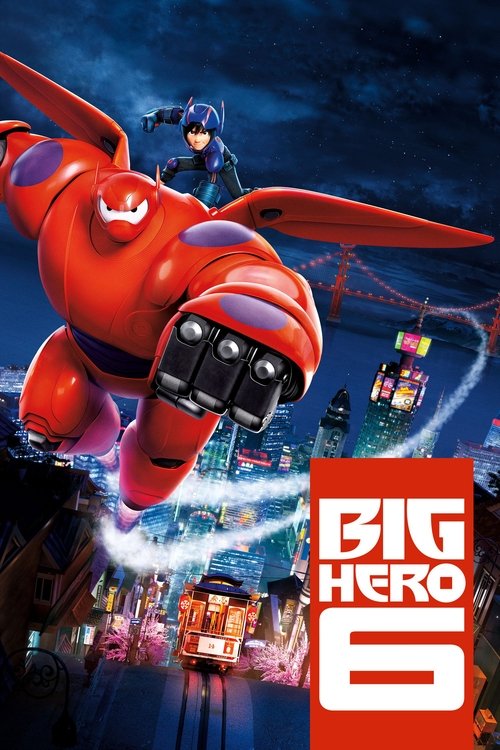
Big Hero 6
2014 · Directed by Chris Williams
Woke Score
CriticCritic Score
Audience
Ultra Based
Critics rated this 66 points above its woke score. Among Ultra Based films, this critic score ranks #496 of 1469.
Representation Casting
Score: 35/100
The ensemble cast features characters of diverse ethnicities including Asian, African American, and Latinx representation. However, this diversity functions as background demographic fact rather than thematic focus or interrogation.
LGBTQ+ Themes
Score: 0/100
There is no LGBTQ+ representation, themes, or subtext in the film. All relationships remain strictly platonic or familial.
Feminist Agenda
Score: 5/100
Female characters are present on the team but are not defined by feminist consciousness or agenda. Their inclusion is incidental to the narrative structure.
Racial Consciousness
Score: 15/100
The film features Asian and multiethnic characters but does not engage with race as a thematic concern. Hiro's Japanese American identity is background information rather than narrative focus.
Climate Crusade
Score: 0/100
There is no environmental messaging or climate consciousness present in the film.
Eat the Rich
Score: 5/100
While the villain's technological ambitions drive the plot, there is no systemic critique of capitalism or wealth. The film simply frames individual villainy as the problem.
Body Positivity
Score: 10/100
Baymax's soft, rounded design could charitably be read as body-positive, but this is a generous interpretation of what is primarily a functional design choice for visual distinctiveness.
Neurodivergence
Score: 0/100
There is no representation of or engagement with neurodivergence in the film.
Revisionist History
Score: 0/100
The film contains no historical content or revisionist approaches to history.
Lecture Energy
Score: 0/100
The film contains no preachy moments or lectures about social issues. It is purely narrative-focused entertainment.


Synopsis
A special bond develops between plus-sized inflatable robot Baymax, and prodigy Hiro Hamada, who team up with a group of friends to form a band of high-tech heroes.
Consciousness Assessment
Big Hero 6 is a competently crafted animated adventure that benefits from the demographic arithmetic of contemporary Hollywood casting. The ensemble features characters of Asian, African American, and Latinx descent, and this variety exists as a matter of factual reality within the film's universe. Yet we should be clear about what this represents: the natural heterogeneity of a diverse city rendered faithfully, not a deliberate interrogation of identity or a narrative commitment to progressive consciousness.
The film's thematic concerns are grief, mentorship, and the moral weight of technological power. These are timeless preoccupations, the stuff of humanist storytelling rather than markers of contemporary social consciousness. There is no LGBTQ+ content, no feminist agenda beyond the incidental presence of female characters, no climate consciousness, no systemic critique of wealth and industry, no body positivity project (despite Baymax's soft form), and no particular engagement with neurodivergence or revisionist history. The film lectures us on nothing save the importance of friendship and personal responsibility.
The result is a children's entertainment wholly unconcerned with the cultural preoccupations we measure. It is neither hostile to progressive values nor particularly animated by them. It simply exists as a story about young people confronting loss and finding purpose together. For the purposes of our assessment, this indifference to contemporary social consciousness markers is precisely the point.
Analysis generated by our Consciousness Algorithm
Critic Reviews
“East meets West to immensely satisfying effect in the vibrant mash-up of an animated romp, Big Hero 6.”
“Take my word for it, or better yet go find out for yourself: Big Hero 6 is a treat.”
“Sweet and sharp and exciting and hilarious, Big Hero 6 comes to the rescue of what's become a dreaded movie trope — the origin story — and launches the superhero tale to pleasurable new heights.”
“Big Hero 6 even has a title that sounds like a product ordered off the takeout menu of the type of restaurant that recombines a few elements in many ways. That could work fine, if any of the ingredients were particularly flavorful.”
Consciousness Markers
The ensemble cast features characters of diverse ethnicities including Asian, African American, and Latinx representation. However, this diversity functions as background demographic fact rather than thematic focus or interrogation.
There is no LGBTQ+ representation, themes, or subtext in the film. All relationships remain strictly platonic or familial.
Female characters are present on the team but are not defined by feminist consciousness or agenda. Their inclusion is incidental to the narrative structure.
The film features Asian and multiethnic characters but does not engage with race as a thematic concern. Hiro's Japanese American identity is background information rather than narrative focus.
There is no environmental messaging or climate consciousness present in the film.
While the villain's technological ambitions drive the plot, there is no systemic critique of capitalism or wealth. The film simply frames individual villainy as the problem.
Baymax's soft, rounded design could charitably be read as body-positive, but this is a generous interpretation of what is primarily a functional design choice for visual distinctiveness.
There is no representation of or engagement with neurodivergence in the film.
The film contains no historical content or revisionist approaches to history.
The film contains no preachy moments or lectures about social issues. It is purely narrative-focused entertainment.