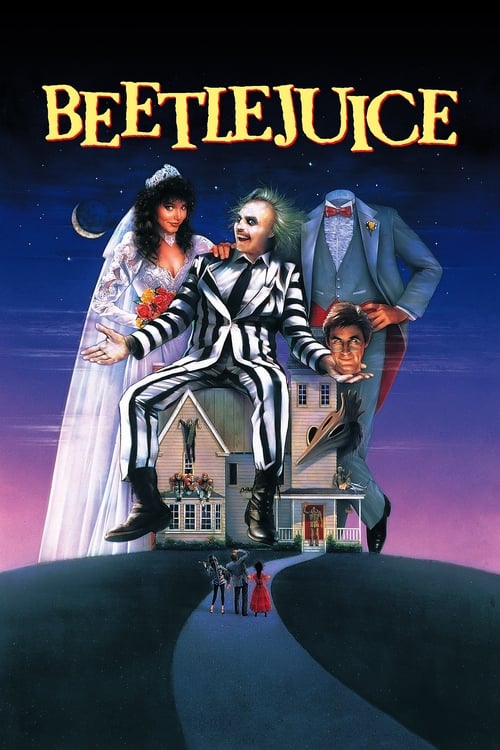
Beetlejuice
1988 · Directed by Tim Burton
Woke Score
CriticCritic Score
Audience
Ultra Based
Critics rated this 67 points above its woke score. Among Ultra Based films, this critic score ranks #603 of 1469.
Representation Casting
Score: 5/100
Geena Davis leads the film, but this reflects standard Hollywood casting rather than deliberate diversity initiatives. The role is simply written as a competent person.
LGBTQ+ Themes
Score: 0/100
No LGBTQ+ characters or themes appear in the film.
Feminist Agenda
Score: 0/100
While the female lead is capable and intelligent, this predates modern feminist consciousness in cinema and reflects no deliberate ideological positioning.
Racial Consciousness
Score: 0/100
The film contains no engagement with racial themes or consciousness.
Climate Crusade
Score: 0/100
No climate messaging or environmental advocacy appears in this supernatural comedy.
Eat the Rich
Score: 25/100
The film gently satirizes the wealthy, pretentious Deetzes and their materialism, contrasting them with the working-class Maitlands. This satire emerges naturally from plot rather than ideological intent.
Body Positivity
Score: 0/100
No body positivity themes or messaging are present.
Neurodivergence
Score: 0/100
The film contains no representation or discussion of neurodivergence.
Revisionist History
Score: 0/100
This is not a historical film and contains no revisionist history.
Lecture Energy
Score: 0/100
The film prioritizes entertainment and comedy over any preachy messaging or lectures.


Synopsis
A newly dead New England couple seeks help from a deranged demon exorcist to scare an affluent New York family out of their home.
Consciousness Assessment
Beetlejuice arrives from 1988 with the cultural sensibilities of 1988, which is to say, almost none of the markers we have learned to recognize. Tim Burton's film is a supernatural comedy preoccupied with visual inventiveness and dark humor rather than with any project of social consciousness. The plot contrasts a working-class couple with an affluent New York family, and there is something like class satire here, though it arrives gently and without ideological fervor. The Deetzes are ridiculous precisely because they are ridiculous, not because their wealth is presented as a systemic injustice requiring correction. Geena Davis carries the film with intelligence and capability, but this is simply who the character is, not a statement about representation. Michael Keaton's Beetlejuice is a chaotic force of nature, and the film's energy comes from his anarchic performance rather than from any deeper thematic architecture. The film won an Academy Award for makeup, and that achievement tells us everything: it was celebrated for craft and technical mastery. There is nothing wrong with this. It is, in fact, the appropriate baseline for cinema before the emergence of the cultural moment we are now tasked with measuring. A film about a haunted house and a malicious spirit has no obligation to reckon with the social consciousness of 2024. We find it quaint that it does not.
Analysis generated by our Consciousness Algorithm
Critic Reviews
“Hilarious…The joy of Beetlejuice is its completely bizarre -- but perfectly realized -- view of the world, a la Gary Larson's "The Far Side," or "The Hitchhiker's Guide to the Galaxy." [1 Apr 1988]”
“By the time this irresistible treat is over, it has created some of the funniest moments and most inspired visual humor and design we may expect to experience at the movies all year. [30 Mar 1988]”
“The story almost comes off the rails, but Beetlejuice’s charm lies more in the execution. The movie is crammed with visual invention and snappy comedy. The afterlife is richly imagined as a macabre bureaucracy. The living world is no less outlandish, especially with those eye-popping interiors and costumes.”
“It's two hours of your life wasted, time once spent that can never be regained. Don't go. Don't do it. [30 Mar 1988]”
Consciousness Markers
Geena Davis leads the film, but this reflects standard Hollywood casting rather than deliberate diversity initiatives. The role is simply written as a competent person.
No LGBTQ+ characters or themes appear in the film.
While the female lead is capable and intelligent, this predates modern feminist consciousness in cinema and reflects no deliberate ideological positioning.
The film contains no engagement with racial themes or consciousness.
No climate messaging or environmental advocacy appears in this supernatural comedy.
The film gently satirizes the wealthy, pretentious Deetzes and their materialism, contrasting them with the working-class Maitlands. This satire emerges naturally from plot rather than ideological intent.
No body positivity themes or messaging are present.
The film contains no representation or discussion of neurodivergence.
This is not a historical film and contains no revisionist history.
The film prioritizes entertainment and comedy over any preachy messaging or lectures.