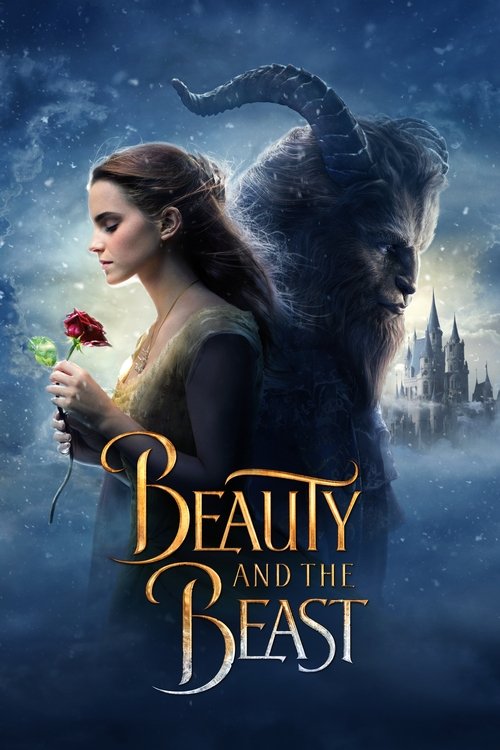
Beauty and the Beast
2017 · Directed by Bill Condon
Woke Score
CriticCritic Score
Audience
Woke-Adjacent
Critics rated this 13 points above its woke score. Among Woke-Adjacent films, this critic score ranks #95 of 151.
Representation Casting
Score: 62/100
Emma Watson's casting signals progressive intent and Belle's role has been expanded to emphasize intellectual pursuits. However, the cast remains predominantly white with limited racial diversity in major roles.
LGBTQ+ Themes
Score: 35/100
LeFou's character includes a subtle LGBTQ moment that was heavily marketed but proved minimal in execution. The restraint and ambiguity suggest discomfort with explicit representation.
Feminist Agenda
Score: 65/100
Belle's character has been retrofitted with expanded intellectual interests and professional ambitions compared to the animated original. However, the core narrative remains centered on romantic partnership as fulfillment.
Racial Consciousness
Score: 25/100
The film maintains predominantly white casting with minimal racial diversity in significant roles. No engagement with racial themes or historical context is present.
Climate Crusade
Score: 0/100
No climate or environmental themes are present in this fairy tale adaptation.
Eat the Rich
Score: 15/100
The film reinforces traditional class structures and contains no critique of wealth, labor, or economic systems beyond the basic fairy tale framework.
Body Positivity
Score: 10/100
The film operates within conventional beauty standards with no engagement with body diversity or body positivity messaging.
Neurodivergence
Score: 0/100
No representation of neurodivergence or disability beyond the magical curse placed on the prince is present.
Revisionist History
Score: 20/100
The film makes minor additions to Belle's backstory but does not engage in revisionist historical framing or recontextualization of historical events.
Lecture Energy
Score: 40/100
The film contains some expository dialogue explaining Belle's progressive values and intellectual interests, though it generally allows the narrative to proceed without heavy-handed moralizing.


Synopsis
A live-action adaptation of Disney's version of the classic tale of a cursed prince and a beautiful young woman who helps him break the spell.
Consciousness Assessment
Disney's 2017 live-action remake exists primarily as a corporate response to sustained feminist criticism of its 1991 animated predecessor. The studio understood that casting Emma Watson, a former Harry Potter star and UN Women's Goodwill Ambassador, would signal progressive intentions to the contemporary audience. Belle's character has been retrofitted with expanded intellectual pursuits and professional ambitions, though the fundamental narrative remains one of a young woman finding fulfillment through romantic partnership with a powerful man. The film presents these additions not as genuine character evolution but as defensive maneuvers against criticism that has been lodged for three decades.
The most revealing aspect of this production involves its handling of LGBTQ representation. Director Bill Condon, himself openly gay, generated considerable pre-release publicity by describing an "exclusively gay moment" for the character LeFou. Upon release, this moment proved to be a brief dance sequence of such restraint and ambiguity that even the actor Josh Gad later claimed he never played the character as gay. The contradiction between marketing promise and actual content reveals the film's discomfort with the progressive sensibilities it purports to embrace. The movie received criticism from both conservative audiences objecting to any suggestion of homosexual content and progressive audiences disappointed by the timidity of its representation.
Regarding racial diversity, the film maintains the predominantly white casting of its source material with only peripheral characters of color in the ensemble. There is no engagement with historical context regarding class, labor, or economic structures beyond the basic fairy tale framework. Body positivity and neurodivergence receive no attention whatsoever. The film operates as a sophisticated corporate calculation: sufficient progressive markers to satisfy liberal audiences while remaining inoffensive enough to maintain broad commercial appeal. It is, in essence, the cultural equivalent of a luxury brand's diversity initiative, undertaken not from conviction but from market research.
Analysis generated by our Consciousness Algorithm
Critic Reviews
“Beauty and the Beast creates an air of enchantment from its first moments, one that lingers and builds and takes on qualities of warmth and generosity as it goes along.”
“There’s no need to worry that this version might crush the gentle charms of the 1991 picture: Even though Condon more or less faithfully follows that movie’s plot, this Beauty is its own resplendent creature. ”
“This Beauty and the Beast had me leaving the theater feeling utterly happy; like I’d spent time with old friends who’d grown and changed, and yet remained the same at heart.”
“It’s largely a frustrating clone of the original movie — same songs, same script, often even the exact same shot choices — but it replaces every moment of authentic or moving emotion with bombast and hyperbolic overemphasis.”
Consciousness Markers
Emma Watson's casting signals progressive intent and Belle's role has been expanded to emphasize intellectual pursuits. However, the cast remains predominantly white with limited racial diversity in major roles.
LeFou's character includes a subtle LGBTQ moment that was heavily marketed but proved minimal in execution. The restraint and ambiguity suggest discomfort with explicit representation.
Belle's character has been retrofitted with expanded intellectual interests and professional ambitions compared to the animated original. However, the core narrative remains centered on romantic partnership as fulfillment.
The film maintains predominantly white casting with minimal racial diversity in significant roles. No engagement with racial themes or historical context is present.
No climate or environmental themes are present in this fairy tale adaptation.
The film reinforces traditional class structures and contains no critique of wealth, labor, or economic systems beyond the basic fairy tale framework.
The film operates within conventional beauty standards with no engagement with body diversity or body positivity messaging.
No representation of neurodivergence or disability beyond the magical curse placed on the prince is present.
The film makes minor additions to Belle's backstory but does not engage in revisionist historical framing or recontextualization of historical events.
The film contains some expository dialogue explaining Belle's progressive values and intellectual interests, though it generally allows the narrative to proceed without heavy-handed moralizing.