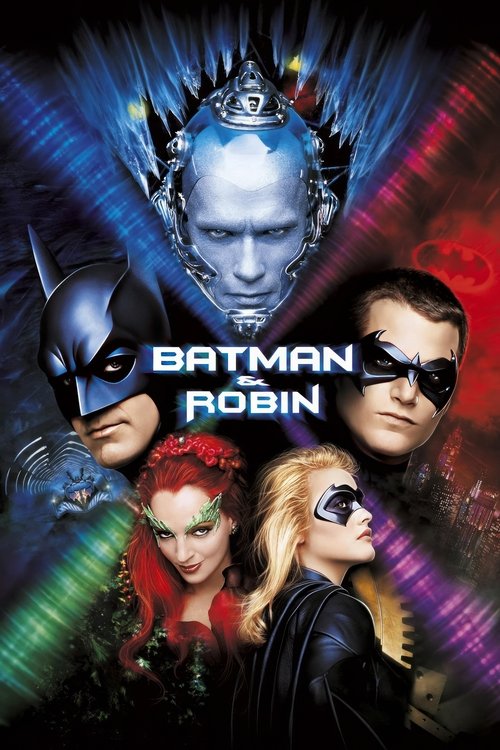
Batman & Robin
1997 · Directed by Joel Schumacher
Woke Score
CriticCritic Score
Audience
Ultra Based
Critics rated this 21 points above its woke score. Among Ultra Based films, this critic score ranks #1440 of 1469.
Representation Casting
Score: 35/100
The film features diverse casting with actors of color in supporting roles and includes female characters in action sequences, though this appears incidental rather than intentional representation.
LGBTQ+ Themes
Score: 0/100
No LGBTQ+ themes, characters, or subtext are present in the film. The material is entirely heterosexual in orientation.
Feminist Agenda
Score: 15/100
While female characters are present and given action roles, they are primarily coded as visual spectacles. Poison Ivy's power derives from seduction, and Batgirl's inclusion lacks thematic purpose beyond adding another protagonist.
Racial Consciousness
Score: 5/100
The film features actors of various racial backgrounds in the cast, but there is no meaningful engagement with racial themes or consciousness. Representation appears incidental.
Climate Crusade
Score: 20/100
Mr. Freeze's motivation involves environmental catastrophe and the need to freeze the planet, which touches on climate concerns, though the film treats this as campy villainy rather than serious environmental commentary.
Eat the Rich
Score: 15/100
Mr. Freeze's backstory involves corporate indifference to his wife's medical condition, suggesting anti-capitalist sentiment, but the film never develops this critique beyond surface-level plot mechanics.
Body Positivity
Score: 0/100
The film makes no effort toward body positivity. Its aesthetic is entirely committed to idealized, hypersexualized bodies, particularly in its portrayal of female characters.
Neurodivergence
Score: 0/100
No representation of neurodivergence is present. The film contains no meaningful engagement with neurodivergent characters or themes.
Revisionist History
Score: 0/100
The film is a contemporary superhero narrative with no historical content to revise or reinterpret.
Lecture Energy
Score: 0/100
Despite its occasional touches of social themes, the film makes no attempt at moralizing or preachy messaging. It is too committed to spectacle to engage in lectures.


Synopsis
Batman and his sidekick Robin attempt to the foil the sinister schemes of a deranged set of new villains, most notably the melancholy Mr. Freeze, who wants to make Gotham City into an arctic region, and the sultry Poison Ivy, a botanical femme fatale. As the Dynamic Duo contend with these bad guys, a third hero, Batgirl, joins the ranks of the city's crime-fighters.
Consciousness Assessment
Batman & Robin emerges from the late 1990s as a curious artifact of its moment, a film so aggressively committed to spectacle over substance that it inadvertently stumbles into a handful of progressive markers while simultaneously undermining them with almost supernatural consistency. The addition of Batgirl, played by Alicia Silverstone, and the prominent presence of Poison Ivy, portrayed by Uma Thurman, suggests some attempt at female representation within the superhero ensemble. Yet these characters function primarily as visual objects within Schumacher's neon-soaked fever dream, their agency consistently subordinated to the demands of camp aesthetics and male-centered action sequences.
The film's relationship with its female characters reveals the fundamental tension at the heart of its mild social consciousness. Poison Ivy is coded as a seductress whose power derives from her sexuality, a tired trope dressed up in botanical terminology. Batgirl enters the narrative as a late addition, her inclusion more structural than thematic. The film makes no genuine attempt to interrogate gender dynamics, corporate power, or any substantive social issue. Mr. Freeze's plight, rooted in medical tragedy and corporate indifference, touches on anti-capitalist sentiment only in the most superficial manner. His villainy is treated as campy spectacle rather than as a legitimate critique of systemic failure.
What ultimately prevents this film from scoring lower is its diverse casting, which includes actors of color in various roles, and its sheer refusal to take itself seriously. This refusal, while disastrous for coherence, occasionally permits a kind of colorblind entertainment that sidesteps the more egregious exclusionary practices of mainstream cinema. Yet this represents accidental representation rather than intentional cultural consciousness. The film's progressive markers emerge despite the project's fundamental vapidity, not because of any sustained commitment to social awareness.
Analysis generated by our Consciousness Algorithm
Critic Reviews
“Joel Schumacher, director and ringmaster, piles on the flashy showmanship and keeps the film as big, bold, noisy and mindlessly overwhelming as possible.”
“There's something almost maniacally heroic about packaging the fourth sequel of a superhero action series without resorting to the old standbys of good writing, capable acting or inspired directing.”
“Unfortunately, the charming Batfamily can't stay in their cave indefinitely; they've got to go out and fight crime. And that's where this elaborately high-style production from Batman Forever director Joel Schumacher hits an iceberg. ”
“Campy costumes can't disguise the incoherent plot, confused performances and lame script that send this star vehicle spiralling downward.”
Consciousness Markers
The film features diverse casting with actors of color in supporting roles and includes female characters in action sequences, though this appears incidental rather than intentional representation.
No LGBTQ+ themes, characters, or subtext are present in the film. The material is entirely heterosexual in orientation.
While female characters are present and given action roles, they are primarily coded as visual spectacles. Poison Ivy's power derives from seduction, and Batgirl's inclusion lacks thematic purpose beyond adding another protagonist.
The film features actors of various racial backgrounds in the cast, but there is no meaningful engagement with racial themes or consciousness. Representation appears incidental.
Mr. Freeze's motivation involves environmental catastrophe and the need to freeze the planet, which touches on climate concerns, though the film treats this as campy villainy rather than serious environmental commentary.
Mr. Freeze's backstory involves corporate indifference to his wife's medical condition, suggesting anti-capitalist sentiment, but the film never develops this critique beyond surface-level plot mechanics.
The film makes no effort toward body positivity. Its aesthetic is entirely committed to idealized, hypersexualized bodies, particularly in its portrayal of female characters.
No representation of neurodivergence is present. The film contains no meaningful engagement with neurodivergent characters or themes.
The film is a contemporary superhero narrative with no historical content to revise or reinterpret.
Despite its occasional touches of social themes, the film makes no attempt at moralizing or preachy messaging. It is too committed to spectacle to engage in lectures.