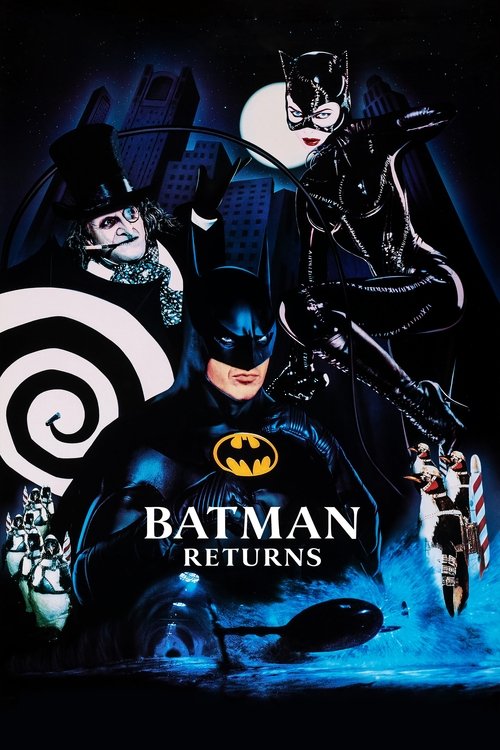
Batman Returns
1992 · Directed by Tim Burton
Woke Score
CriticCritic Score
Audience
Ultra Based
Critics rated this 60 points above its woke score. Among Ultra Based films, this critic score ranks #690 of 1469.
Representation Casting
Score: 15/100
The cast is predominantly white, reflecting 1992 Hollywood demographics. Michelle Pfeiffer as Catwoman provides female representation, but she is primarily defined through sexuality and romantic/antagonistic relationship to Batman rather than as an independent figure making political statements.
LGBTQ+ Themes
Score: 0/100
No LGBTQ+ themes, representation, or subtext present in the film. The narrative concerns itself entirely with heterosexual relationships and power dynamics.
Feminist Agenda
Score: 22/100
Catwoman's transformation grants her agency and power, but this is presented as personal liberation and erotic awakening rather than feminist consciousness. The film does not engage with systemic gender oppression or position female empowerment as a political goal.
Racial Consciousness
Score: 5/100
The film contains no racial consciousness or commentary. Gotham is presented as a monochromatic metropolis where race is not a factor in the narrative or visual composition.
Climate Crusade
Score: 0/100
No climate themes, environmental consciousness, or ecological commentary of any kind. The film is indifferent to questions of environmental sustainability.
Eat the Rich
Score: 10/100
Max Shreck is a corrupt businessman, but his villainy is personal and individual rather than systemic. The film presents him as a bad person, not as evidence of capitalism's inherent corruption.
Body Positivity
Score: 8/100
The Penguin's physical deformity is treated as grotesque and tragic. While Burton embraces the grotesque aesthetically, the film does not celebrate bodily difference or challenge beauty standards in any progressive sense.
Neurodivergence
Score: 5/100
The Penguin's rage and social dysfunction are portrayed as consequences of trauma and rejection. There is no framework for understanding neurodivergence as valid difference; his alienation is presented as tragic motivation for villainy.
Revisionist History
Score: 0/100
The film contains no historical revisionism. It is set in a fictional Gotham and engages with no real historical narratives or events.
Lecture Energy
Score: 2/100
Batman Returns is entirely free of preachy intent or moralizing about social issues. Its only explicit message concerns the nature of corruption, which it treats as a character trait rather than a structural problem.


Synopsis
The monstrous Penguin, who dwells in the sewers beneath Gotham, joins up with corrupt mayoral candidate Max Shreck to topple the Batman once and for all. But when Shreck's timid assistant Selina Kyle finds out, and Shreck tries to kill her, she's transformed into the sexy Catwoman. She teams up with the Penguin and Shreck to destroy Batman, but sparks fly unexpectedly when she confronts the caped crusader.
Consciousness Assessment
Batman Returns is a film that operates entirely in the pre-woke register, concerned with visual excess, gothic atmosphere, and the interior lives of its villains rather than any systematic interrogation of social structures. Tim Burton's sensibility is anarchic and individualistic, not collectivist. Catwoman's arc, while featuring a woman who embraces agency and sexuality on her own terms, is presented through a lens of personal transformation and erotic awakening rather than feminist consciousness. She is sexy, yes, and powerful, but the film does not position her agency as a political statement about gender liberation. The Penguin's physical deformity is played for pathos and gothic tragedy, not as a vehicle for disability representation or neurodivergent celebration. We are meant to understand his rage as the product of abandonment and social rejection, classical villainous motivation from the Batman canon, not as commentary on ableist systems.
The film's capitalism is corrupt in the manner of 1940s noir, with Max Shreck as a generic tycoon villain rather than a figure whose evil is positioned as inherent to the system itself. There is no anti-capitalist framework here, merely the observation that some rich people are bad. The racial composition of Gotham reflects 1992 Hollywood, which is to say it features white men almost exclusively. The film contains no LGBTQ+ themes, no climate consciousness, no body positivity agenda, no revisionist history, and virtually no lecture energy. It is a stylish, violent entertainment about a man in a cape fighting attractive people in costumes.
What we see instead is pure Burton: a director interested in the grotesque, the misfit, the emotionally damaged. This is humanism of a sort, but not progressive humanism. It is the humanism of the Romantic tradition, which finds beauty in suffering and alienation. The film works because it is internally consistent, gorgeously composed, and genuinely entertaining. It does not work because it has anything to say about the state of the world in 2024. It is content to be what it is: a Batman movie made in 1992, when such things did not yet require social consciousness to justify their existence.
Analysis generated by our Consciousness Algorithm
Critic Reviews
“Batman Returns could mark a happy beginning for Hollywood -- not because it might make a mint but because it dispenses with realism and aspires to animation, to the freedom of idea and image found in the best feature-length cartoons. ”
“I find it the most adventurous and imaginative American film I've seen this year - and also the weirdest.”
“The passion that was brought to creating the perilous and dark world is just so spectacular to take in. If modern superhero films had even one iota of the creativity of this one, they wouldn’t grow so tiresome.”
“The film preaches the gospel of unpredictable change, of ironic metamorphosis, of a psychological ebb and flow from love to lust, hope to despair, good to evil. But if the message is fluid, the medium is static at best and chaotic at worst - there's very little controlled motion in this picture. [19 June 1992]”
Consciousness Markers
The cast is predominantly white, reflecting 1992 Hollywood demographics. Michelle Pfeiffer as Catwoman provides female representation, but she is primarily defined through sexuality and romantic/antagonistic relationship to Batman rather than as an independent figure making political statements.
No LGBTQ+ themes, representation, or subtext present in the film. The narrative concerns itself entirely with heterosexual relationships and power dynamics.
Catwoman's transformation grants her agency and power, but this is presented as personal liberation and erotic awakening rather than feminist consciousness. The film does not engage with systemic gender oppression or position female empowerment as a political goal.
The film contains no racial consciousness or commentary. Gotham is presented as a monochromatic metropolis where race is not a factor in the narrative or visual composition.
No climate themes, environmental consciousness, or ecological commentary of any kind. The film is indifferent to questions of environmental sustainability.
Max Shreck is a corrupt businessman, but his villainy is personal and individual rather than systemic. The film presents him as a bad person, not as evidence of capitalism's inherent corruption.
The Penguin's physical deformity is treated as grotesque and tragic. While Burton embraces the grotesque aesthetically, the film does not celebrate bodily difference or challenge beauty standards in any progressive sense.
The Penguin's rage and social dysfunction are portrayed as consequences of trauma and rejection. There is no framework for understanding neurodivergence as valid difference; his alienation is presented as tragic motivation for villainy.
The film contains no historical revisionism. It is set in a fictional Gotham and engages with no real historical narratives or events.
Batman Returns is entirely free of preachy intent or moralizing about social issues. Its only explicit message concerns the nature of corruption, which it treats as a character trait rather than a structural problem.