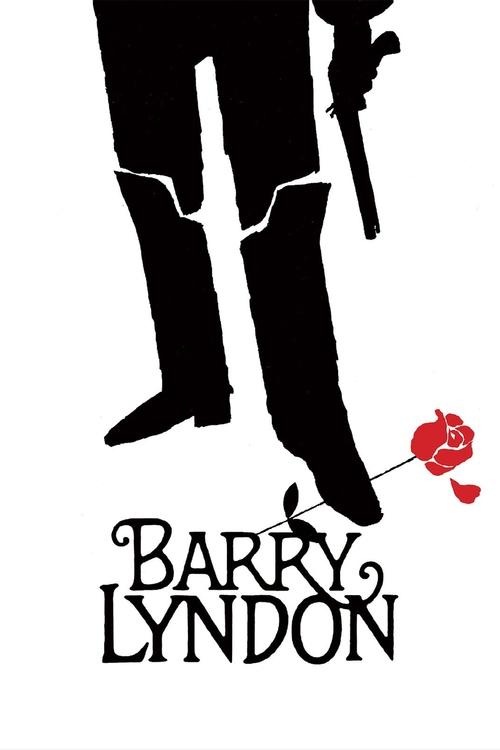
Barry Lyndon
1975 · Directed by Stanley Kubrick
Woke Score
CriticCritic Score
Audience
Ultra Based
Critics rated this 87 points above its woke score. Among Ultra Based films, this critic score ranks #160 of 1469.
Representation Casting
Score: 5/100
The film depicts an 18th-century English world with historically appropriate casting. No deliberate effort to exclude or include diverse representation, simply period-accurate casting reflecting the historical setting.
LGBTQ+ Themes
Score: 0/100
No LGBTQ+ themes, subtext, or representation present. The film contains no engagement with queer identity or sexuality beyond heterosexual relationships of the period.
Feminist Agenda
Score: 2/100
Female characters are depicted as products of their historical moment, objectified and manipulated without contemporary feminist critique or reframing. Lady Lyndon is victimized but this is not presented as commentary on gender systems.
Racial Consciousness
Score: 0/100
The film contains no racial consciousness or engagement with race as a social category. It depicts a historically white English and Irish society without commentary or awareness of racial systems.
Climate Crusade
Score: 0/100
No climate consciousness or environmental awareness present. The film shows no concern with ecological themes or sustainability.
Eat the Rich
Score: 0/100
The film depicts class mobility and social climbing without anti-capitalist critique. Capitalism and class hierarchies are presented as natural features of the world, not systems to be questioned.
Body Positivity
Score: 0/100
No body positivity agenda or celebration of bodily diversity. The film contains conventional period beauty standards without comment or subversion.
Neurodivergence
Score: 0/100
No representation of neurodivergence or engagement with disability and neurodiversity. Characters are presented as neurotypical without exploration of alternative cognition.
Revisionist History
Score: 0/100
The film presents a straightforward historical narrative without revisionist reframing of historical events or figures. It adapts the source material faithfully rather than reimagining history through contemporary lenses.
Lecture Energy
Score: 3/100
Kubrick maintains ironic distance and formal detachment throughout, avoiding preachy messaging or moral instruction. The narrative presents events with observational coolness rather than explicit commentary or lectures.


Synopsis
An Irish rogue uses his cunning and wit to work his way up the social classes of 18th century England, transforming himself from the humble Redmond Barry into the noble Barry Lyndon.
Consciousness Assessment
Barry Lyndon stands as a monument to pre-woke cinema, a visually extraordinary 18th-century period piece rendered with painterly precision and formal mastery. Stanley Kubrick's adaptation of Thackeray's novel follows an Irish rogue's ascent through Georgian society, depicting his manipulations and social climbing with cool aesthetic distance rather than moral commentary. The film achieves its effects through revolutionary cinematography, including candlelit scenes shot with special lenses, creating tableaux that resemble 18th-century paintings. This formal innovation is the film's primary concern, not the exploration of social consciousness or contemporary cultural awareness.
The film presents the historical world with accurate specificity, which means it contains no modern progressive markers. The absence of diverse casting reflects historical authenticity rather than exclusionary intent. Female characters exist as victims of Barry's schemes or as social fixtures of their time, depicted without contemporary critique or feminist reframing. There is no engagement with class consciousness as a means of anti-capitalist messaging, no environmental awareness, no celebration of bodily diversity, and no neurodivergent representation. The narrative maintains ironic distance from its protagonist's moral transgressions, treating his rise and fall with detached observation.
This is not a failure on the film's part. Rather, it represents a different era of cinema, one in which formal experimentation and historical storytelling operated independent of the cultural frameworks that would emerge decades later. The film's artistic significance remains undiminished by its complete lack of engagement with modern social consciousness. We observe here a work that has aged into historical curiosity from the perspective of contemporary cultural analysis, a perfect artifact of its time, untouched by the preoccupations of a future it could not have anticipated.
Analysis generated by our Consciousness Algorithm
Critic Reviews
“This is a story of identity, and the lack of it. And it’s fascinating. ”
“Between the vast exteriors and candlelit interiors, the expressive authority of Kubrick’s direction is breathtaking.”
“Barry Lyndon is a rich cinematic experience which fully deserves to once more be seen on the big screen and enjoy its status as one of Stanley Kubrick’s greatest achievements.”
“Seeking the sources of our alienation in the explosively random energies of the eighteenth century, Kubrick has created an epic of esthetic self-indulgence, beautiful but empty. He needs to come back to earth from the outer spaces of past and future. [22 Dec 1975, p.49]”
Consciousness Markers
The film depicts an 18th-century English world with historically appropriate casting. No deliberate effort to exclude or include diverse representation, simply period-accurate casting reflecting the historical setting.
No LGBTQ+ themes, subtext, or representation present. The film contains no engagement with queer identity or sexuality beyond heterosexual relationships of the period.
Female characters are depicted as products of their historical moment, objectified and manipulated without contemporary feminist critique or reframing. Lady Lyndon is victimized but this is not presented as commentary on gender systems.
The film contains no racial consciousness or engagement with race as a social category. It depicts a historically white English and Irish society without commentary or awareness of racial systems.
No climate consciousness or environmental awareness present. The film shows no concern with ecological themes or sustainability.
The film depicts class mobility and social climbing without anti-capitalist critique. Capitalism and class hierarchies are presented as natural features of the world, not systems to be questioned.
No body positivity agenda or celebration of bodily diversity. The film contains conventional period beauty standards without comment or subversion.
No representation of neurodivergence or engagement with disability and neurodiversity. Characters are presented as neurotypical without exploration of alternative cognition.
The film presents a straightforward historical narrative without revisionist reframing of historical events or figures. It adapts the source material faithfully rather than reimagining history through contemporary lenses.
Kubrick maintains ironic distance and formal detachment throughout, avoiding preachy messaging or moral instruction. The narrative presents events with observational coolness rather than explicit commentary or lectures.