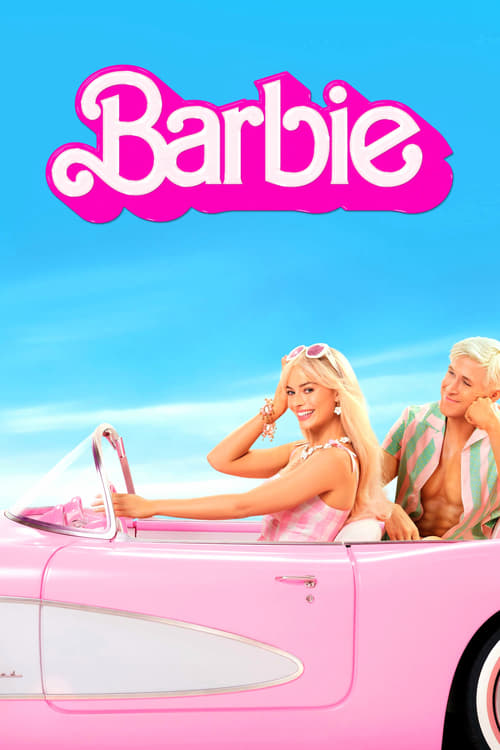
Barbie
2023 · Directed by Greta Gerwig
Woke Score
Critic Score
Audience
Woke
Critics rated this 20 points above its woke score. Among Woke films, this critic score ranks #17 of 57.
Representation Casting
Score: 82/100
The cast features deliberate racial and ethnic diversity across multiple Barbie and Ken variants, with prominent roles for actors of color. This represents intentional representation rather than incidental inclusion, though character depth varies considerably.
LGBTQ+ Themes
Score: 45/100
The film features Hari Nef, a transgender actress, in a supporting role as one of the Barbies. However, the character receives minimal screen time and the film does not explicitly center or develop LGBTQ+ narratives or themes.
Feminist Agenda
Score: 88/100
Feminist critique forms the film's primary intellectual preoccupation, with extensive examination of patriarchal structures, gender roles, and impossible female standards. America Ferrera's monologue articulates explicit feminist ideology, and the narrative arc revolves around rejecting patriarchal infiltration of Barbie Land.
Racial Consciousness
Score: 48/100
While the film includes diverse casting, it engages minimally with racial consciousness as a thematic concern. Diverse characters are present but treated as interchangeable variants rather than distinct perspectives on racial experience or identity.
Climate Crusade
Score: 12/100
The film contains no discernible environmental themes or climate consciousness. Barbie Land's plastic aesthetic and the film's focus on consumption remain unexamined from an ecological perspective.
Eat the Rich
Score: 35/100
The film critiques patriarchal capitalism and masculine greed but ultimately affirms Mattel as a workplace where professional women navigate careers successfully. Corporate structures escape systematic critique despite the film's satirical treatment of other institutions.
Body Positivity
Score: 52/100
The film acknowledges body diversity through its ensemble cast of Barbies with varying builds and appearances, contrasting with the original doll's proportions. However, the lead Barbie remains conventionally attractive, and the film treats body standards as a women's problem rather than a systemic design issue.
Neurodivergence
Score: 8/100
The film contains no meaningful engagement with neurodivergence, mental disability, or cognitive diversity. These dimensions of human experience remain entirely absent from the narrative.
Revisionist History
Score: 18/100
While Barbie Land's history is fictional by design, the film does not engage in revisionist reinterpretation of actual historical events. The real-world sequences remain set in contemporary Los Angeles rather than historical periods.
Lecture Energy
Score: 72/100
The film frequently prioritizes thematic exposition over narrative momentum, most notably in Gloria's extended monologue about female socialization. Multiple scenes pause plot development to deliver ideological clarification, creating an instructional quality.


Synopsis
Barbie and Ken are having the time of their lives in the colorful and seemingly perfect world of Barbie Land. However, when they get a chance to go to the real world, they soon discover the joys and perils of living among humans.
Consciousness Assessment
Greta Gerwig's Barbie operates as a meticulously calibrated artifact of contemporary progressive sensibilities, functioning simultaneously as corporate product and social critique. The film presents Barbie Land as a matriarchal utopia before Ken discovers the patriarchal Internet and introduces toxic masculinity into the system, a narrative device that transforms the plot into an extended lecture on gender dynamics. Margot Robbie's Barbie must journey to Los Angeles, where she encounters America Ferrera's Gloria, a Mattel executive who delivers an extended monologue about the impossible standards imposed on women, a scene that suspends the film's narrative momentum in favor of didactic clarity. The casting deliberately emphasizes diversity across its ensemble, with Issa Rae and Alexandra Shipp occupying significant roles as alternate Barbies, a choice that reads as representation checking rather than character necessity.
The film's intellectual apparatus remains largely focused on gender and patriarchal structures while treating other social dimensions with noticeably less precision. Ryan Gosling's Ken, allowed to become a parody of masculine entitlement, receives more philosophical weight than the supporting Kens portrayed by actors of color, who remain underdeveloped. The narrative engages minimally with questions of race, class, or economic justice beyond surface-level acknowledgment. Mattel itself appears in the film not as a target of systemic critique but as a workplace where professional women navigate their careers, a curious blind spot for a project that elsewhere mines corporate absurdity for satirical effect.
The film's central tension between entertainment and instruction creates an uneven viewing experience. Sequences celebrating the artificiality of Barbie Land demonstrate genuine cinematic imagination, while scenes devoted to unpacking gender ideology feel imported from a different screenplay. The movie wants to be both a joyful celebration of play and a serious examination of social construction, and these impulses frequently conflict. It remains undeniably a product designed for maximum cultural penetration, engineered to generate discourse while avoiding positions that might alienate significant audience segments.
Analysis generated by our Consciousness Algorithm
Critic Reviews
“Barbie knows it can be construed as a giant Mattel commercial. Look at how it highlights Barbie's outfits by having them stop in midair for product identification, or how even the discontinued Barbies have houses in Barbie Land. That self-awareness is part of the charm, along with the clever way the plot unfolds and the genuine love Gerwig has for her characters.”
“While it's impossible for any studio film to be truly subversive, this Mattel-approved comedy gets away with far more than you'd think was possible.”
“This Barbie is a modern movie masterpiece that must be seen to be believed.”
“It may be a comedy about a mass-produced plastic doll, but Barbie breaks the mould.”
“It is infectiously delightful, even if you're someone who might typically steer clear of chipper, pink-hued flicks. Somehow Gerwig has struck a balance between unhinged whimsy, deep humanity and comedic bliss. It's funny, it will make you cry and it feels almost like a rebellion.”
“Gerwig and Baumbach come out on the side of the power of the imagination but never discount the criticisms of this iconic American object. What the film does best, perhaps, is to understand and explain why people make up worlds, be they real systems of oppression or imaginary playsets.”
Consciousness Markers
The cast features deliberate racial and ethnic diversity across multiple Barbie and Ken variants, with prominent roles for actors of color. This represents intentional representation rather than incidental inclusion, though character depth varies considerably.
The film features Hari Nef, a transgender actress, in a supporting role as one of the Barbies. However, the character receives minimal screen time and the film does not explicitly center or develop LGBTQ+ narratives or themes.
Feminist critique forms the film's primary intellectual preoccupation, with extensive examination of patriarchal structures, gender roles, and impossible female standards. America Ferrera's monologue articulates explicit feminist ideology, and the narrative arc revolves around rejecting patriarchal infiltration of Barbie Land.
While the film includes diverse casting, it engages minimally with racial consciousness as a thematic concern. Diverse characters are present but treated as interchangeable variants rather than distinct perspectives on racial experience or identity.
The film contains no discernible environmental themes or climate consciousness. Barbie Land's plastic aesthetic and the film's focus on consumption remain unexamined from an ecological perspective.
The film critiques patriarchal capitalism and masculine greed but ultimately affirms Mattel as a workplace where professional women navigate careers successfully. Corporate structures escape systematic critique despite the film's satirical treatment of other institutions.
The film acknowledges body diversity through its ensemble cast of Barbies with varying builds and appearances, contrasting with the original doll's proportions. However, the lead Barbie remains conventionally attractive, and the film treats body standards as a women's problem rather than a systemic design issue.
The film contains no meaningful engagement with neurodivergence, mental disability, or cognitive diversity. These dimensions of human experience remain entirely absent from the narrative.
While Barbie Land's history is fictional by design, the film does not engage in revisionist reinterpretation of actual historical events. The real-world sequences remain set in contemporary Los Angeles rather than historical periods.
The film frequently prioritizes thematic exposition over narrative momentum, most notably in Gloria's extended monologue about female socialization. Multiple scenes pause plot development to deliver ideological clarification, creating an instructional quality.