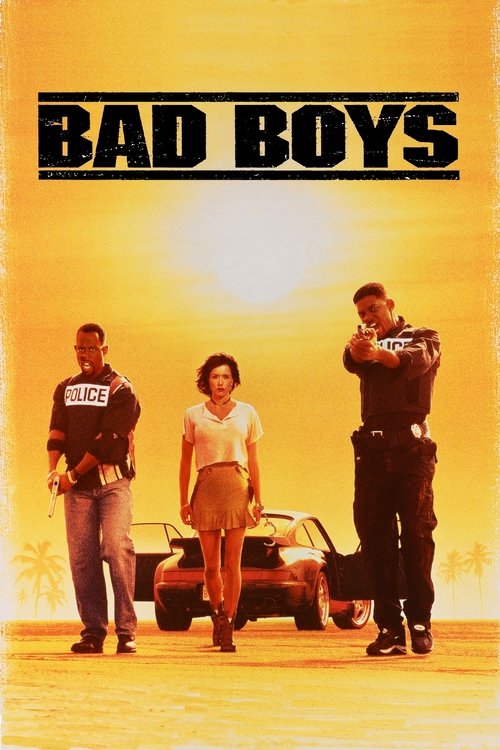
Bad Boys
1995 · Directed by Michael Bay
Woke Score
CriticCritic Score
Audience
Ultra Based
Critics rated this 37 points above its woke score. Among Ultra Based films, this critic score ranks #1334 of 1469.
Representation Casting
Score: 15/100
Two Black male leads in leading roles was notable for 1995 action cinema, but the film makes no thematic use of this casting choice. They are action heroes first, with racial identity treated as incidental rather than meaningful.
LGBTQ+ Themes
Score: 0/100
No LGBTQ+ themes, characters, or representation present in the film. The narrative centers entirely on heterosexual relationships and male bonding.
Feminist Agenda
Score: 5/100
Female characters exist primarily as plot devices and romantic interests. Téa Leoni's witness is played for comedy through her incompetence and vulnerability. The film reinforces traditional gender roles without examination.
Racial Consciousness
Score: 10/100
While the film features prominent Black leads, it does not engage in any thematic exploration of race, racism, or racial experience. The casting is not interrogated or made meaningful within the narrative.
Climate Crusade
Score: 0/100
No climate themes, environmental consciousness, or ecological concerns present in the film. The narrative is entirely divorced from environmental issues.
Eat the Rich
Score: 0/100
The film contains no critique of capitalism or examination of economic structures. Law enforcement and the status quo are treated as natural and necessary.
Body Positivity
Score: 0/100
No body positivity messaging or representation of diverse body types. The film follows conventional action cinema norms of physical idealization.
Neurodivergence
Score: 0/100
No neurodivergent characters or representation of neurodiversity. No acknowledgment of autism, ADHD, dyslexia, or other forms of neurodivergence.
Revisionist History
Score: 0/100
The film contains no historical content or revisionist engagement with history. It is set in a contemporary Miami crime narrative.
Lecture Energy
Score: 0/100
The film does not engage in moral instruction or preachy messaging. It prioritizes entertainment and action sequences over thematic instruction.


Synopsis
Marcus Burnett is a henpecked family man. Mike Lowrey is a footloose and fancy free ladies' man. Both Miami policemen, they have 72 hours to reclaim a consignment of drugs stolen from under their station's nose. To complicate matters, in order to get the assistance of the sole witness to a murder, they have to pretend to be each other.
Consciousness Assessment
Bad Boys arrives at the cultural moment of 1995 as a film concerned primarily with explosions, wisecracks, and the comedic friction between two incompatible partners. The film's representation of Black leads in an action film was notable for its era, though the movie itself makes no particular effort to examine or interrogate racial dynamics. Will Smith and Martin Lawrence carry the film with charisma and chemistry, but they exist within a narrative framework that treats their partnership as a straightforward buddy-cop formula rather than as a site for cultural exploration. The film is, in essence, indifferent to the progressive sensibilities that would later come to define Hollywood's approach to representation.
The female characters function primarily as plot devices and romantic interests. Téa Leoni's witness character is portrayed as an anxiety-ridden liability, and the film derives much of its humor from her incompetence and vulnerability. The narrative structure is built around masculine action heroics and the emotional bonds between the two male leads, with women existing in the margins. There is no examination of gender dynamics, no interrogation of power structures, no suggestion that these arrangements warrant reconsideration. This is simply how action films worked in 1995.
The film's stance toward capitalism, law enforcement, and institutional power is similarly unreflective. Bad Boys operates within the logic of police proceduralism without irony, celebrating law enforcement and treating the drug trade as an abstract antagonist rather than a phenomenon deserving systemic analysis. There is no climate consciousness, no disability representation, no neurodivergent characters, no engagement with revisionist history, and no hectoring moral instruction. What emerges is a film of its moment, concerned with entertainment rather than edification, and thus scoring low across markers that would define contemporary progressive filmmaking.
Analysis generated by our Consciousness Algorithm
Critic Reviews
“What Bay has really done is slice Beverly Hills Cop in two; Eddie Murphy's sandpaper personality in Lawrence and his silky style in Smith. [7 April 1995, p.7]”
“With more sophisticated writing, one suspects they could really soar: Even here, slowed by clunky, character-establishing lines and an all-devouring plot, they hit more often than they miss.”
“Formulaic sass machine... I was writhing in my seat.”
Consciousness Markers
Two Black male leads in leading roles was notable for 1995 action cinema, but the film makes no thematic use of this casting choice. They are action heroes first, with racial identity treated as incidental rather than meaningful.
No LGBTQ+ themes, characters, or representation present in the film. The narrative centers entirely on heterosexual relationships and male bonding.
Female characters exist primarily as plot devices and romantic interests. Téa Leoni's witness is played for comedy through her incompetence and vulnerability. The film reinforces traditional gender roles without examination.
While the film features prominent Black leads, it does not engage in any thematic exploration of race, racism, or racial experience. The casting is not interrogated or made meaningful within the narrative.
No climate themes, environmental consciousness, or ecological concerns present in the film. The narrative is entirely divorced from environmental issues.
The film contains no critique of capitalism or examination of economic structures. Law enforcement and the status quo are treated as natural and necessary.
No body positivity messaging or representation of diverse body types. The film follows conventional action cinema norms of physical idealization.
No neurodivergent characters or representation of neurodiversity. No acknowledgment of autism, ADHD, dyslexia, or other forms of neurodivergence.
The film contains no historical content or revisionist engagement with history. It is set in a contemporary Miami crime narrative.
The film does not engage in moral instruction or preachy messaging. It prioritizes entertainment and action sequences over thematic instruction.