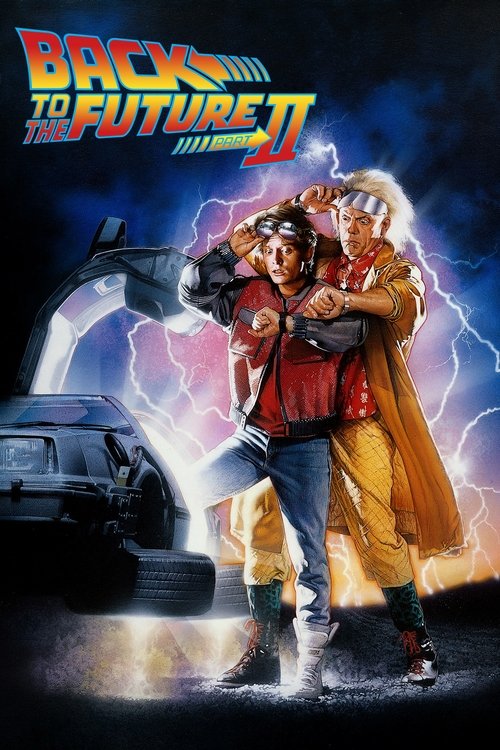
Back to the Future Part II
1989 · Directed by Robert Zemeckis
Woke Score
CriticCritic Score
Audience
Ultra Based
Critics rated this 53 points above its woke score. Among Ultra Based films, this critic score ranks #1004 of 1469.
Representation Casting
Score: 15/100
The cast reflects 1989 Hollywood demographics. Female characters are present but subordinate to the male protagonist's narrative. No meaningful diversity in supporting roles.
LGBTQ+ Themes
Score: 0/100
The film contains no LGBTQ+ themes, representation, or subtext. This was not a consideration in mainstream 1989 cinema of this type.
Feminist Agenda
Score: 8/100
Female characters serve supporting functions. Lorraine McFly exists primarily as an object of narrative concern. No examination of gender dynamics or women's agency appears in the text.
Racial Consciousness
Score: 5/100
The film demonstrates no racial consciousness. The 1955 setting allows avoidance of any substantive engagement with the racial context of that era. No characters of color hold meaningful roles.
Climate Crusade
Score: 0/100
Environmental concerns are entirely absent from the film. The future sequences contain no commentary on climate change or ecological sustainability.
Eat the Rich
Score: 8/100
The 2015 sequences mock consumer excess, but the critique is superficial and individualistic rather than structural. No systemic analysis of capitalism appears.
Body Positivity
Score: 0/100
Body positivity is not a concern of the film. Physical appearance is treated conventionally, with no commentary on body diversity or acceptance.
Neurodivergence
Score: 0/100
The film contains no representation of or engagement with neurodivergent characters or perspectives.
Revisionist History
Score: 25/100
The 1955 sequences present an idealized, nostalgic version of the past. The film romanticizes mid-century America without acknowledging its systemic injustices, though this is more product of Reagan-era nostalgia than deliberate revisionism.
Lecture Energy
Score: 10/100
The film avoids overt preachiness, preferring entertainment to messaging. Whatever social commentary exists emerges through plot rather than character speeches.


Synopsis
Marty and Doc are at it again as the time-traveling duo head to 2015 to nip some McFly family woes in the bud. But things go awry thanks to bully Biff Tannen and a pesky sports almanac. In a last-ditch attempt to set things straight, Marty finds himself bound for 1955 and face to face with his teenage parents -- again.
Consciousness Assessment
Back to the Future Part II remains a technical marvel and a genuine feat of imaginative filmmaking, yet it carries the social sensibilities of a film made in 1989 for an audience nostalgic for 1955. The narrative constructs itself around a thoroughly masculine adventure, with Marty McFly as the sole agent of change across three temporal periods. Female characters exist primarily as objects of concern or romantic interest rather than as protagonists of their own destinies. The film's vision of the future, for all its hoverboards and flying cars, does not extend to any meaningful reimagining of gender roles or social structures.
The 2015 sequences, intended as satire of then-contemporary consumer culture, operate from a fundamentally conservative position. They mock the world Zemeckis imagines we will become, but the mockery contains no systemic critique. The film presents a future that is simultaneously overrun with frivolous consumption and corporate dominance, yet offers no alternative vision. This is Reagan-era social commentary: problems are identified through the lens of personal responsibility and nostalgia, not structural analysis. The McFly family troubles exist because individuals have failed to exercise proper self-discipline, not because anything systemic requires examination.
The racial and ethnic composition of the cast reflects the Hollywood standards of 1989, which is to say it reflects a particular blindness. The temporal leaps allow the film to avoid any substantive engagement with the racial dynamics of either 1955 or 2015. Biff Tannen's villainy is personal and cartoonish, not ideological. The film's greatest achievement remains its technical execution and its genuine inventiveness with the time-travel premise. Its cultural consciousness, however, is precisely what we might expect from a major studio production of this era: present, but not particularly developed.
Analysis generated by our Consciousness Algorithm
Critic Reviews
“It twists it, shakes it and stands it on its ear. But as before, the film's technical brilliance is the least of its appeals. Satirically acute, intricately structured and deftly paced, it is at heart stout, good and untainted by easy sentiment.”
“All in all, Future II is another fantastic voyage in a thoroughly entertaining contraption.”
“Back to the Future deserved a chance to come back, especially under the cheerful, enterprising, mathematically minded stewardship of Mr. Zemeckis and Mr. Gale. Their new film isn't an ordinary sequel. It's as if the earlier film had been squared.”
“Given Part II's quality, the final sequence, a series of clips from next summer's Part III, may be a major miscalculation. "To be concluded," reads the final title. Sounds more like a threat than a promise. [22 Nov 1989, p.C9]”
Consciousness Markers
The cast reflects 1989 Hollywood demographics. Female characters are present but subordinate to the male protagonist's narrative. No meaningful diversity in supporting roles.
The film contains no LGBTQ+ themes, representation, or subtext. This was not a consideration in mainstream 1989 cinema of this type.
Female characters serve supporting functions. Lorraine McFly exists primarily as an object of narrative concern. No examination of gender dynamics or women's agency appears in the text.
The film demonstrates no racial consciousness. The 1955 setting allows avoidance of any substantive engagement with the racial context of that era. No characters of color hold meaningful roles.
Environmental concerns are entirely absent from the film. The future sequences contain no commentary on climate change or ecological sustainability.
The 2015 sequences mock consumer excess, but the critique is superficial and individualistic rather than structural. No systemic analysis of capitalism appears.
Body positivity is not a concern of the film. Physical appearance is treated conventionally, with no commentary on body diversity or acceptance.
The film contains no representation of or engagement with neurodivergent characters or perspectives.
The 1955 sequences present an idealized, nostalgic version of the past. The film romanticizes mid-century America without acknowledging its systemic injustices, though this is more product of Reagan-era nostalgia than deliberate revisionism.
The film avoids overt preachiness, preferring entertainment to messaging. Whatever social commentary exists emerges through plot rather than character speeches.