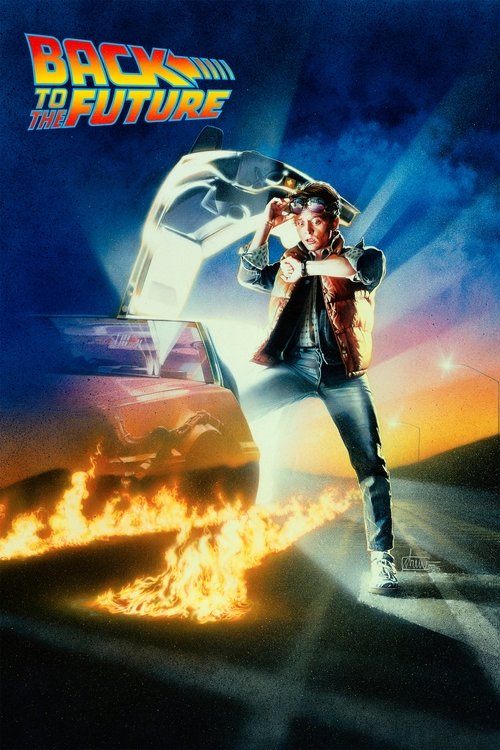
Back to the Future
1985 · Directed by Robert Zemeckis
Woke Score
CriticCritic Score
Audience
Ultra Based
Critics rated this 84 points above its woke score. Among Ultra Based films, this critic score ranks #180 of 1469.
Representation Casting
Score: 5/100
The cast is predominantly white with no meaningful minority representation. The few non-white characters appear briefly without context or development, reflecting 1985 Hollywood norms rather than any deliberate commitment to diverse casting.
LGBTQ+ Themes
Score: 0/100
No LGBTQ+ characters, themes, or subtext are present in the film. Sexual orientation and gender identity are not addressed in any capacity.
Feminist Agenda
Score: 3/100
Female characters function primarily as romantic interests or mothers. Lorraine is the object of male attention and protection rather than an autonomous protagonist. Her agency is limited to responding to male initiatives.
Racial Consciousness
Score: 2/100
The 1950s setting is presented nostalgically without any acknowledgment of racial segregation, discrimination, or the Civil Rights era. The film contains no racial consciousness or historical reckoning.
Climate Crusade
Score: 0/100
Environmental concerns are entirely absent from the narrative. Climate change, pollution, or ecological consciousness play no role in the film's themes or plot.
Eat the Rich
Score: 5/100
The film presents American small-town capitalism as charming and natural. There is no critique of economic systems, class dynamics, or wealth inequality, though the McFly family's financial struggles are treated sympathetically.
Body Positivity
Score: 2/100
The film reflects 1980s aesthetic standards without deliberate body positivity messaging. Physical appearance and attractiveness are treated as significant to romantic success, particularly for female characters.
Neurodivergence
Score: 0/100
No neurodivergent characters are present. Doc Brown's eccentricity is played for comedic effect rather than representing authentic neurodivergence or autism spectrum traits.
Revisionist History
Score: 0/100
The film does not attempt to revise historical narratives. Instead, it presents the 1950s as an appealing era worth returning to, without critical examination of historical injustices.
Lecture Energy
Score: 1/100
The film contains no preachy messaging about social issues. It is purely an entertainment narrative focused on plot mechanics and character relationships rather than educational content.


Synopsis
Eighties teenager Marty McFly is accidentally sent back in time to 1955, inadvertently disrupting his parents' first meeting and attracting his mother's romantic interest. Marty must repair the damage to history by rekindling his parents' romance and - with the help of his eccentric inventor friend Doc Brown - return to 1985.
Consciousness Assessment
Back to the Future remains a masterpiece of 1980s entertainment, which is precisely why examining it for contemporary progressive sensibilities feels somewhat like analyzing a sandwich for architectural integrity. Released in 1985, the film exists in a cultural moment before the specific constellation of social consciousness markers we now track had yet crystallized. The film's view of the 1950s is fundamentally nostalgic and uncritical, presenting that decade as a golden era to which one might wish to return, rather than as a period worthy of serious historical reckoning. The women in the film function primarily as romantic objects or mothers, Lorraine in particular becoming the object of Marty's protective intervention rather than an autonomous character with her own narrative.
The film's racial composition reflects 1985 Hollywood rather than any deliberate commitment to diverse representation. Hill Valley in both 1955 and 1985 is rendered as almost entirely white, with no meaningful Black characters in the cast or visible in the town scenes. The few minority characters who appear do so without context or development. There is no acknowledgment of the Civil Rights era or any racial consciousness whatsoever. The 1950s setting is mined purely for its aesthetic and cultural products, with no examination of what that decade meant for people of color. Similarly, the film contains no LGBTQ+ characters or themes, no discussion of environmental concerns, no neurodivergent representation (though Doc Brown's eccentricity borders on stereotype), and no systemic critique beyond the vaguely fascistic biker gang antagonists.
The film is entertaining, inventive, and narratively satisfying, which is not in question. What we have here is a clear-eyed assessment of what the film actually is: a product of its era, made before such considerations became part of the artistic calculus. Zemeckis created an entertainment about time travel and teenage romance, not social commentary. The score reflects the film's actual content, not a condemnation of its quality.
Analysis generated by our Consciousness Algorithm
Critic Reviews
“The best mainstream film since "E.T.," is an uplifting reminder that Hollywood can still produce truly great entertainment...The plot is so exquisitely developed that divulging anything beyond the basic outline might diminish the joyous surprises that await an audience thirsting for originality in a reactionary medium. [03 July 1985, p.57]”
“So what we have in the middle of Back to the Future, this seeming kids' movie full of screeching cars, special effects and lightning storms, is nothing less than an adult reverie. And if families could be persuaded to see this film together, it might touch off a long night of sharing between parents and children. [03 July 1985]”
“This brilliant contraption of a film could become the hit of the summer. It's a cinematic Rube Goldberg machine whose parts connect in audacious, witty ways. [04 July 1985, p.E.1]”
“It's big, cartoonish and empty, with an interesting premise that is underdeveloped and overproduced. [3 July 1985, p.Calendar 6]”
Consciousness Markers
The cast is predominantly white with no meaningful minority representation. The few non-white characters appear briefly without context or development, reflecting 1985 Hollywood norms rather than any deliberate commitment to diverse casting.
No LGBTQ+ characters, themes, or subtext are present in the film. Sexual orientation and gender identity are not addressed in any capacity.
Female characters function primarily as romantic interests or mothers. Lorraine is the object of male attention and protection rather than an autonomous protagonist. Her agency is limited to responding to male initiatives.
The 1950s setting is presented nostalgically without any acknowledgment of racial segregation, discrimination, or the Civil Rights era. The film contains no racial consciousness or historical reckoning.
Environmental concerns are entirely absent from the narrative. Climate change, pollution, or ecological consciousness play no role in the film's themes or plot.
The film presents American small-town capitalism as charming and natural. There is no critique of economic systems, class dynamics, or wealth inequality, though the McFly family's financial struggles are treated sympathetically.
The film reflects 1980s aesthetic standards without deliberate body positivity messaging. Physical appearance and attractiveness are treated as significant to romantic success, particularly for female characters.
No neurodivergent characters are present. Doc Brown's eccentricity is played for comedic effect rather than representing authentic neurodivergence or autism spectrum traits.
The film does not attempt to revise historical narratives. Instead, it presents the 1950s as an appealing era worth returning to, without critical examination of historical injustices.
The film contains no preachy messaging about social issues. It is purely an entertainment narrative focused on plot mechanics and character relationships rather than educational content.