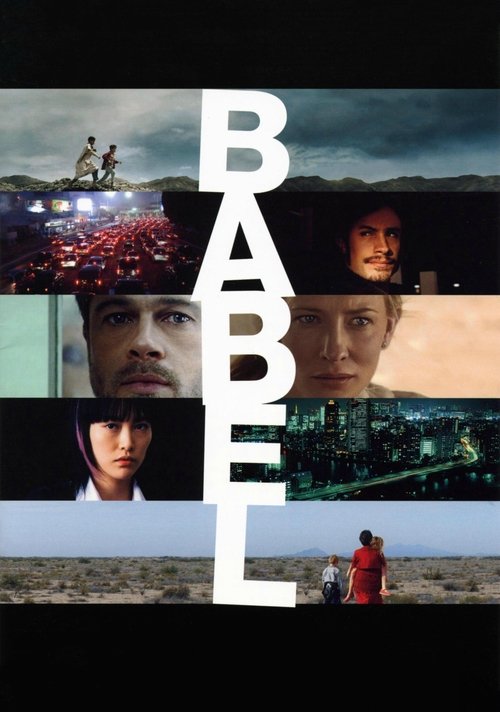
Babel
2006 · Directed by Alejandro González Iñárritu
Woke Score
CriticCritic Score
Audience
Based
Critics rated this 37 points above its woke score. Among Based films, this critic score ranks #169 of 345.
Representation Casting
Score: 58/100
The film features genuinely international casting across four continents with non-white leads in several storylines, though the narrative structure privileges Western perspectives as the emotional center.
LGBTQ+ Themes
Score: 0/100
No LGBTQ+ themes, characters, or content is present in the film.
Feminist Agenda
Score: 0/100
While female characters appear throughout, there is no discernible feminist agenda or examination of gender-based systems of oppression.
Racial Consciousness
Score: 35/100
The film depicts cross-cultural conflict and misunderstanding but does not engage with systemic racism or structural inequality; cultural difference is presented as a universal human condition rather than a product of power imbalances.
Climate Crusade
Score: 0/100
No climate-related themes or environmental consciousness appears in the narrative.
Eat the Rich
Score: 15/100
The Mexican nanny storyline touches obliquely on class disparity and labor exploitation, but without any systematic critique of capitalist structures.
Body Positivity
Score: 0/100
No body positivity messaging or engagement with non-normative body representation is present.
Neurodivergence
Score: 40/100
Rinko Kikuchi's deaf character is portrayed with genuine specificity regarding her lived experience, though she primarily exists to illustrate universal themes of isolation and miscommunication rather than to center deaf culture.
Revisionist History
Score: 0/100
The film contains no engagement with historical revisionism or reframing of established historical narratives.
Lecture Energy
Score: 25/100
The film maintains aesthetic distance from preachiness, preferring visual storytelling and ambiguity, though the thematic messaging about global interconnectedness remains somewhat pointed.


Synopsis
Tragedy strikes a married couple vacationing in the Moroccan desert, which jumpstarts an interlocking story involving four different families.
Consciousness Assessment
Babel arrives as a thoroughly well-intentioned exploration of global miscommunication and cultural fracture, assembled with the kind of meticulous craft that suggests the director spent considerable time considering how to make suffering look compositionally interesting. The film's central conceit involves four narratively interlocking tragedies across Morocco, Mexico, Japan, and the United States, each populated by characters who fail to understand one another in ways both literal and metaphorical. Brad Pitt and Cate Blanchett anchor the American storyline as tourists caught in a Moroccan shooting, while parallel narratives follow a Mexican nanny, a deaf Japanese teenager, and rural Moroccan shepherds. This structural approach to diversity, while ambitious, operates within a distinctly 2000s framework where global representation functioned primarily as a vehicle for universalist themes about human connection rather than as a space for autonomous cultural expression.
The film's engagement with representation reflects the earnest multiculturalism of its era, though viewed through contemporary sensibilities it reads as somewhat extractive. Rinko Kikuchi's portrayal of Chieko, a deaf teenager navigating Tokyo's nightlife, represents perhaps the film's most genuine engagement with neurodivergence as narrative substance rather than plot device, though the character exists primarily to illustrate themes of isolation and miscommunication that align with the film's broader preoccupations. The Mexican storyline, featuring Adriana Barraza as a domestic worker separated from her children, carries weight but functions largely as a vehicle for examining class and national boundaries rather than centering Mexican cultural particularity. The film's visual language, while sophisticated, positions non-Western locations primarily as backdrops for Western emotional crises, a framing that was commercially and critically standard in 2006 but now appears structurally limiting. The film's commitment to depicting global complexity remains constrained by the aesthetic and narrative conventions of prestige drama, where social consciousness manifests through earnestness rather than structural interrogation.
The film contains no evidence of feminist agenda, climate consciousness, anti-capitalist critique, body positivity messaging, LGBTQ+ themes, or revisionist historical positioning. Its engagement with racial consciousness exists primarily through the acknowledgment of cross-cultural conflict rather than examination of systemic structures, while its lecture energy remains minimal, preferring ambiguity to preachiness. The cast diversity and international locations provide the scaffolding for contemporary progressive sensibilities, yet the film's actual engagement with those sensibilities remains largely implicit and mediated through universal humanist frameworks that predate the modern cultural markers we now examine.
Analysis generated by our Consciousness Algorithm
Critic Reviews
“In the year's richest, most complex and ultimately most heartbreaking film, Inarritu invites us to get past the babble of modern civilization and start listening to each other.”
“This is a serious movie overflowing with memorable acting, unforgettable images, searing tragedy, unexpected humor and an eloquent plea for international understanding. And while it's by no stretch of imagination light entertainment, it's fundamentally a more optimistic work than either "Amores Perros" or "21 Grams."”
“Effectively building dread and emotional tension as tragic incidents triggered by human stupidity and carelessness steadily multiply, this film, like "21 Grams" in particular, employs a deterministically grim mindset in the cause of its philosophical aspirations, but is gripping nearly all the way.”
“Yet as sophisticated a piece of filmmaking as it is, it seems hamstrung by the banality at its center; that's why it never assembles into a satisfying whole. It's pretty -- oh, what's the word? -- stupid in its dramatization of the silly little connections that unite us, and it's somewhat selective in its choice of them.”
Consciousness Markers
The film features genuinely international casting across four continents with non-white leads in several storylines, though the narrative structure privileges Western perspectives as the emotional center.
No LGBTQ+ themes, characters, or content is present in the film.
While female characters appear throughout, there is no discernible feminist agenda or examination of gender-based systems of oppression.
The film depicts cross-cultural conflict and misunderstanding but does not engage with systemic racism or structural inequality; cultural difference is presented as a universal human condition rather than a product of power imbalances.
No climate-related themes or environmental consciousness appears in the narrative.
The Mexican nanny storyline touches obliquely on class disparity and labor exploitation, but without any systematic critique of capitalist structures.
No body positivity messaging or engagement with non-normative body representation is present.
Rinko Kikuchi's deaf character is portrayed with genuine specificity regarding her lived experience, though she primarily exists to illustrate universal themes of isolation and miscommunication rather than to center deaf culture.
The film contains no engagement with historical revisionism or reframing of established historical narratives.
The film maintains aesthetic distance from preachiness, preferring visual storytelling and ambiguity, though the thematic messaging about global interconnectedness remains somewhat pointed.