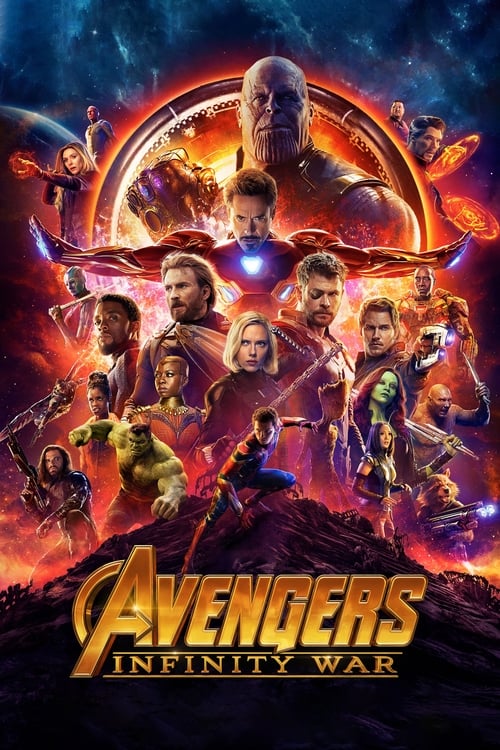
Avengers: Infinity War
2018 · Directed by Anthony Russo
Woke Score
CriticCritic Score
Audience
Based
Critics rated this 33 points above its woke score. Among Based films, this critic score ranks #172 of 345.
Representation Casting
Score: 55/100
The ensemble features substantial racial diversity including Chadwick Boseman, Don Cheadle, and Tom Holland. However, this diversity feels more like contemporary casting practice than deliberate thematic commitment.
LGBTQ+ Themes
Score: 0/100
There is no meaningful LGBTQ+ representation or themes in the film. The focus is entirely on heterosexual relationships and cosmic conflict.
Feminist Agenda
Score: 25/100
Despite featuring multiple capable female characters, the film received substantial criticism for sidelining its women from meaningful arcs. Female heroes are present but passive, lacking agency in central conflicts.
Racial Consciousness
Score: 45/100
The Wakandan sequences and Black Panther's presence signal awareness of racial representation, but this consciousness remains superficial and divorced from the film's thematic concerns.
Climate Crusade
Score: 0/100
Climate change and environmental concerns are entirely absent from this cosmic action film. The narrative concerns itself with universal destruction but not planetary ecology.
Eat the Rich
Score: 10/100
Thanos's stated motivation involves resource scarcity and balance, which could be read as anti-capitalist, but the film treats his ideology as philosophical villainy rather than engaging with economic critique.
Body Positivity
Score: 5/100
The film presents conventionally attractive and athletic bodies throughout. Thanos is grotesque, but this is treated as visual spectacle rather than any commentary on body diversity or acceptance.
Neurodivergence
Score: 0/100
There is no representation of neurodivergent characters or exploration of neurodiversity. All characters function within conventional neurotypical frameworks.
Revisionist History
Score: 0/100
This is a science fiction film set in a fictional universe. There is no historical revisionism or reframing of real events.
Lecture Energy
Score: 15/100
The film avoids overt preachiness, though Thanos delivers several monologues about his philosophy. These remain within the register of villain exposition rather than activist messaging.


Synopsis
As the Avengers and their allies have continued to protect the world from threats too large for any one hero to handle, a new danger has emerged from the cosmic shadows: Thanos. A despot of intergalactic infamy, his goal is to collect all six Infinity Stones, artifacts of unimaginable power, and use them to inflict his twisted will on all of reality. Everything the Avengers have fought for has led up to this moment - the fate of Earth and existence itself has never been more uncertain.
Consciousness Assessment
Avengers: Infinity War presents a curious case of progressive aesthetics layered atop a fundamentally apolitical blockbuster. The film's diverse casting, particularly the prominent inclusion of Chadwick Boseman's Black Panther and the Wakandan contingent fresh from their own cultural moment, signals awareness of contemporary audience expectations. Yet this representation functions largely as spectacle rather than substance. The women in the ensemble, despite their formidable presence, are systematically sidelined from the narrative's central conflicts, their agency subordinate to the male-dominated action set pieces. Scarlett Johansson's Black Widow and Elizabeth Olsen's Scarlet Witch are competent but peripheral, their combat prowess never translating into meaningful character development or thematic weight.
The film's central preoccupation is mythic rather than social. Thanos, a purple titan obsessed with cosmic balance through mass elimination, is presented as a philosophical antagonist, yet the script shows no genuine interest in interrogating his ideology or exploring its implications through any progressive lens. This is a film about power, destiny, and spectacle, not about systemic injustice or cultural critique. The half-measure of diversity serves primarily to expand the MCU's appeal while avoiding any real engagement with the social consciousness that animated its more culturally aware predecessor.
The result is a movie caught between eras. It inherits the diverse casting norms of post-2015 blockbuster culture without adopting the thematic commitments that would justify such choices. The Wakandan sequences are visually striking and narratively functional, but they exist in isolation from the film's broader concerns. This is representation without revolution, diversity without dissent, a film that looks contemporary while remaining thematically conservative.
Analysis generated by our Consciousness Algorithm
Critic Reviews
“Marvel has solved their third-act problem and villain problem and then some. However prepared you feel, you are not ready for Thanos. But then, neither are our heroes.”
“The Avengers latest stand feels well worth the wait. It’s not perfect, but it goes to a place most tentpole movies wouldn’t dream of, while retaining the scale, excitement, and humour you’ve come to demand from an MCU movie.”
“The perfect mix of thrilling action, compelling storytelling, memorable characters, comedic moments — and all of that works in tandem like an orchestra bellowing an epic score. Infinity War leaves audiences wanting more… and with a lot to think about.”
“Even by Marvel’s own standards of serviceable mediocrity, Infinity War fails.”
Consciousness Markers
The ensemble features substantial racial diversity including Chadwick Boseman, Don Cheadle, and Tom Holland. However, this diversity feels more like contemporary casting practice than deliberate thematic commitment.
There is no meaningful LGBTQ+ representation or themes in the film. The focus is entirely on heterosexual relationships and cosmic conflict.
Despite featuring multiple capable female characters, the film received substantial criticism for sidelining its women from meaningful arcs. Female heroes are present but passive, lacking agency in central conflicts.
The Wakandan sequences and Black Panther's presence signal awareness of racial representation, but this consciousness remains superficial and divorced from the film's thematic concerns.
Climate change and environmental concerns are entirely absent from this cosmic action film. The narrative concerns itself with universal destruction but not planetary ecology.
Thanos's stated motivation involves resource scarcity and balance, which could be read as anti-capitalist, but the film treats his ideology as philosophical villainy rather than engaging with economic critique.
The film presents conventionally attractive and athletic bodies throughout. Thanos is grotesque, but this is treated as visual spectacle rather than any commentary on body diversity or acceptance.
There is no representation of neurodivergent characters or exploration of neurodiversity. All characters function within conventional neurotypical frameworks.
This is a science fiction film set in a fictional universe. There is no historical revisionism or reframing of real events.
The film avoids overt preachiness, though Thanos delivers several monologues about his philosophy. These remain within the register of villain exposition rather than activist messaging.