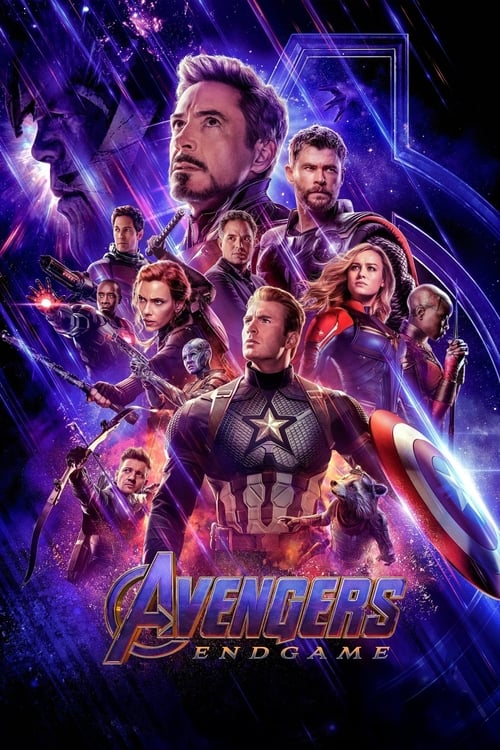
Avengers: Endgame
2019 · Directed by Joe Russo
Woke Score
CriticCritic Score
Audience
Based
Critics rated this 56 points above its woke score. Among Based films, this critic score ranks #90 of 345.
Representation Casting
Score: 45/100
The cast includes actors of color in supporting roles, though the ensemble remains white-male-dominated in its core leadership. The film reflects Marvel's gradual diversification rather than any deliberate commitment to casting equity.
LGBTQ+ Themes
Score: 5/100
A minor supporting character mentions an ex-boyfriend in a throwaway line, representing tokenistic LGBTQ inclusion that exists only to provide a box to check. The moment is neither developed nor meaningful.
Feminist Agenda
Score: 28/100
Female characters participate in the climactic battle, but this sequence was widely criticized for staging all the female heroes in one shot, appearing performative rather than integrated. The film does not interrogate gender dynamics or power structures.
Racial Consciousness
Score: 15/100
The narrative contains no exploration of racial themes, systemic inequality, or the specific experiences of characters of color. Don Cheadle's Rhodey remains a supporting character without personal development.
Climate Crusade
Score: 0/100
Climate change receives no mention or consideration. The plot concerns itself with cosmic-scale villainy rather than environmental concerns.
Eat the Rich
Score: 10/100
The film presents no critique of capitalism or wealth accumulation. The protagonist's journey involves no reckoning with economic systems or class dynamics.
Body Positivity
Score: 8/100
The film showcases conventionally attractive bodies in action sequences. A character's weight gain is treated as comedic, rather than as an opportunity to challenge beauty standards.
Neurodivergence
Score: 0/100
No meaningful representation of neurodivergence or disability. The film does not engage with these aspects of human experience in any substantive way.
Revisionist History
Score: 0/100
As a fantasy narrative, the film does not reframe historical events. It creates its own fictional timeline rather than revising actual history.
Lecture Energy
Score: 20/100
The film occasionally addresses themes of sacrifice and responsibility through character dialogue, but these moments serve the narrative rather than functioning as preachy lectures. The tone remains action-adventure rather than preachy.


Synopsis
After the devastating events of Avengers: Infinity War, the universe is in ruins due to the efforts of the Mad Titan, Thanos. With the help of remaining allies, the Avengers must assemble once more in order to undo Thanos' actions and restore order to the universe once and for all, no matter what consequences may be in store.
Consciousness Assessment
Avengers: Endgame represents the current state of corporate progressive aesthetics: diverse enough to avoid criticism, not diverse enough to threaten the fundamental power structure. The film assembles a cast that includes actors of various ethnic backgrounds, yet ensures that the narrative's emotional and strategic center remains firmly occupied by white men. This is not an accident but a choice, one that allows Marvel to market itself as inclusive while maintaining the existing hierarchy of heroic importance.
The film's most controversial gesture toward social consciousness arrived in a single shot of its climactic battle, wherein every female character in the Marvel universe was assembled in one frame. Critics at the time noted the performative quality of this sequence: rather than integrating female heroes throughout the action, the film segregated them into a single, applause-ready moment. This approach captures the essence of contemporary mainstream entertainment's relationship with progressive representation. It acknowledges the demand for visibility while containing it within manageable boundaries. Similarly, a male character's passing mention of an ex-boyfriend serves as the film's entire contribution to LGBTQ recognition, a gesture so minimal that it barely registers on screen.
The narrative itself concerns itself with cosmic villainy and time travel mechanics, offering no engagement with systemic inequality, environmental catastrophe, economic exploitation, or any of the material conditions that shape contemporary life. A three-hour spectacle of this scale could easily accommodate such concerns, yet chooses not to. Instead, it presents a conservative vision: the solution to cosmic imbalance is not structural change but the sacrifice of individual heroes. The film treats this as tragic and noble rather than as a reinforcement of the status quo. We are asked to admire the personal cost of maintaining the existing order, not to question the order itself.
Analysis generated by our Consciousness Algorithm
Critic Reviews
“I have to admit, in all its surreal grandiosity, in all its delirious absurdity, there is a huge sugar rush of excitement to this mighty finale, finally interchanging with euphoric emotion and allowing us to say poignant farewells.”
“I’m not prepared to instantly label Avengers: Endgame as the best of the 23 Marvel Universe movies to date, but it’s a serious contender for the crown and it’s the undisputed champion when it comes to emotional punch. ”
“A victory lap that moonwalks through the best part of the MCU back catalogue and emphasises emotion as much as action, this is an intensely satisfying piece of blockbuster filmmaking. ”
“Every serious narrative beat in the film is ultimately undercut by pro-forma storytelling, or by faux-improvised humor.”
Consciousness Markers
The cast includes actors of color in supporting roles, though the ensemble remains white-male-dominated in its core leadership. The film reflects Marvel's gradual diversification rather than any deliberate commitment to casting equity.
A minor supporting character mentions an ex-boyfriend in a throwaway line, representing tokenistic LGBTQ inclusion that exists only to provide a box to check. The moment is neither developed nor meaningful.
Female characters participate in the climactic battle, but this sequence was widely criticized for staging all the female heroes in one shot, appearing performative rather than integrated. The film does not interrogate gender dynamics or power structures.
The narrative contains no exploration of racial themes, systemic inequality, or the specific experiences of characters of color. Don Cheadle's Rhodey remains a supporting character without personal development.
Climate change receives no mention or consideration. The plot concerns itself with cosmic-scale villainy rather than environmental concerns.
The film presents no critique of capitalism or wealth accumulation. The protagonist's journey involves no reckoning with economic systems or class dynamics.
The film showcases conventionally attractive bodies in action sequences. A character's weight gain is treated as comedic, rather than as an opportunity to challenge beauty standards.
No meaningful representation of neurodivergence or disability. The film does not engage with these aspects of human experience in any substantive way.
As a fantasy narrative, the film does not reframe historical events. It creates its own fictional timeline rather than revising actual history.
The film occasionally addresses themes of sacrifice and responsibility through character dialogue, but these moments serve the narrative rather than functioning as preachy lectures. The tone remains action-adventure rather than preachy.