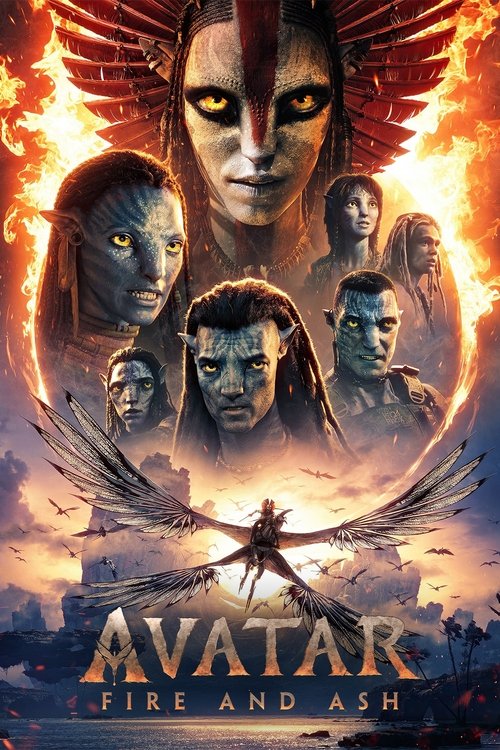
Avatar: Fire and Ash
2025 · Directed by James Cameron
Woke Score
CriticCritic Score
Audience
Woke-Adjacent
Critics rated this 13 points above its woke score. Among Woke-Adjacent films, this critic score ranks #111 of 151.
Representation Casting
Score: 52/100
The cast includes performers of diverse racial backgrounds (Zoe Saldaña, Cliff Curtis, CCH Pounder), though their representation is integrated into narrative necessity rather than foregrounded as a statement. The diverse ensemble is present but not explicitly centered.
LGBTQ+ Themes
Score: 0/100
No apparent LGBTQ+ themes, characters, or representation visible in the plot summary or available information about the film.
Feminist Agenda
Score: 35/100
The franchise has featured strong female characters (Neytiri, Kate Winslet's character), but the film does not appear to foreground feminist themes or gender-centered narratives as primary concerns.
Racial Consciousness
Score: 55/100
The film continues the franchise's pattern of positioning Na'vi peoples as indigenous-coded inhabitants resisting colonization and exploitation. This represents racial consciousness but in an older progressive idiom rather than contemporary social justice framing.
Climate Crusade
Score: 60/100
Environmental protection and defense of Pandora's ecosystem remain central to the narrative. The franchise has consistently advocated for environmental consciousness, though not through modern climate activism messaging.
Eat the Rich
Score: 65/100
The conflict centers on resistance to corporate exploitation and resource extraction (the RDA represents extractive capitalism). Anti-capitalist themes are fundamental to the franchise's DNA rather than added as contemporary critique.
Body Positivity
Score: 0/100
No apparent body positivity messaging, diverse body representation, or anti-diet culture themes visible in the plot or available information.
Neurodivergence
Score: 0/100
No apparent representation of neurodivergent characters or themes in the available plot information.
Revisionist History
Score: 15/100
While the franchise engages with colonial history and indigenous perspectives, it does not appear to engage in contemporary revisionist history framing or challenge dominant historical narratives in the modern sense.
Lecture Energy
Score: 25/100
The film appears to convey its themes through narrative and spectacle rather than explicit preachiness. While the franchise's politics are present, they operate through visual storytelling rather than characters delivering social commentary.
Synopsis
In the wake of the devastating war against the RDA and the loss of their eldest son, Jake Sully and Neytiri face a new threat on Pandora: the Ash People, a violent and power-hungry Na'vi tribe led by the ruthless Varang. Jake's family must fight for their survival and the future of Pandora in a conflict that pushes them to their emotional and physical limits.
Consciousness Assessment
Avatar: Fire and Ash carries forward the franchise's inheritance of pre-2015 progressive sensibilities, which is to say it operates in an idiom of sincere environmental consciousness and anti-colonial narrative that predates contemporary social justice discourse by design. The film features a racially diverse ensemble and positions indigenous-coded peoples as rightful inhabitants defending their homeland against extractive corporate interests. These elements are integrated into the story's basic architecture rather than functioning as performative gestures toward modern progressive credentials. James Cameron remains committed to his original vision: a film that advocates for environmental protection and indigenous sovereignty through spectacular action rather than through preachy messaging.
The film's relationship to contemporary cultural markers is negligible. There is no apparent LGBTQ+ representation, no neurodivergence coding, no body positivity messaging, and no revisionist history framing. The representation present, while genuine, does not signal the specific constellation of 2020s progressive anxieties that define modern social consciousness performance. One might describe the film's approach as earnest rather than performative, which paradoxically places it outside the frame of contemporary social awareness despite its progressive intentions.
What emerges is a film that occupies an interesting categorical position: politically progressive in substance but culturally conservative in its presentation. It advocates for causes that align with progressive values while remaining indifferent to the aesthetic and rhetorical markers that have become associated with contemporary cultural awareness. The result is a blockbuster that will satisfy neither traditionalist critics seeking apolitical entertainment nor advocates seeking films that explicitly center the concerns of marginalized communities through contemporary cultural language. It is, in essence, a 2009 film released in 2025.
Analysis generated by our Consciousness Algorithm
Critic Reviews
“Avatar: Fire and Ash is a triumph of genre filmmaking, proof that sci-fi/action can be both deliriously daring and thoroughly thrilling. At this point, I can't wait to go back to Pandora.”
“Cameron wrings the most from his environment and its inhabitants, not just for the sake of going-for-broke, but to deliver something thematically resonant, folding the first two films on top of each other.”
“Avatar: Fire and Ash isn’t the technical leap forward that its predecessor was, which is to be expected after three years instead of thirteen. But what it lacks in novelty, it more than makes up for with refinement on every level.”
“Some of us saw a while ago that turning Avatar into a franchise would prove to be a creative cul-de-sac. Having reached the top of the street three years ago, Cameron spends all of Fire and Ash trying to turn his enormous articulated lorry around. The back-up beeper is beeping, the spinning yellow lights are spinning, and he’s just knocked over his third wheelie bin. I do hope he eventually gets out.”
Consciousness Markers
The cast includes performers of diverse racial backgrounds (Zoe Saldaña, Cliff Curtis, CCH Pounder), though their representation is integrated into narrative necessity rather than foregrounded as a statement. The diverse ensemble is present but not explicitly centered.
No apparent LGBTQ+ themes, characters, or representation visible in the plot summary or available information about the film.
The franchise has featured strong female characters (Neytiri, Kate Winslet's character), but the film does not appear to foreground feminist themes or gender-centered narratives as primary concerns.
The film continues the franchise's pattern of positioning Na'vi peoples as indigenous-coded inhabitants resisting colonization and exploitation. This represents racial consciousness but in an older progressive idiom rather than contemporary social justice framing.
Environmental protection and defense of Pandora's ecosystem remain central to the narrative. The franchise has consistently advocated for environmental consciousness, though not through modern climate activism messaging.
The conflict centers on resistance to corporate exploitation and resource extraction (the RDA represents extractive capitalism). Anti-capitalist themes are fundamental to the franchise's DNA rather than added as contemporary critique.
No apparent body positivity messaging, diverse body representation, or anti-diet culture themes visible in the plot or available information.
No apparent representation of neurodivergent characters or themes in the available plot information.
While the franchise engages with colonial history and indigenous perspectives, it does not appear to engage in contemporary revisionist history framing or challenge dominant historical narratives in the modern sense.
The film appears to convey its themes through narrative and spectacle rather than explicit preachiness. While the franchise's politics are present, they operate through visual storytelling rather than characters delivering social commentary.