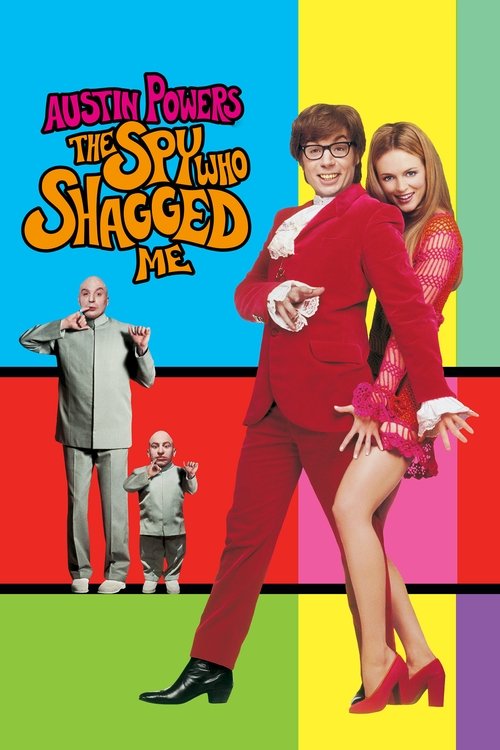
Austin Powers: The Spy Who Shagged Me
1999 · Directed by Jay Roach
Woke Score
CriticCritic Score
Audience
Ultra Based
Critics rated this 51 points above its woke score. Among Ultra Based films, this critic score ranks #938 of 1469.
Representation Casting
Score: 15/100
The cast is almost entirely white with no meaningful ethnic diversity. Female characters are present but primarily serve decorative functions within the narrative structure.
LGBTQ+ Themes
Score: 0/100
No LGBTQ+ themes, characters, or representation appear in the film. The sexual humor is exclusively heterosexual in orientation.
Feminist Agenda
Score: 25/100
A female CIA agent is present and operational, but the film's humor consistently derives from objectifying her and treating her body as a source of comedy rather than as a person of agency.
Racial Consciousness
Score: 0/100
The film exhibits no racial consciousness whatsoever. Race is not addressed, interrogated, or acknowledged in any meaningful way.
Climate Crusade
Score: 0/100
Climate concerns are entirely absent from this spy comedy. The narrative makes no reference to environmental issues or ecological consciousness.
Eat the Rich
Score: 5/100
While the villain is a caricatured corporate figure (Dr. Evil), there is no systematic critique of capitalism. The film is a straightforward entertainment product.
Body Positivity
Score: 0/100
The film's humor frequently targets bodies and physical appearance. Body positivity is not a concern of the comedic sensibility on display.
Neurodivergence
Score: 0/100
No characters with neurodivergence appear, and the film shows no awareness of or interest in neurodivergent representation.
Revisionist History
Score: 10/100
The film is set in the 1960s and engages in comedic riffing on the period, but does not attempt to revise or reinterpret historical events or dynamics in a progressive manner.
Lecture Energy
Score: 5/100
The film is structured as broad comedy and makes no attempt to educate the audience about social issues. Any political content is incidental to the humor.


Synopsis
When diabolical genius Dr. Evil travels back in time to steal superspy Austin Powers's 'mojo,' Austin must return to the swingin' '60s himself - with the help of American agent, Felicity Shagwell - to stop the dastardly plan. Once there, Austin faces off against Dr. Evil's army of minions to try to save the world in his own unbelievably groovy way.
Consciousness Assessment
Austin Powers: The Spy Who Shagged Me arrives as a product of late 1990s comedy sensibilities, which is to say it traffics in the kind of broad sexual humor and gender dynamics that were considered edgy before the cultural realignment of the 2010s. The film's central conceit involves a female CIA agent (Felicity Shagwell) who operates as a competent professional in her own right, though the screenplay remains fundamentally interested in her as an object of desire and comedic fodder. She is permitted agency within the spy narrative, yet the film's humor consistently derives from infantilizing her and positioning her body as the site of comedy. This represents a kind of proto-progressive gesture—a woman in a position of authority—undermined by the execution, which treats her as decorative.
The film's satirical apparatus targets the conventions of 1960s spy cinema, particularly the Bond franchise, but it does so without interrogating the gender politics embedded in that source material. Instead, it amplifies them. The humor depends on exaggerated masculinity and female characters who exist primarily to facilitate male pleasure, which was standard operating procedure for comedy in 1999 but reads today as a commitment to a particular vision of gender relations rather than a critique of it. The casting is overwhelmingly white, and there is no engagement whatsoever with racial consciousness or any other marker of contemporary progressive sensibility.
What remains is a film that is fundamentally uninterested in any dimension of social consciousness beyond the occasional sexual innuendo. It represents a moment when comedy could afford to be indifferent to representation, and that indifference is now its most honest quality.
Analysis generated by our Consciousness Algorithm
Critic Reviews
“For long stretches, the film is just as funny as the first -- which is saying something, since the first is one of the funniest comedies of the decade, the only film in years to truly infiltrate our communal language and sense of humor.”
“There is enough mirthful good will generated to justify even another sequel. May we suggest: "License to Shag," "You Only Shag Twice" or "Thundershag."”
“The most consistently funny studio sequel in some time, and the rare blockbuster that actually delivers on what it promises.”
“Kills whatever charm the first movie had by recycling its few serviceable parts.”
Consciousness Markers
The cast is almost entirely white with no meaningful ethnic diversity. Female characters are present but primarily serve decorative functions within the narrative structure.
No LGBTQ+ themes, characters, or representation appear in the film. The sexual humor is exclusively heterosexual in orientation.
A female CIA agent is present and operational, but the film's humor consistently derives from objectifying her and treating her body as a source of comedy rather than as a person of agency.
The film exhibits no racial consciousness whatsoever. Race is not addressed, interrogated, or acknowledged in any meaningful way.
Climate concerns are entirely absent from this spy comedy. The narrative makes no reference to environmental issues or ecological consciousness.
While the villain is a caricatured corporate figure (Dr. Evil), there is no systematic critique of capitalism. The film is a straightforward entertainment product.
The film's humor frequently targets bodies and physical appearance. Body positivity is not a concern of the comedic sensibility on display.
No characters with neurodivergence appear, and the film shows no awareness of or interest in neurodivergent representation.
The film is set in the 1960s and engages in comedic riffing on the period, but does not attempt to revise or reinterpret historical events or dynamics in a progressive manner.
The film is structured as broad comedy and makes no attempt to educate the audience about social issues. Any political content is incidental to the humor.