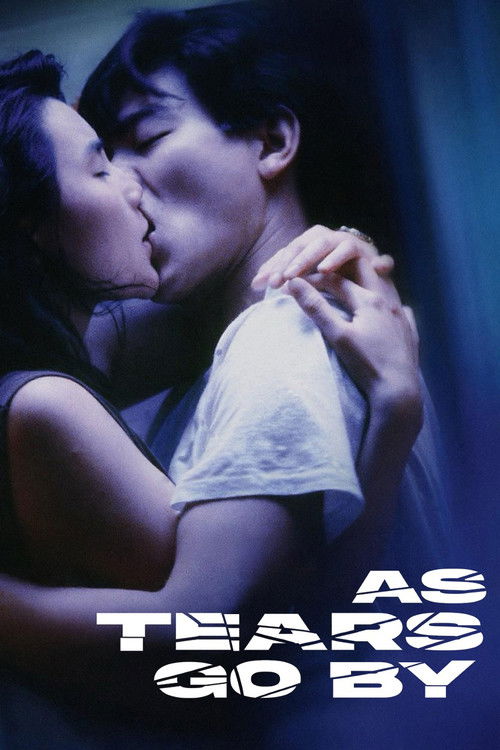
As Tears Go By
1988 · Directed by Wong Kar-Wai
Woke Score
CriticCritic Score
Audience
Ultra Based
Critics rated this 65 points above its woke score. Among Ultra Based films, this critic score ranks #717 of 1469.
Representation Casting
Score: 0/100
The film features Asian actors in lead roles, but this reflects the default casting for a Hong Kong production, not a deliberate progressive choice about representation.
LGBTQ+ Themes
Score: 0/100
There is no evidence of LGBTQ+ themes or representation in the narrative.
Feminist Agenda
Score: 5/100
The female character is portrayed as passive and primarily defined by her romantic relationship to the male protagonist, reflecting conventional gender dynamics of the era without interrogating them.
Racial Consciousness
Score: 0/100
The film contains no commentary on racial dynamics or racial consciousness.
Climate Crusade
Score: 0/100
Climate themes are entirely absent from the narrative.
Eat the Rich
Score: 0/100
While the film depicts criminal activity, it does not offer any anti-capitalist critique or commentary on economic systems.
Body Positivity
Score: 0/100
There is no evidence of body positivity messaging or commentary on body image.
Neurodivergence
Score: 0/100
Neurodivergence representation is absent from the film.
Revisionist History
Score: 0/100
The film contains no revisionist historical narratives or reinterpretations of historical events.
Lecture Energy
Score: 0/100
The film prioritizes visual storytelling and action over preachy dialogue or explicit thematic commentary.


Synopsis
Mid-level gangster Wah falls in love with his beautiful cousin, but must also continue to protect his volatile partner-in-crime and friend, Fly.
Consciousness Assessment
Wong Kar-Wai's directorial debut announces itself as a stylish crime film in the lineage of Scorsese, which is to say it is fundamentally uninterested in the social consciousness markers that would emerge as cultural preoccupations decades later. The film concerns itself with the ritualized codes of masculine honor among Hong Kong gangsters, the anguish of conflicted loyalty, and the romantic complications that arise when a mid-level criminal falls for his cousin. These are the proper concerns of a 1988 crime melodrama, and Wong pursues them with visual sophistication and narrative economy.
The female character exists almost entirely in relation to the male protagonist's emotional state. She is beautiful, sympathetic, but ultimately passive, a romantic object rather than a character with her own interior life or agency. The supporting male characters are permitted depth and contradiction; she exists to be loved and worried over. This is not a progressive choice by contemporary standards, but it is also not remarkable for the era or the genre, which inherited its gender dynamics wholesale from decades of Hollywood crime cinema. The film shows no interest in interrogating these dynamics, nor does it demonstrate any awareness that they might warrant interrogation.
What remains striking about "As Tears Go By" is not its social consciousness but its visual language and emotional precision. Wong crafts meaning through composition, color, and movement rather than dialogue or preachy commentary. The film does not lecture; it shows. By the standards of contemporary progressive cultural sensibility, it barely registers. By the standards of cinema, it remains accomplished.
Analysis generated by our Consciousness Algorithm
Critic Reviews
“Right out of the gate—and even working within the modern Hong Kong gangster genre—Wong Kar-wai burst onto the screen as a strikingly unique talent. This is clearly a filmmaker less interested in plot and dialogue than he is in movement, music, and color—no matter the time, place, or story.”
“Some of the editing has a giddy, overeager quality, the natural excess of a young prodigy, but when the action and the tempo align, the results are exhilarating: an early brawl in a pool hall fairly leaps off the screen. ”
“Ostensibly a conventional tale of triad loyalty, As Tears Go By announced the presence of a genuine Hong Kong new wave—as well as an ambitious cineaste.”
“Easily summarized, the plot is entirely secondhand. ”
Consciousness Markers
The film features Asian actors in lead roles, but this reflects the default casting for a Hong Kong production, not a deliberate progressive choice about representation.
There is no evidence of LGBTQ+ themes or representation in the narrative.
The female character is portrayed as passive and primarily defined by her romantic relationship to the male protagonist, reflecting conventional gender dynamics of the era without interrogating them.
The film contains no commentary on racial dynamics or racial consciousness.
Climate themes are entirely absent from the narrative.
While the film depicts criminal activity, it does not offer any anti-capitalist critique or commentary on economic systems.
There is no evidence of body positivity messaging or commentary on body image.
Neurodivergence representation is absent from the film.
The film contains no revisionist historical narratives or reinterpretations of historical events.
The film prioritizes visual storytelling and action over preachy dialogue or explicit thematic commentary.