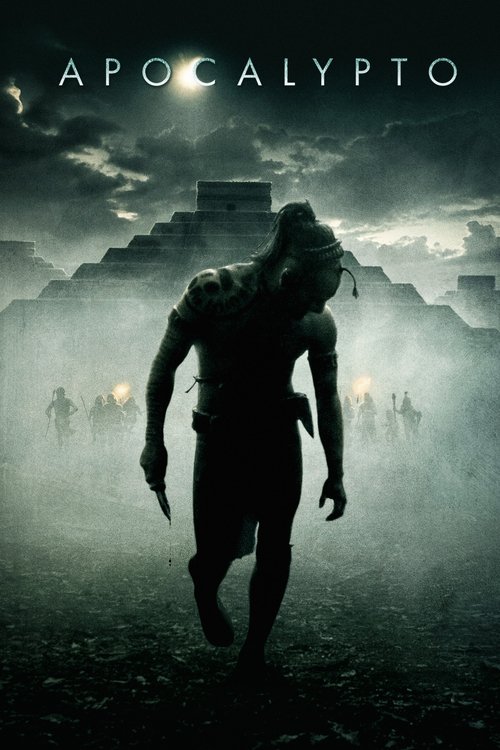
Apocalypto
2006 · Directed by Mel Gibson · $45.2M domestic
Woke Score
CriticCritic Score
Audience
Ultra Based
Critics rated this 60 points above its woke score. Among Ultra Based films, this critic score ranks #682 of 1469.
Representation Casting
Score: 15/100
Indigenous actors are cast in lead roles, which was noteworthy for 2006, but they are depicted primarily through stereotypes of savagery and victimhood rather than as complex characters.
LGBTQ+ Themes
Score: 0/100
No LGBTQ+ themes, characters, or content present in the film.
Feminist Agenda
Score: 5/100
The female lead exists primarily as a kidnapped victim and motivation for the male protagonist's survival, with minimal agency beyond being rescued.
Racial Consciousness
Score: 20/100
While the film centers on an indigenous civilization, it reinforces stereotypes of primitiveness and violence rather than offering nuanced cultural understanding or progressive racial consciousness.
Climate Crusade
Score: 0/100
No environmental themes or climate messaging present in the film.
Eat the Rich
Score: 0/100
No anti-capitalist messaging or critique of economic systems present.
Body Positivity
Score: 0/100
No body positivity themes or commentary on physical appearance standards present.
Neurodivergence
Score: 0/100
No representation of or themes related to neurodivergence present in the film.
Revisionist History
Score: 25/100
The film significantly distorts Mayan history and culture, portraying the civilization as uniformly violent and primitive, though this serves the action-thriller formula rather than progressive historical reframing.
Lecture Energy
Score: 5/100
The film is primarily a visceral action thriller with minimal dialogue or preachy messaging of any kind.


Synopsis
Set in the Mayan civilization, when a man's idyllic presence is brutally disrupted by a violent invading force, he is taken on a perilous journey to a world ruled by fear and oppression where a harrowing end awaits him. Through a twist of fate and spurred by the power of his love for his woman and his family he will make a desperate break to return home and to ultimately save his way of life.
Consciousness Assessment
Mel Gibson's 2006 action thriller Apocalypto presents a case study in how casting decisions alone cannot constitute progressive representation. While the film employs indigenous actors in its lead roles, they are deployed primarily to enact a narrative of primordial violence and ritualistic brutality, effectively updating the noble savage stereotype for the contemporary action movie. The Mayan civilization is rendered as a monolith of cruelty and oppression, with virtually no cultural texture beyond the visual spectacle of human sacrifice and warfare. Critics and Mayan scholars have noted the film's cavalier relationship with historical accuracy, though the inaccuracies serve the action-thriller formula rather than any deliberate revisionist agenda.
The narrative structure itself adheres to a conventional hero's journey in which the female lead functions as motivation rather than agent. She is captured, rescued, and ultimately saved by the male protagonist's will and physical prowess. The film's engagement with indigenous representation amounts to exoticization and stereotyping, rendering an entire civilization as a backdrop for survival spectacle. There is no self-awareness, no irony, no attempt to complicate or interrogate these representations. Gibson approaches his source material with the confidence of a man untroubled by historical nuance.
This is fundamentally a 2000s action film that happens to be set in Mesoamerica. It carries no progressive sensibilities, engages in no social commentary, and seeks no dialogue with the cultures it depicts. The casting of indigenous performers is presented as a virtue, yet they are given minimal agency and characterized almost entirely by physicality and violence. For a modern audience trained to read representation through contemporary cultural lenses, the film reads less as progressive cinema and more as an artifact of an era before such considerations became standard.
Analysis generated by our Consciousness Algorithm
Critic Reviews
“Mel Gibson is always good for a surprise, and his latest is that Apocalypto is a remarkable film. Set in the waning days of the Mayan civilization, the picture provides a trip to a place one's never been before, offering hitherto unseen sights of exceptional vividness and power.”
“For those of us who prefer to judge Gibson solely in terms of his art, the movie is a virtuosic piece of action cinema -- particularly in its second half...And while there has been no shortage of recent films that decry the horrors of war and man's inhumanity to his fellow man, I know of none other quite this sickeningly powerful.”
“The production design is superb, and the actors deliver their dialogue in subtitled Yucatecan Maya, but despite all the anthropological drag, this is really just a crackerjack Saturday-afternoon serial.”
“It's "Braveheart" without historical significance and "Passion" without spirituality, though it dabbles in both, and it represents as brazen an act of career suicide as I can recall from a star director. If he were a first-timer, he'd never work again.”
Consciousness Markers
Indigenous actors are cast in lead roles, which was noteworthy for 2006, but they are depicted primarily through stereotypes of savagery and victimhood rather than as complex characters.
No LGBTQ+ themes, characters, or content present in the film.
The female lead exists primarily as a kidnapped victim and motivation for the male protagonist's survival, with minimal agency beyond being rescued.
While the film centers on an indigenous civilization, it reinforces stereotypes of primitiveness and violence rather than offering nuanced cultural understanding or progressive racial consciousness.
No environmental themes or climate messaging present in the film.
No anti-capitalist messaging or critique of economic systems present.
No body positivity themes or commentary on physical appearance standards present.
No representation of or themes related to neurodivergence present in the film.
The film significantly distorts Mayan history and culture, portraying the civilization as uniformly violent and primitive, though this serves the action-thriller formula rather than progressive historical reframing.
The film is primarily a visceral action thriller with minimal dialogue or preachy messaging of any kind.