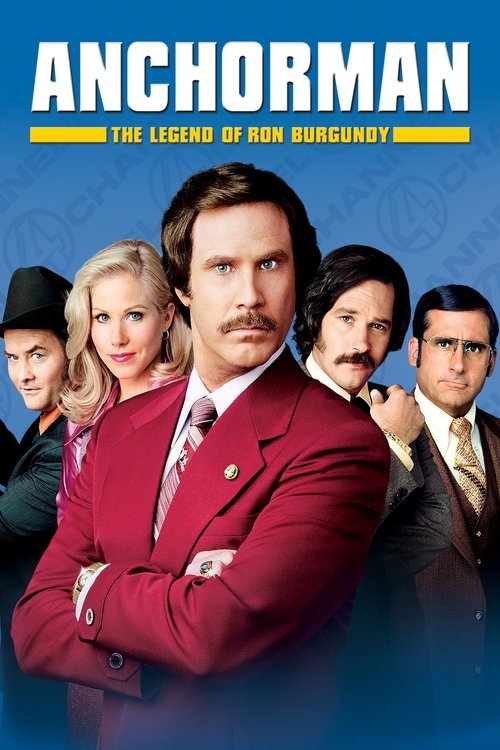
Anchorman: The Legend of Ron Burgundy
2004 · Directed by Adam McKay
Woke Score
CriticCritic Score
Audience
Ultra Based
Critics rated this 55 points above its woke score. Among Ultra Based films, this critic score ranks #822 of 1469.
Representation Casting
Score: 15/100
Christina Applegate plays a capable female journalist, but this is standard comedy casting rather than deliberate representation consciousness. The female character exists within a male-dominated narrative structure without explicit commentary on systemic inclusion.
LGBTQ+ Themes
Score: 0/100
No LGBTQ+ themes, characters, or content present in the film.
Feminist Agenda
Score: 25/100
The film satirizes male sexism and positions Veronica as competent, but this is 2004 mainstream comedy feminism expressed through satire rather than contemporary progressive feminist ideology or advocacy.
Racial Consciousness
Score: 0/100
Set in 1970s San Diego with an all-white main cast and no racial commentary, consciousness, or representation.
Climate Crusade
Score: 0/100
No environmental themes or climate-related content present.
Eat the Rich
Score: 0/100
While the film satirizes corporate media culture, there is no systematic critique of capitalism or economic systems.
Body Positivity
Score: 0/100
No body positivity themes present; humor often derives from physical comedy and appearance without progressive body consciousness.
Neurodivergence
Score: 5/100
Brick Tamland is portrayed as intellectually disabled and played for comedic effect, but without any awareness, respect, or representation of neurodivergence as a concept.
Revisionist History
Score: 0/100
While set in the 1970s, the film does not rewrite, reframe, or revisit historical events.
Lecture Energy
Score: 5/100
The film is comedic satire rather than preachy or preachy, with minimal explicit messaging about social issues or institutional problems.


Synopsis
It's the 1970s and San Diego anchorman Ron Burgundy is the top dog in local TV, but that's all about to change when ambitious reporter Veronica Corningstone arrives as a new employee at his station.
Consciousness Assessment
Anchorman arrives at the woke assessment as a film trapped in the amber of mid-2000s comedic sensibilities, which is to say it contains satirical jabs at sexism without carrying the ideological weight of contemporary progressive consciousness. The film mocks Ron Burgundy's chauvinism and presents Veronica Corningstone as a capable counterforce, but the satire operates through broad physical comedy and absurdism rather than through the preachy or self-righteous modes that characterize modern social consciousness. There is no sense here of systematic institutional critique or the specific cultural markers that define 2020s progressive ideology.
The cast is uniformly white, the humor often derives from disability played for laughs, and the film's relationship to power structures remains fundamentally comedic rather than analytical. Adam McKay constructs a film about the collision between old-guard male dominance and female ambition, but it is satire in the traditional sense: the exposure of folly through exaggeration, not advocacy through instruction. Ron Burgundy's sexism is the joke, but the joke's mechanism is that he is ridiculous, not that the system enabling him is corrupt.
This is a competent comedy that happened to satirize sexism, not a film animated by the progressive sensibilities that would later crystallize into contemporary cultural consciousness. Its low score reflects not moral failure but rather temporal displacement, the simple fact of its creation in 2004, before such markers became culturally legible as markers at all.
Analysis generated by our Consciousness Algorithm
Critic Reviews
“Full force Will Ferrell at his best. And as an added bonus, we all get one of the funniest movies of the year...that is if you don't mind your humor on the rude and crude side. ”
“It strides above its crudeness like a colossus. It's smart people telling dumb jokes with a brilliant sense of irony. Anchorman gives you permission to laugh like an idiot. ”
“You will laugh. Then you will laugh some more. Then you will laugh still again. ”
“Their collective timing is so off that the dead space around their endless bits is like that more commonly experienced during a job interview gone wrong.”
Consciousness Markers
Christina Applegate plays a capable female journalist, but this is standard comedy casting rather than deliberate representation consciousness. The female character exists within a male-dominated narrative structure without explicit commentary on systemic inclusion.
No LGBTQ+ themes, characters, or content present in the film.
The film satirizes male sexism and positions Veronica as competent, but this is 2004 mainstream comedy feminism expressed through satire rather than contemporary progressive feminist ideology or advocacy.
Set in 1970s San Diego with an all-white main cast and no racial commentary, consciousness, or representation.
No environmental themes or climate-related content present.
While the film satirizes corporate media culture, there is no systematic critique of capitalism or economic systems.
No body positivity themes present; humor often derives from physical comedy and appearance without progressive body consciousness.
Brick Tamland is portrayed as intellectually disabled and played for comedic effect, but without any awareness, respect, or representation of neurodivergence as a concept.
While set in the 1970s, the film does not rewrite, reframe, or revisit historical events.
The film is comedic satire rather than preachy or preachy, with minimal explicit messaging about social issues or institutional problems.