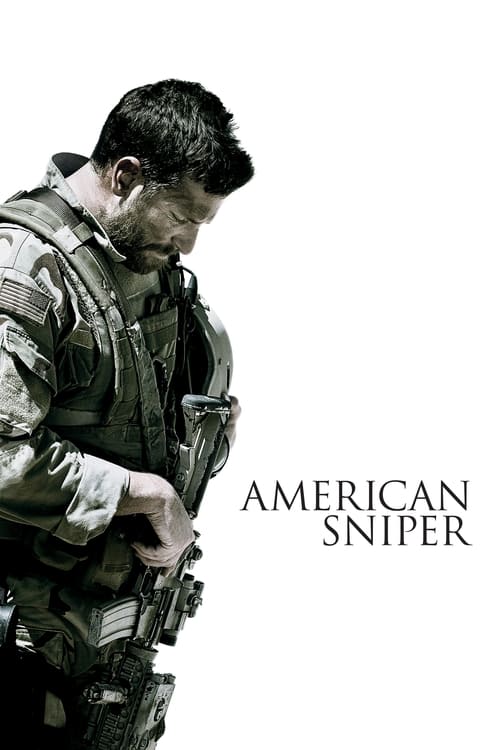
American Sniper
2014 · Directed by Clint Eastwood
Woke Score
CriticCritic Score
Audience
Ultra Based
Critics rated this 69 points above its woke score. Among Ultra Based films, this critic score ranks #521 of 1469.
Representation Casting
Score: 15/100
Cast reflects some military diversity typical of modern armed forces, but women are largely absent from substantive roles. Sienna Miller's character exists primarily in relation to the male protagonist's emotional state.
LGBTQ+ Themes
Score: 0/100
No LGBTQ+ representation or themes whatsoever. The film is entirely heteronormative in its worldview and relationships.
Feminist Agenda
Score: 5/100
Traditional gender roles are presented without critique. Women are passive and domestic, existing to support men's military ambitions. The wife's suffering is portrayed as inevitable rather than systemic.
Racial Consciousness
Score: 10/100
Military personnel include people of color in realistic proportions, but there is no conscious examination of race, racism, or systemic inequality. The frame never considers the perspective of Iraqi civilians or populations affected by the war.
Climate Crusade
Score: 0/100
No engagement with environmental themes or climate consciousness whatsoever. The desert setting is purely geographical rather than ecological.
Eat the Rich
Score: 0/100
The film contains no critique of capitalism, militarism as an economic system, or the arms industry. Military service is framed as honorable rather than as labor within a capitalist war machine.
Body Positivity
Score: 0/100
No engagement with body positivity or acceptance of diverse body types. The film valorizes traditional physical prowess and military fitness without complication.
Neurodivergence
Score: 5/100
PTSD is depicted with some sympathy, showing Kyle's difficulty reintegrating into civilian life. However, this is framed as an individual psychological problem rather than a systemic critique of trauma production.
Revisionist History
Score: 0/100
The film accepts the official historical narrative of the Iraq War without questioning its premises or political justifications. No alternative perspectives are entertained.
Lecture Energy
Score: 5/100
The film shows minimal preachy impulse to teach the audience about progressive values. It trusts the viewer to accept its framework without explicit moral instruction.


Synopsis
U.S. Navy SEAL Chris Kyle takes his sole mission—protect his comrades—to heart and becomes one of the most lethal snipers in American history. His pinpoint accuracy not only saves countless lives but also makes him a prime target of insurgents. Despite grave danger and his struggle to be a good husband and father to his family back in the States, Kyle serves four tours of duty in Iraq. However, when he finally returns home, he finds that he cannot leave the war behind.
Consciousness Assessment
Clint Eastwood's American Sniper stands as a curious artifact of pre-woke cinema sensibility, a film of considerable commercial success that arrives at a moment when the modern progressive cultural apparatus was still in its infancy. The film presents Chris Kyle's military service with essentially uncritical reverence, framing his lethal precision as a form of patriotic duty and personal honor. There is no interrogation of the Iraq War's political justifications, no examination of collateral damage beyond the psychological toll on Kyle himself, and no space for any perspective that might complicate the narrative of American military righteousness. Eastwood's camera admires Kyle's skill and his commitment to his comrades with the warmth of a director who grew up in an earlier era of American cinema.
The film's treatment of masculinity is equally instructive in its unreconstructed nature. Kyle is presented as a man shaped by a particular vision of traditional manhood, one rooted in physical prowess, competitive dominance, and the subordination of domestic life to military duty. His wife Taya (Sienna Miller) exists primarily as a vessel for his emotional distance and as a symbol of the civilian world he cannot return to. The film acknowledges his PTSD with genuine sympathy, but frames his struggle not as an indictment of warfare but as an inevitable cost of heroic service. There is no feminist critique of this arrangement, no interrogation of why women must absorb the emotional labor of traumatized warriors, no suggestion that the entire system might be structurally unjust.
By contemporary progressive standards, American Sniper is remarkably bare of the markers that define modern social consciousness. It contains no racial consciousness beyond the baseline representation of military personnel, no climate concerns, no body positivity, no neurodivergence representation, no revisionist history, and virtually no lecture energy. It is instead a film that believes in the moral clarity of its subject matter and asks us to believe in it as well. For this reason, it scores low on our scale, not because it is immoral or because its subject is unworthy, but because it predates and exists outside the constellation of cultural sensibilities we are measuring.
Analysis generated by our Consciousness Algorithm
Critic Reviews
“The moral alertness of the film is of the level normally confined, in military pictures, to talky courtroom scenes, yet Eastwood skillfully works dilemmas into propulsive and suspenseful action. ”
“It shows Eastwood, at 84, in his finest directorial effort since the 2008 "Gran Torino," while painting on a much broader canvas. Utterly in command of his epic material, he films the Iraqi action in terse, tense panoramas with little cinematic editorializing, as if he were an old Greek or Hebrew God who is never surprised at man’s ability to kill his fellow men, or to find reasons to do so. Directing 34 films over 44 years, Eastwood has honed his craft to its essentials: make it seem as if the story is telling itself.”
“Unlike many post 9/11 war movies, American Sniper goes easier on the gung ho, with a third act leavened by Chris' depressed denial, his "hurt locker" of stored regret. Eastwood is less concerned with action heroism than the consequences of deadly action, how it chips away at the living.”
“Despite a delicate handling of Kyle's internal struggles on home soil, deeper complexity appears to lie just out of frame throughout.”
Consciousness Markers
Cast reflects some military diversity typical of modern armed forces, but women are largely absent from substantive roles. Sienna Miller's character exists primarily in relation to the male protagonist's emotional state.
No LGBTQ+ representation or themes whatsoever. The film is entirely heteronormative in its worldview and relationships.
Traditional gender roles are presented without critique. Women are passive and domestic, existing to support men's military ambitions. The wife's suffering is portrayed as inevitable rather than systemic.
Military personnel include people of color in realistic proportions, but there is no conscious examination of race, racism, or systemic inequality. The frame never considers the perspective of Iraqi civilians or populations affected by the war.
No engagement with environmental themes or climate consciousness whatsoever. The desert setting is purely geographical rather than ecological.
The film contains no critique of capitalism, militarism as an economic system, or the arms industry. Military service is framed as honorable rather than as labor within a capitalist war machine.
No engagement with body positivity or acceptance of diverse body types. The film valorizes traditional physical prowess and military fitness without complication.
PTSD is depicted with some sympathy, showing Kyle's difficulty reintegrating into civilian life. However, this is framed as an individual psychological problem rather than a systemic critique of trauma production.
The film accepts the official historical narrative of the Iraq War without questioning its premises or political justifications. No alternative perspectives are entertained.
The film shows minimal preachy impulse to teach the audience about progressive values. It trusts the viewer to accept its framework without explicit moral instruction.