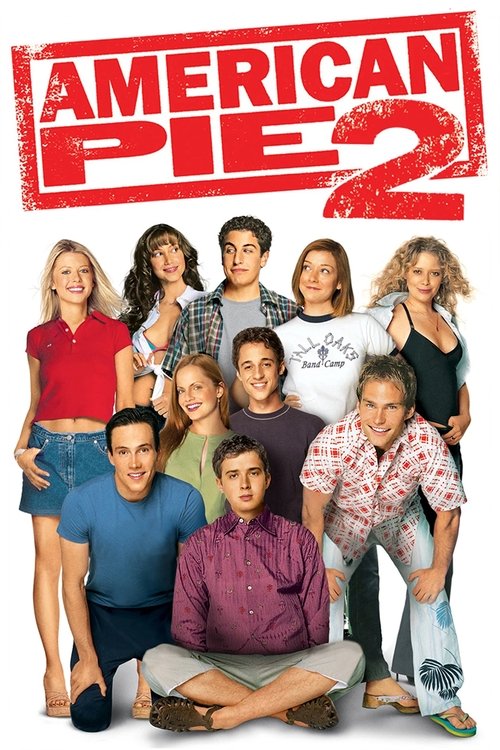
American Pie 2
2001 · Directed by J.B. Rogers
Woke Score
CriticCritic Score
Audience
Ultra Based
Critics rated this 41 points above its woke score. Among Ultra Based films, this critic score ranks #1299 of 1469.
Representation Casting
Score: 5/100
The cast is almost entirely white with minimal meaningful diversity. No actors of color appear in substantive roles, reflecting the casting priorities of early 2000s mainstream comedy.
LGBTQ+ Themes
Score: 0/100
No LGBTQ+ themes or characters of substance appear in the film. Homophobic humor is present but no genuine representation.
Feminist Agenda
Score: 2/100
Female characters exist primarily as objects of desire and targets of male humor. Women are portrayed as conquests rather than fully realized individuals with agency and depth.
Racial Consciousness
Score: 0/100
No exploration of race, racism, or racial dynamics appears in the film. The narrative operates in an implicitly white cultural space without acknowledgment of this fact.
Climate Crusade
Score: 0/100
No environmental themes, climate consciousness, or ecological awareness appears in this beach comedy.
Eat the Rich
Score: 0/100
No critique of capitalism or class systems is present. The film celebrates consumer culture and material acquisition without irony.
Body Positivity
Score: 0/100
The film relies heavily on body-based humor and objectification. No celebration of body diversity or positive messaging around physical appearance.
Neurodivergence
Score: 0/100
No representation of neurodivergent characters or exploration of neurodiversity appears in the film.
Revisionist History
Score: 0/100
This is a contemporary comedy with no historical setting or narrative. No revisionist historical claims are made.
Lecture Energy
Score: 3/100
The film occasionally includes awkward moments where characters discuss relationships and sexuality, but these lack any preachy progressive messaging.


Synopsis
After a year apart - attending different schools, meeting different people - the guys rent a beach house and vow to make this the best summer ever. As it turns out, whether that will happen or not has a lot to do with the girls. Between the wild parties, outrageous revelations and yes, a trip to band camp, they discover that times change and people change, but in the end, it's all about sticking together.
Consciousness Assessment
American Pie 2 is a creature of its time, and that time was the summer of 2001, when the primary concern of mainstream comedy was the procurement of bikinis and the maintenance of male heterosexual anxiety. The film operates in a universe where women exist principally as objects of desire and targets of pranks, their agency subordinated to the narrative requirements of male bonding and sexual conquest. There is no attempt at intersectional awareness, no acknowledgment of systemic inequities, no suggestion that the world might be inhabited by people whose concerns extend beyond the romantic entanglements of white suburban teenagers.
The cast is almost entirely white, which was unremarkable for mainstream American comedy in 2001 but would be conspicuous in a 2024 context. There are no queer characters of any substance, no disabled characters, no exploration of any social consciousness whatsoever. The humor derives from misogyny and homophobic panic in equal measure, delivered with the confidence of an era that had not yet developed sufficient self-awareness to question these premises. The film takes pride in its juvenile sensibility and asks the viewer to do the same.
One might describe this as a historical artifact, a snapshot of cultural attitudes before progressive sensibilities became a fixture of mainstream discourse. It is not aggressively regressive by the standards of its era, but it is aggressively unconcerned with representation, equity, or the dignity of its female characters. It is what it is: a thoroughly conventional comedy of its moment, unmarked by any particular consciousness of social dynamics beyond the immediate gratification of its target demographic.
Analysis generated by our Consciousness Algorithm
Critic Reviews
“The funniest scenes involve Jim and his father, thanks to the brilliant, improvisational skills of Eugene Levy.”
“The simple premise of one scene of table-turning voyeurism is brilliant.”
“It's all patently ridiculous, but it's also ridiculously fun.”
Consciousness Markers
The cast is almost entirely white with minimal meaningful diversity. No actors of color appear in substantive roles, reflecting the casting priorities of early 2000s mainstream comedy.
No LGBTQ+ themes or characters of substance appear in the film. Homophobic humor is present but no genuine representation.
Female characters exist primarily as objects of desire and targets of male humor. Women are portrayed as conquests rather than fully realized individuals with agency and depth.
No exploration of race, racism, or racial dynamics appears in the film. The narrative operates in an implicitly white cultural space without acknowledgment of this fact.
No environmental themes, climate consciousness, or ecological awareness appears in this beach comedy.
No critique of capitalism or class systems is present. The film celebrates consumer culture and material acquisition without irony.
The film relies heavily on body-based humor and objectification. No celebration of body diversity or positive messaging around physical appearance.
No representation of neurodivergent characters or exploration of neurodiversity appears in the film.
This is a contemporary comedy with no historical setting or narrative. No revisionist historical claims are made.
The film occasionally includes awkward moments where characters discuss relationships and sexuality, but these lack any preachy progressive messaging.