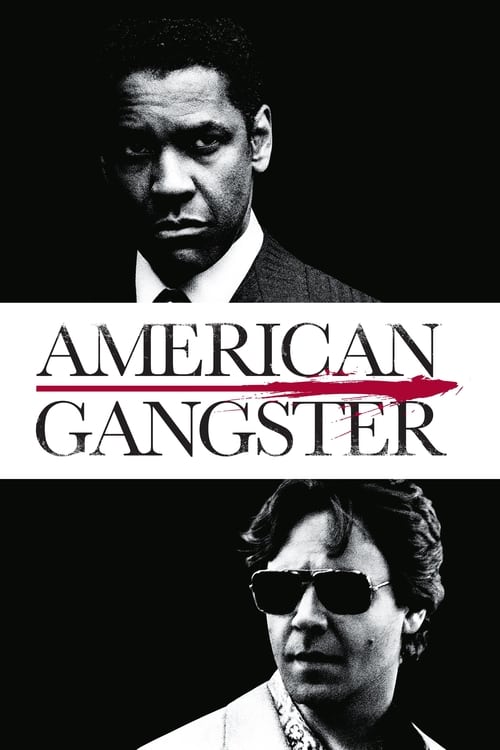
American Gangster
2007 · Directed by Ridley Scott
Woke Score
Critic Score
Audience
Ultra Based
Critics rated this 74 points above its woke score. Among Ultra Based films, this critic score ranks #309 of 833.
Representation Casting
Score: 35/100
The film features a predominantly Black cast with Denzel Washington and Chiwetel Ejiofor in substantial roles, though this reflects the historical setting and crime genre convention rather than conscious representation work. The casting appears natural to the narrative rather than motivated by progressive intent.
LGBTQ+ Themes
Score: 0/100
No LGBTQ+ themes, characters, or references are present in the film. The narrative focuses entirely on heterosexual relationships and male-centered crime dynamics.
Feminist Agenda
Score: 0/100
The film contains no feminist agenda or examination of gender dynamics. Female characters, including Ruby Dee's supporting role as Lucas's mother, remain peripheral to the male-driven narrative.
Racial Consciousness
Score: 20/100
While the film depicts Black characters in positions of power within the drug trade, it does not interrogate systemic racism or use the narrative to examine racial capitalism and inequality. The story is presented as individual criminal enterprise rather than systemic commentary.
Climate Crusade
Score: 0/100
No climate-related themes, environmental concerns, or ecological messaging appear in the film.
Eat the Rich
Score: 10/100
The film portrays institutional corruption and police malfeasance, but does not mount a sustained critique of capitalism itself. Frank Lucas is presented as an entrepreneur operating within corrupt systems rather than as evidence of systemic economic injustice.
Body Positivity
Score: 0/100
No body positivity themes, discussions of body image, or challenges to conventional beauty standards appear in the film.
Neurodivergence
Score: 0/100
No neurodivergent characters or representation of neurodivergence appear in the film.
Revisionist History
Score: 0/100
The film is based on the true story of Frank Lucas and presents historical events without attempting to revise or reframe historical narratives through a contemporary progressive lens.
Lecture Energy
Score: 5/100
The film maintains the classical crime drama's trust in narrative ambiguity and audience interpretation. There is minimal explicit moral instruction, though some scenes touch on corruption and institutional hypocrisy.


Synopsis
Loosely based on the criminal career of Frank Lucas, a gangster from La Grange, North Carolina, who smuggled heroin into the United States on American service planes returning from the Vietnam War, before being detained by a task force led by Newark Detective Richie Roberts.
Consciousness Assessment
American Gangster is a classical crime drama that happens to feature a predominantly Black cast and explore the criminal underworld of 1970s Harlem, but it does not constitute a vehicle for progressive social consciousness. The film presents Frank Lucas as a charismatic antihero whose entrepreneurial ruthlessness is rendered with aesthetic glamour rather than systemic critique. Ridley Scott's direction prioritizes visual spectacle and narrative momentum over interrogation of the conditions that produce such figures, and the moral framework centers on Russell Crowe's detective as the institutional counterweight to Washington's protagonist. The film contains no sustained examination of racial capitalism, poverty, or systemic inequality, instead operating within the traditional crime genre's framework of individual ambition and institutional corruption.
This is a work of technical proficiency and strong performances, not progressive cinema. Ruby Dee's supporting role earned awards recognition, yet her character remains secondary to the male-driven narrative architecture. The film makes no effort to foreground LGBTQ+ themes, feminist perspectives, climate concerns, or any interrogation of historical narratives through a contemporary lens. Its treatment of Black characters in positions of power operates within crime fiction convention rather than as conscious representation work designed to challenge existing hierarchies. The absence of lecture energy is actually a marker of the film's classical approach: it trusts the audience to navigate moral ambiguity without explicit guidance.
The film's commercial and critical success reflects recognition of its craftsmanship and performances, not endorsement of any particular social agenda. It achieved number one at the box office with a $46.3 million opening weekend and was nominated for two Academy Awards, including a Best Supporting Actress nomination for Ruby Dee. These accolades honor the film's technical achievement and acting prowess within the crime drama tradition, a lineage that predates the cultural moment when progressive sensibilities became a central concern in mainstream cinema.
Analysis generated by our Consciousness Algorithm
Critic Reviews
“Denzel Washington dazzles in his best screen performance to date as Frank Lucas.”
“This is an engrossing story, told smoothly and well, and Russell Crowe's contribution is enormous.”
“It has the aspirations of an epic of crime and punishment, a superb feel for time and milieu, and an almost subliminal feel for myth.”
“Crowe has rarely been better, and the same goes for director Scott, who parallels and then dovetails Lucas and Roberts' stories with sublime, gritty precision, working up to a magnificent "Godfather III"-style crosscutting sequence that electrifies an already explosive tale.”
“Call it the black "Scarface" or "the Harlem Godfather" or just one hell of an exciting movie.”
Consciousness Markers
The film features a predominantly Black cast with Denzel Washington and Chiwetel Ejiofor in substantial roles, though this reflects the historical setting and crime genre convention rather than conscious representation work. The casting appears natural to the narrative rather than motivated by progressive intent.
No LGBTQ+ themes, characters, or references are present in the film. The narrative focuses entirely on heterosexual relationships and male-centered crime dynamics.
The film contains no feminist agenda or examination of gender dynamics. Female characters, including Ruby Dee's supporting role as Lucas's mother, remain peripheral to the male-driven narrative.
While the film depicts Black characters in positions of power within the drug trade, it does not interrogate systemic racism or use the narrative to examine racial capitalism and inequality. The story is presented as individual criminal enterprise rather than systemic commentary.
No climate-related themes, environmental concerns, or ecological messaging appear in the film.
The film portrays institutional corruption and police malfeasance, but does not mount a sustained critique of capitalism itself. Frank Lucas is presented as an entrepreneur operating within corrupt systems rather than as evidence of systemic economic injustice.
No body positivity themes, discussions of body image, or challenges to conventional beauty standards appear in the film.
No neurodivergent characters or representation of neurodivergence appear in the film.
The film is based on the true story of Frank Lucas and presents historical events without attempting to revise or reframe historical narratives through a contemporary progressive lens.
The film maintains the classical crime drama's trust in narrative ambiguity and audience interpretation. There is minimal explicit moral instruction, though some scenes touch on corruption and institutional hypocrisy.