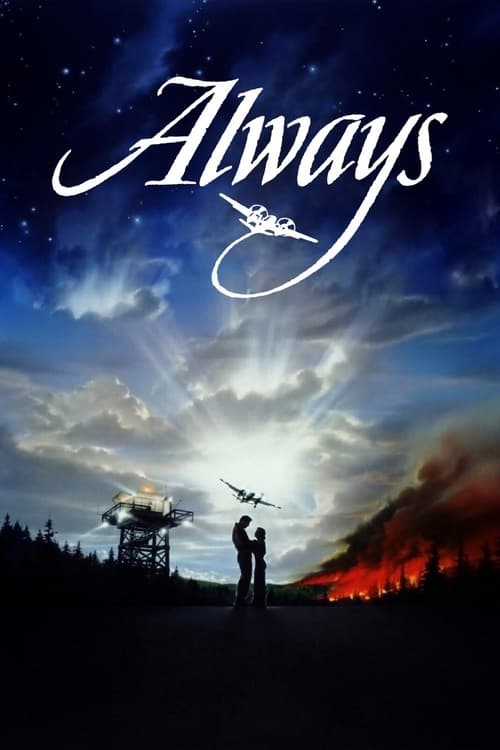
Always
1989 · Directed by Steven Spielberg
Woke Score
CriticCritic Score
Audience
Ultra Based
Critics rated this 42 points above its woke score. Among Ultra Based films, this critic score ranks #1167 of 1469.
Representation Casting
Score: 15/100
Holly Hunter plays a female pilot, but her gender is incidental to the narrative. The film does not emphasize this as groundbreaking or commentary on representation.
LGBTQ+ Themes
Score: 0/100
No LGBTQ themes or characters present in the film.
Feminist Agenda
Score: 20/100
While Hunter's character works independently in aviation, the narrative is ultimately about a deceased man manipulating events to help another man win the woman. This undermines any feminist reading.
Racial Consciousness
Score: 0/100
No racial themes, racial representation, or racial consciousness evident in the film.
Climate Crusade
Score: 0/100
No climate or environmental themes present.
Eat the Rich
Score: 0/100
No anti-capitalist or critique of wealth and capitalism present.
Body Positivity
Score: 0/100
No body positivity or body representation themes evident.
Neurodivergence
Score: 0/100
No neurodivergence representation or themes present.
Revisionist History
Score: 0/100
No revisionist history or reinterpretation of historical events.
Lecture Energy
Score: 10/100
The film contains moralizing about loss and acceptance, but these are delivered through narrative and character action rather than explicit preachy messaging.


Synopsis
The spirit of a recently deceased expert pilot mentors a newer pilot while watching him fall in love with the girlfriend that he left behind.
Consciousness Assessment
Steven Spielberg's "Always" is a romantic fantasy from an era when such things could exist without commentary. The film presents Holly Hunter as a capable pilot who manages a dangerous profession, a detail so incidental to the plot that it registers as mere window dressing rather than any deliberate statement about gender or representation. She exists in the story, competent and independent, but the narrative machinery subordinates her agency to a traditional romantic triangle orchestrated by a dead man who has appointed himself her emotional custodian from beyond the grave.
The film's cultural posture is that of 1989 Hollywood romance, which is to say it operates in a space before the modern frameworks of progressive cultural analysis took hold. Audrey Hepburn's appearance as a celestial bureaucrat, her final screen role, carries no particular significance beyond the stunt casting. The movie's thematic concerns center on loss, grief, and the difficulty of letting go, delivered through the supernatural mechanics of guardian angels and spectral mentorship rather than through any lens of contemporary social consciousness.
This film is a period piece that has aged into an artifact of pre-contemporary sensibilities. It is not hostile to progressive ideas, nor is it particularly progressive itself. It simply exists in a moment before such classifications became mandatory. The result is a movie that registers as culturally neutral by modern standards, neither advancing nor resisting the progressive sensibilities that would come to define Hollywood discourse decades later.
Analysis generated by our Consciousness Algorithm
Critic Reviews
“It's the film in which an entertainer at last becomes an artist, dealing with manifestly personal, painful emotions and casting them in a form that gives them philosophical perspective and universal affect. It's Spielberg's finest achievement, a film that will look better and better with the passage of time. [22 Dec. 1989]”
“You expect virtuosic technique from Spielberg, and it's there, in spades. What you don't expect is heartfelt romanticism. But that's there, too... Always is a terrific-looking throwback to those large-scale '40s cinematic stews of romantic longing. [22 Dec. 1989, p.43]”
“Though there are scenes in Always (both intimate and spectacular) I love, the film does seem a bit asking-for-it-weightless following an Indiana Jones sequel. Yet if, as I suspect, many reviewers elect to carve up Always, the film will pick up its devotees - now or down the road. [22 Dec. 1989, p.1D]”
“Always is such a lamentable production _ hardly a moment rings true _ that you almost feel like saying ''pardon me'' when you wonder why it apparently didn't occur to Spielberg or anyone else involved that no chemistry was taking place. Not only are the stars rather uninteresting people, they don't seem to like each other in any way that you can feel. [22 Dec. 1989, p.E1]”
Consciousness Markers
Holly Hunter plays a female pilot, but her gender is incidental to the narrative. The film does not emphasize this as groundbreaking or commentary on representation.
No LGBTQ themes or characters present in the film.
While Hunter's character works independently in aviation, the narrative is ultimately about a deceased man manipulating events to help another man win the woman. This undermines any feminist reading.
No racial themes, racial representation, or racial consciousness evident in the film.
No climate or environmental themes present.
No anti-capitalist or critique of wealth and capitalism present.
No body positivity or body representation themes evident.
No neurodivergence representation or themes present.
No revisionist history or reinterpretation of historical events.
The film contains moralizing about loss and acceptance, but these are delivered through narrative and character action rather than explicit preachy messaging.