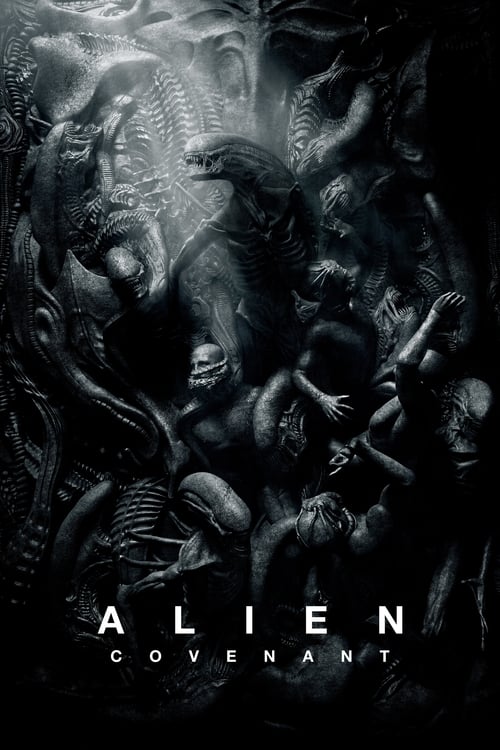
Alien: Covenant
2017 · Directed by Ridley Scott
Woke Score
CriticCritic Score
Audience
Ultra Based
Critics rated this 57 points above its woke score. Among Ultra Based films, this critic score ranks #763 of 1469.
Representation Casting
Score: 35/100
The crew includes performers of various ethnicities and genders, with Katherine Waterston in a capable lead role. However, this diversity appears incidental rather than intentional, with minority characters receiving minimal character development before being killed off.
LGBTQ+ Themes
Score: 0/100
No evidence of LGBTQ+ themes, representation, or subtext in the film. The narrative contains no LGBTQ+ characters or relationships.
Feminist Agenda
Score: 15/100
While the protagonist is female and capable, the film makes no effort to examine gender dynamics or challenge patriarchal structures. Waterston's character functions as a standard action hero rather than exploring feminist themes.
Racial Consciousness
Score: 10/100
The diverse cast appears to be treated as a demographic fact of the future rather than as an opportunity for racial commentary or examination of systemic power dynamics.
Climate Crusade
Score: 0/100
No evidence of environmental or climate-related themes in the film. The plot concerns survival against biological threat, not ecological or climate consciousness.
Eat the Rich
Score: 5/100
The Alien franchise contains corporate villainy in its DNA, but Covenant largely sidelines this element in favor of theological and philosophical concerns, avoiding sustained critique of capitalism.
Body Positivity
Score: 0/100
The film is a horror movie that uses the human body as a site of violation and destruction. There is no body positivity messaging or celebration of bodily diversity.
Neurodivergence
Score: 0/100
No representation of neurodivergent characters or engagement with neurodiversity themes.
Revisionist History
Score: 0/100
As a science fiction film set in the future, the film does not engage with historical revisionism or reinterpretation of past events.
Lecture Energy
Score: 5/100
The film contains brief philosophical discussions between characters about faith and creation, but these remain dialogue rather than preachy lectures meant to educate the audience about social issues.


Synopsis
The crew of the colony ship Covenant, bound for a remote planet on the far side of the galaxy, discovers what they think is an uncharted paradise but is actually a dark, dangerous world.
Consciousness Assessment
Alien Covenant arrives as a mid-tier entry in the Alien franchise, a film more concerned with existential philosophy and body horror than with any particular social consciousness. The narrative centers on a diverse crew encountering catastrophe on an alien world, a setup that would seem ripe for commentary on colonialism, but instead the film treats its premise as mere staging for grotesque spectacle. The ensemble cast includes performers of various ethnic backgrounds, though their presence functions primarily as a roster of disposable bodies for the xenomorph to consume. There is no particular effort to examine what the colonization of new worlds might mean in terms of power dynamics or resource extraction, nor does the film pause to consider the gendered dimensions of its central human conflict. The film is competent as horror, which is to say it understands the mechanics of dread and gore, but it remains fundamentally indifferent to questions of representation or social meaning.
The character of Captain Oram, played by Billy Crudup, comes nearest to something resembling thematic substance, as a man whose faith in divine creation collides with the film's atheistic sci-fi framework. Yet this philosophical tension never crystallizes into genuine intellectual engagement. Katherine Waterston's Daniels occupies the position of capable female survivor, a role that echoes Ripley without interrogating what such a role means or how it has evolved. The film's androids, including the duplicitous David played by Fassbender, exist primarily as plot mechanisms rather than vehicles for commentary on artificial life or consciousness. One might anticipate that a 2017 science fiction film would offer some meditation on these themes, but Covenant remains stubbornly committed to the notion that spectacle is sufficient unto itself. It is a film made by people who believe they are making art while primarily engaged in the business of franchise maintenance.
The broader context of the Alien universe, with its corporate exploitation and military-industrial complexities, suggests pathways toward genuine social critique that this film declines to follow. Instead, we receive well-executed set pieces divorced from meaningful consequence. The diverse casting is presented as a simple fact of future demographics rather than as an opportunity for storytelling that might acknowledge the lived experiences of its performers. This is not failure so much as indifference, the comfortable assumption that representation exists simply by appearing on screen.
Analysis generated by our Consciousness Algorithm
Critic Reviews
“Scott’s Alien: Covenant is a mad scientist film – arguably, one of the maddest. It’s grandiose, exhilarating, vertiginously cynical and symphonically perverse.”
“This is one of Scott’s best-directed movies and one of his most entertaining overall, partly because he’s working in a genre, the science fiction spectacle, that he does better than anyone since Stanley Kubrick, but also because he seems to be approaching it almost entirely in terms of visceral impact and emotion—as symphony of fire and blood, poetry and schlock.”
“The drama flows gorgeously and, unlike in many other franchises in which entries keep getting longer every time out, this one is served up without an ounce of fat. It provides all the tension and action the mainstream audience could want, along with a good deal more.”
“Presumably, Scott is giving the audience what it wants, but purists may wonder whether simply re-watching “Alien” would have provided scarier, more genuine jolts.”
Consciousness Markers
The crew includes performers of various ethnicities and genders, with Katherine Waterston in a capable lead role. However, this diversity appears incidental rather than intentional, with minority characters receiving minimal character development before being killed off.
No evidence of LGBTQ+ themes, representation, or subtext in the film. The narrative contains no LGBTQ+ characters or relationships.
While the protagonist is female and capable, the film makes no effort to examine gender dynamics or challenge patriarchal structures. Waterston's character functions as a standard action hero rather than exploring feminist themes.
The diverse cast appears to be treated as a demographic fact of the future rather than as an opportunity for racial commentary or examination of systemic power dynamics.
No evidence of environmental or climate-related themes in the film. The plot concerns survival against biological threat, not ecological or climate consciousness.
The Alien franchise contains corporate villainy in its DNA, but Covenant largely sidelines this element in favor of theological and philosophical concerns, avoiding sustained critique of capitalism.
The film is a horror movie that uses the human body as a site of violation and destruction. There is no body positivity messaging or celebration of bodily diversity.
No representation of neurodivergent characters or engagement with neurodiversity themes.
As a science fiction film set in the future, the film does not engage with historical revisionism or reinterpretation of past events.
The film contains brief philosophical discussions between characters about faith and creation, but these remain dialogue rather than preachy lectures meant to educate the audience about social issues.