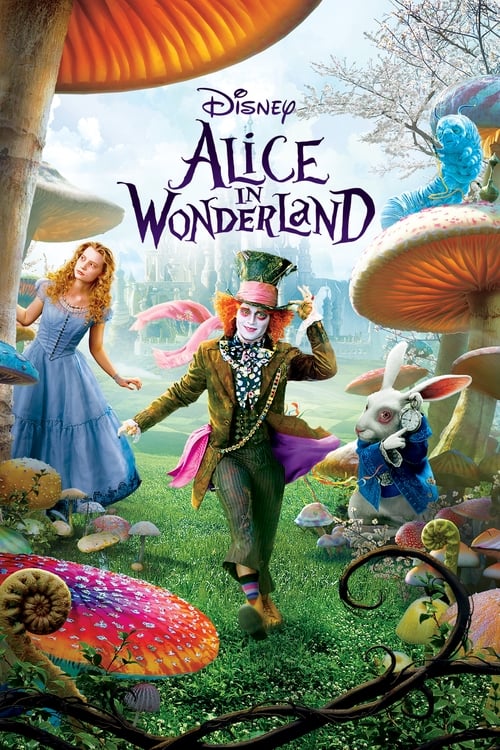
Alice in Wonderland
2010 · Directed by Tim Burton
Woke Score
CriticCritic Score
Audience
Based
Critics rated this 31 points above its woke score. Among Based films, this critic score ranks #280 of 345.
Representation Casting
Score: 35/100
The cast includes actors of various backgrounds, but this appears reflective of standard Hollywood casting rather than deliberate representation strategy. Several female characters occupy positions of power and agency.
LGBTQ+ Themes
Score: 0/100
No meaningful LGBTQ themes, representation, or subtext are present in the film. The characters and relationships are presented in conventional heteronormative terms.
Feminist Agenda
Score: 45/100
Alice is positioned as an active protagonist who chooses her destiny and leads resistance, reflecting 1990s girl-power sensibilities rather than contemporary feminist consciousness. Female agency exists but lacks systemic critique.
Racial Consciousness
Score: 10/100
The film contains no explicit racial commentary or consciousness-raising elements. The diverse casting appears incidental rather than intentional in terms of narrative engagement with racial dynamics.
Climate Crusade
Score: 0/100
Climate themes are entirely absent from the narrative. Environmental destruction appears in the film as fantasy worldbuilding consequence rather than as climate consciousness commentary.
Eat the Rich
Score: 5/100
While the Red Queen's regime involves oppression, the film presents no analysis of economic systems or capitalist structures. Rebellion is framed as personal heroism against individual tyranny.
Body Positivity
Score: 15/100
The film features conventionally attractive leads and Burton's stylized visual approach to body representation. No explicit body positivity messaging or diverse body representation appears intentional.
Neurodivergence
Score: 10/100
The Mad Hatter displays eccentric behavior, but the film does not engage with neurodivergence as a conscious or respectful framework. Eccentricity is played for whimsy rather than representation.
Revisionist History
Score: 0/100
As a fantasy film based on a classic literary work, the film contains no historical revisionism. It operates entirely in the realm of fictional worldbuilding.
Lecture Energy
Score: 5/100
The film prioritizes narrative entertainment over preachy messaging. Characters do not deliver explicit moral lectures regarding social issues or values.


Synopsis
Alice, now 19 years old, returns to the whimsical world she first entered as a child and embarks on a journey to discover her true destiny.
Consciousness Assessment
Tim Burton's 2010 Alice in Wonderland arrives at a peculiar historical juncture, occupying the liminal space between pre-2015 progressivism and the contemporary cultural moment. The film's central gesture toward female agency, positioning Alice as a young woman who must choose her own path and ultimately lead a rebellion against tyranny, reads more as 1990s girl-power feminism than as the identity-conscious social analysis that would come to define the cultural landscape. Alice's determination is presented as individual heroism rather than as systemic critique. The supporting cast includes several women in positions of authority and decision-making, though this reflects practical storytelling choices more than deliberate representational politics.
The film's visual aesthetic and narrative structure betray no particular investment in the markers of contemporary progressive consciousness. There are no meaningful explorations of climate catastrophe, economic exploitation, or institutional racism. The Red Queen's tyranny is a generic fantasy evil rather than a vehicle for commentary on power structures. The diverse ensemble cast, which includes actors of various backgrounds, appears to reflect standard Hollywood casting practices rather than conscious representation strategies. Johnny Depp's Mad Hatter is presented as eccentrically brilliant rather than neurodivergent in any clinically aware sense. LGBTQ themes are entirely absent.
This is fundamentally a work of fantastical escapism, competently executed and visually accomplished, but operating according to the entertainment logic of its era. It predates the coalescence of the particular cultural sensibilities we now recognize as constituting modern social consciousness in cinema. One might praise or criticize the film on numerous grounds, but reading it through the contemporary framework produces only a modest score.
Analysis generated by our Consciousness Algorithm
Critic Reviews
“A fantastical romp that proves every bit as transporting as that movie about the blue people of Pandora, his "Alice" is more than just a gorgeous 3D sight to behold.”
“Tim Burton, plus Alice, plus 3D equals an unforgettable, one-of-a-kind movie experience. It will clean up.”
“When it comes to 3-D visual splendors, give me Wonderland over Pandora any day.”
Consciousness Markers
The cast includes actors of various backgrounds, but this appears reflective of standard Hollywood casting rather than deliberate representation strategy. Several female characters occupy positions of power and agency.
No meaningful LGBTQ themes, representation, or subtext are present in the film. The characters and relationships are presented in conventional heteronormative terms.
Alice is positioned as an active protagonist who chooses her destiny and leads resistance, reflecting 1990s girl-power sensibilities rather than contemporary feminist consciousness. Female agency exists but lacks systemic critique.
The film contains no explicit racial commentary or consciousness-raising elements. The diverse casting appears incidental rather than intentional in terms of narrative engagement with racial dynamics.
Climate themes are entirely absent from the narrative. Environmental destruction appears in the film as fantasy worldbuilding consequence rather than as climate consciousness commentary.
While the Red Queen's regime involves oppression, the film presents no analysis of economic systems or capitalist structures. Rebellion is framed as personal heroism against individual tyranny.
The film features conventionally attractive leads and Burton's stylized visual approach to body representation. No explicit body positivity messaging or diverse body representation appears intentional.
The Mad Hatter displays eccentric behavior, but the film does not engage with neurodivergence as a conscious or respectful framework. Eccentricity is played for whimsy rather than representation.
As a fantasy film based on a classic literary work, the film contains no historical revisionism. It operates entirely in the realm of fictional worldbuilding.
The film prioritizes narrative entertainment over preachy messaging. Characters do not deliver explicit moral lectures regarding social issues or values.