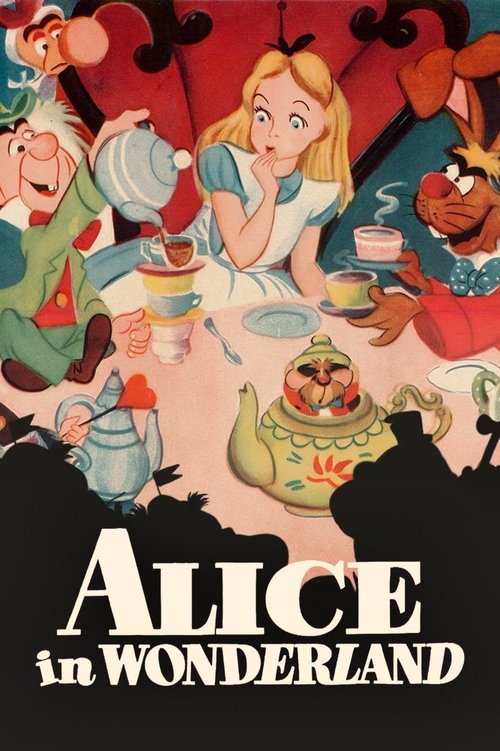
Alice in Wonderland
1951 · Directed by Clyde Geronimi
Woke Score
CriticCritic Score
Audience
Ultra Based
Critics rated this 49 points above its woke score. Among Ultra Based films, this critic score ranks #1097 of 1469.
Representation Casting
Score: 5/100
Features a female lead character, but the entire supporting cast and world are uniformly white with no meaningful diversity in casting or character design.
LGBTQ+ Themes
Score: 0/100
No LGBTQ+ themes, characters, or representation of any kind present in the film.
Feminist Agenda
Score: 15/100
Alice is intelligent and resourceful, navigating the absurd world on her own terms, but this reflects the source material rather than conscious feminist intent.
Racial Consciousness
Score: 0/100
No engagement with racial themes or consciousness. The film contains no characters of color or acknowledgment of racial perspectives.
Climate Crusade
Score: 0/100
No environmental or climate-related themes present in the film.
Eat the Rich
Score: 0/100
No critique of capitalism, wealth inequality, or economic systems appears in the narrative.
Body Positivity
Score: 0/100
No body positivity messaging. Characters are drawn in conventional styles without commentary on physical diversity.
Neurodivergence
Score: 0/100
No representation of neurodivergence or disability is present in the film.
Revisionist History
Score: 0/100
The film contains no historical narrative or revisionist historical claims to evaluate.
Lecture Energy
Score: 5/100
The film is playful and anarchic rather than preachy, though some sequences contain mild moral lessons about propriety and obedience.


Synopsis
On a golden afternoon, wildly curious young Alice tumbles into the burrow and enters the merry, madcap world of Wonderland full of whimsical escapades.
Consciousness Assessment
Disney's 1951 "Alice in Wonderland" presents a curious case study in the archaeology of cultural attitudes. The film centers an intelligent, resourceful female protagonist who navigates absurdity with wit and determination, which was not nothing for animated features of the era. Yet this credit must be tempered by the film's wholesale indifference to any contemporary progressive sensibilities. The work exists in a pre-consciousness state regarding representation, diversity, or social awareness. The cast and characters are uniformly white, the humor relies on acceptable mid-century conventions, and the narrative contains no engagement whatsoever with systemic critique or marginalized perspectives.
The film's visual language, while imaginative, carries the casual assumptions of its time without apparent self-awareness. There are no attempts at racial or cultural sensitivity, no coded acknowledgment of social hierarchies beyond the whimsy of the source material, and no indication that anyone involved in its creation considered such matters relevant to a children's fantasy. This is not a moral failing so much as a historical fact. The work predates the contemporary frameworks we now use to analyze such questions by decades.
What emerges is a film that benefits from a female lead primarily through accident of literary inheritance rather than intentional progressive design. The 1951 "Alice" is a polished entertainment from a studio at the height of its technical powers, but it occupies a cultural moment when progressive sensibility had not yet crystallized into the specific markers we track. It is, in short, an artifact of genuine innocence regarding the categories we now find essential.
Analysis generated by our Consciousness Algorithm
Critic Reviews
“A fantastical romp that proves every bit as transporting as that movie about the blue people of Pandora, his "Alice" is more than just a gorgeous 3D sight to behold.”
“Tim Burton, plus Alice, plus 3D equals an unforgettable, one-of-a-kind movie experience. It will clean up.”
“When it comes to 3-D visual splendors, give me Wonderland over Pandora any day.”
Consciousness Markers
Features a female lead character, but the entire supporting cast and world are uniformly white with no meaningful diversity in casting or character design.
No LGBTQ+ themes, characters, or representation of any kind present in the film.
Alice is intelligent and resourceful, navigating the absurd world on her own terms, but this reflects the source material rather than conscious feminist intent.
No engagement with racial themes or consciousness. The film contains no characters of color or acknowledgment of racial perspectives.
No environmental or climate-related themes present in the film.
No critique of capitalism, wealth inequality, or economic systems appears in the narrative.
No body positivity messaging. Characters are drawn in conventional styles without commentary on physical diversity.
No representation of neurodivergence or disability is present in the film.
The film contains no historical narrative or revisionist historical claims to evaluate.
The film is playful and anarchic rather than preachy, though some sequences contain mild moral lessons about propriety and obedience.