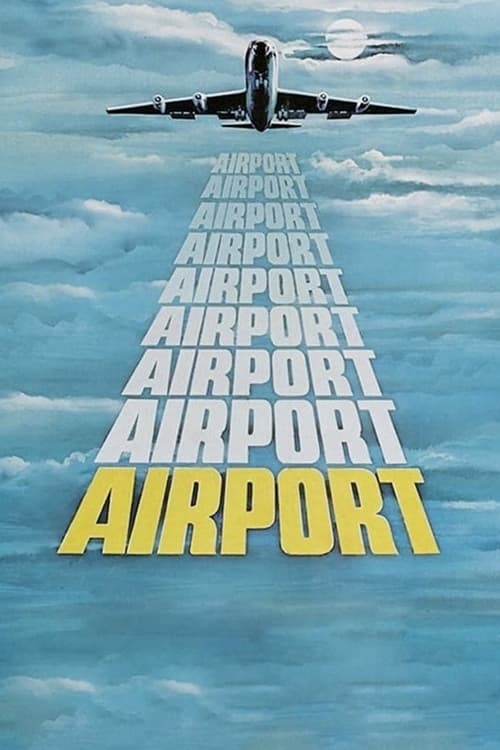
Airport
1970 · Directed by George Seaton
Woke Score
CriticCritic Score
Audience
Ultra Based
Critics rated this 38 points above its woke score. Among Ultra Based films, this critic score ranks #1317 of 1469.
Representation Casting
Score: 5/100
The cast is predominantly white with no meaningful minority representation in speaking roles. Women are present but confined to secondary roles as stewardess and mistress.
LGBTQ+ Themes
Score: 0/100
No LGBTQ+ themes, characters, or representation present in the film.
Feminist Agenda
Score: 5/100
Women appear in professional settings but are primarily decorative, defined by their relationships to male characters rather than possessing autonomous agency or arcs.
Racial Consciousness
Score: 0/100
No racial consciousness, commentary, or awareness. The film operates with complete indifference to racial representation or dynamics.
Climate Crusade
Score: 0/100
Climate themes are entirely absent. The snowstorm is a plot device, not a commentary on environmental systems or climate crisis.
Eat the Rich
Score: 0/100
The film celebrates institutional competence and managerial expertise. There is no critique of capitalism or power structures.
Body Positivity
Score: 0/100
No body positivity themes. The film makes no commentary on bodies, appearance, or physical diversity.
Neurodivergence
Score: 0/100
The suicide bomber's motivations are treated as simple personal grievance, not as any form of neurodivergence or mental health commentary.
Revisionist History
Score: 0/100
The film contains no historical revisionism. It is a contemporary thriller with no historical content to revise.
Lecture Energy
Score: 8/100
While not preachy about progressive causes, the film relentlessly lectures about airport operations, managerial procedure, and institutional hierarchy with exhaustive technical detail.


Synopsis
An airport manager tries to keep his terminals open during a snowstorm, while a suicide bomber plots to blow up a Boeing 707 airliner in flight.
Consciousness Assessment
Airport arrives as a monument to pre-woke cinema sensibilities, a disaster film so resolutely committed to its own narrative machinery that questions of representation barely register as speed bumps. George Seaton's adaptation of Arthur Hailey's bestseller concerns itself exclusively with the mechanics of airport operations and the parallel crises of a suicide bomber and a marriage in freefall. The film features women in professional roles, yes, but primarily as decorative accessories to the real business of male problem-solving. Jean Seberg appears as a stewardess and Jacqueline Bisset as a mistress, both confined to the emotional labor of supporting Burt Lancaster's airport manager through his managerial tribulations. There is no consciousness here of gender dynamics, no interrogation of power structures, no suggestion that these women might possess interior lives separate from their utility to the male leads.
The film's treatment of its suicide bomber subplot contains no commentary whatsoever on capitalism, militarism, or systemic despair. The bomber is simply a disturbed individual whose personal grievance sets the plot in motion. There exists no critique of the systems that produced his alienation, no examination of economic anxiety or institutional failure. The film celebrates the triumph of institutional competence over chaos, the restoration of order through managerial expertise and masculine authority. This is not progressive cinema attempting to hide its conservative impulses. It is conservative cinema operating with complete transparency, asking nothing of itself beyond entertainment and technical spectacle.
The casting reflects the Hollywood baseline of 1970: predominantly white, male-centered, with minorities absent from any speaking roles. No one is discussing body positivity, climate impact, or historical revision. The film simply exists in its own moment, indifferent to considerations that would later become cultural preoccupations. One might mistake this for a virtue, a film untainted by contemporary anxieties. One would be making a category error. Airport is not a film that transcends these concerns. It simply predates their emergence.
Analysis generated by our Consciousness Algorithm
Critic Reviews
“On some dumb fundamental level, Airport kept me interested for a couple of hours. I can't quite remember why. The plot has few surprises (you know and I know that no airplane piloted by Dean Martin ever crashed). The gags are painfully simpleminded (a priest, pretending to cross himself, whacks a wise guy across the face). And the characters talk in regulation B-movie clichés like no B-movie you've seen in ten years. ”
“Airport, the film version of Arthur Hailey's novel, is the sort of movie most people mean when they say Hollywood doesn't make movies the way it used to. This isn't just because Airport resembles any number of old Grand Hotel movies. Rather it's because it evokes our nostalgic feelings, not only for the innocence of old movies but also for the innocent old times in which we saw them. ”
“Airport is a handsome, often dramatically involving $10-million epitaph to a bygone brand of filmmaking. However, the ultimate dramatic situation of a passenger loaded jetliner with a psychopathic bomber aboard that has to be brought into a blizzard-swept airport with runway blocked by a snow-stalled plane actually does not create suspense because the audience knows how it's going to end.”
“An empty reshaping of Grand Hotel, held together by disaster in the sky. Airport will be remembered as the trailblazer of the disaster epic, one of the most trivial genres in the history of motion pictures.”
Consciousness Markers
The cast is predominantly white with no meaningful minority representation in speaking roles. Women are present but confined to secondary roles as stewardess and mistress.
No LGBTQ+ themes, characters, or representation present in the film.
Women appear in professional settings but are primarily decorative, defined by their relationships to male characters rather than possessing autonomous agency or arcs.
No racial consciousness, commentary, or awareness. The film operates with complete indifference to racial representation or dynamics.
Climate themes are entirely absent. The snowstorm is a plot device, not a commentary on environmental systems or climate crisis.
The film celebrates institutional competence and managerial expertise. There is no critique of capitalism or power structures.
No body positivity themes. The film makes no commentary on bodies, appearance, or physical diversity.
The suicide bomber's motivations are treated as simple personal grievance, not as any form of neurodivergence or mental health commentary.
The film contains no historical revisionism. It is a contemporary thriller with no historical content to revise.
While not preachy about progressive causes, the film relentlessly lectures about airport operations, managerial procedure, and institutional hierarchy with exhaustive technical detail.